


Korea South-East Power Company's proposed $1bn hydropower investment: humongous cost of regulatory indecision
Pakistan's prolonged regulatory delays, exemplified by the KOEN hydropower project, are harming its investment climate and credibility, despite necessary power sector reforms.
- KOEN's $1 billion hydropower investment stuck in regulatory limbo.
- Pakistan's investment climate and regulatory uncertainty.
- Transparent policy decisions for the power sector.
- Reconciling investment discipline with investor credibility.
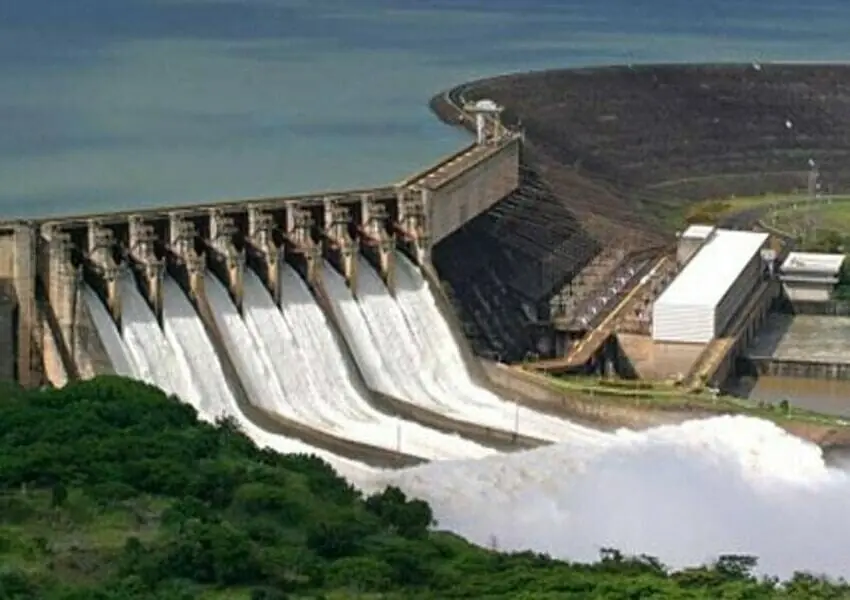
EDITORIAL: The complaint by Korea South-East Power Company (KOEN) over the prolonged regulatory limbo surrounding its proposed $1 billion hydropower investment should not be viewed merely as a dispute between an investor and a regulator. It raises a far more consequential question about Pakistan’s investment climate: what message does the country send when an investor that has spent nearly a decade navigating official procedures still finds itself waiting for a decision?
According to the company, every major milestone required under the prevailing policy framework was completed. Memoranda were signed, feasibility studies undertaken, letters of intent secured, the projects incorporated into the Indicative Generation Capacity Expansion Plan (IGCEP), and a generation licence obtained from Nepra. Yet, nearly three years after the tariff hearing, the determination remains pending, despite the regulator’s own appellate tribunal directing that the matter be decided.
Be that as it may, the issue is larger than the merits of these two hydropower projects. Pakistan’s power sector has changed significantly since they were first conceived. Demand has failed to grow as anticipated, generation capacity has expanded rapidly, and the country today finds itself grappling with surplus capacity rather than shortages. Under these circumstances, it is entirely legitimate for policymakers to revisit investment priorities and reassess the sequencing of future generation projects.
What is far more difficult to justify, however, is allowing regulatory uncertainty to substitute for a policy decision. If circumstances have changed, they should be communicated transparently. If projects no longer fit into the country’s least-cost expansion plan, investors deserve a timely explanation grounded in policy and economics. If, on the other hand, the projects remain viable but their commercial operation needs to be deferred, that too should be conveyed through an orderly and predictable process. Indefinite silence serves neither the investor nor the country.
Regulatory certainty is not synonymous with regulatory approval. Investors understand that projects may be accepted, modified or even rejected. What they cannot reasonably price into their investment decisions is an open-ended process in which applications remain pending for years despite statutory timelines and completed hearings. Such uncertainty ultimately becomes a cost in itself.
The implications extend well beyond a single Korean investor. Pakistan has repeatedly stated its ambition to attract greater foreign direct investment, diversify its energy mix and deepen economic cooperation with friendly countries. Those ambitions cannot rest solely on investment conferences, roadshows or memoranda of understanding. They depend equally, if not, more on institutions that deliver timely, transparent and predictable decisions. An investment climate is shaped as much by regulatory conduct as by fiscal incentives.
That the timing is particularly noteworthy is a fact. Pakistan and South Korea are actively pursuing a Comprehensive Economic Partnership Agreement, with both governments expressing their desire to strengthen trade and investment ties. That broader relationship should provide additional impetus to resolve outstanding investment matters through established institutional mechanisms rather than allowing them to drift indefinitely.
None of this should be interpreted as a call to ignore Pakistan’s current power sector realities. The country can ill afford to add generation capacity without regard to demand or affordability, particularly when capacity payments continue to weigh heavily on electricity consumers. Prudence in approving new projects remains essential. But prudence should not be confused with paralysis.
The profound challenge before policymakers is to reconcile two equally legitimate objectives: maintaining discipline in future power sector investments while preserving Pakistan’s credibility as a destination for long-term capital. Those goals are not mutually exclusive. Indeed, they reinforce one another when regulatory institutions function as intended.
The KOEN case should therefore serve as more than a reminder of one delayed tariff determination. It should prompt a broader reflection on regulatory governance itself. Pakistan has rightly undertaken important reforms across its energy sector, from renegotiating power purchase agreements to restructuring market institutions. Ensuring that statutory timelines are respected and regulatory decisions are delivered without undue delay deserves to be part of that reform agenda.
For investors, certainty often matters as much as the outcome itself. Pakistan cannot promise approval to every project. It can, however, promise a process that is timely, transparent and credible. That is the minimum expectation of any serious investor—and one the country can scarcely afford to fall short of.
Copyright Business Recorder, 2026














Comments