


Petroleum products: Wave of protests puts govt’s daily pricing policy in jeopardy
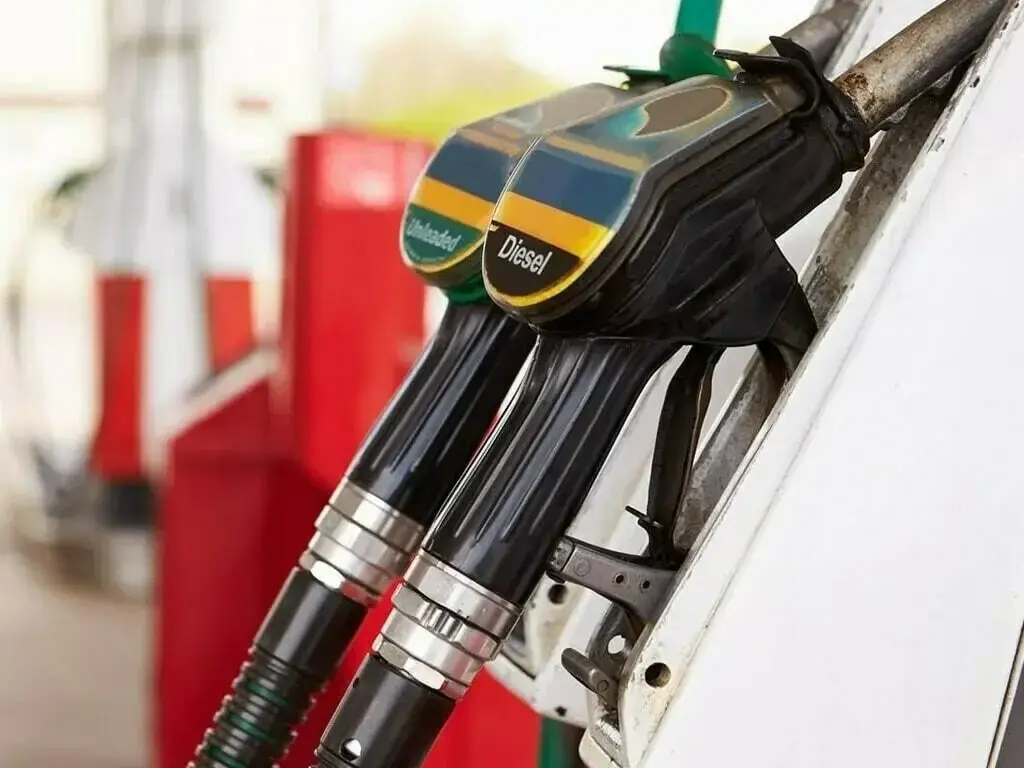

KARACHI: Business and industrial community has urged the Prime Minister Shehbaz Sharif and Minister for Petroleum Ali Pervaiz Malik to withdraw the government’s decision to introduce daily pricing of petroleum products, warning that the policy could prove disastrous for industry, trade and the broader economy.
They said that fuel pricing mechanisms were to be formulated through broad based consultation with all the stakeholders.
Expressing serious reservations over the government’s decision to introduce daily pricing of petroleum products, SITE Association of Industry President Abdul Rehman Fudda urged Prime Minister Shehbaz Sharif to immediately review and withdraw the policy, warning that it could trigger a fresh crisis for Pakistan’s industrial and export sectors.
He said the country’s manufacturing sector was already under immense pressure due to high electricity and gas tariffs, excessive taxation and steadily rising production costs. Introducing daily revisions in petroleum prices, he said, would further deepen uncertainty for businesses, making long-term planning and cost management increasingly difficult.
“The two biggest challenges confronting Pakistan’s industrial sector are expensive energy and policy uncertainty,” he said. “If manufacturers wake up every morning unsure of fuel prices and production costs, they cannot effectively price their products, manage inventories or make investment decisions.”
SAI chief noted that export-oriented industries were particularly vulnerable because export contracts were typically finalized several months before delivery. Continuous fluctuations in fuel prices during the production cycle, he said, would significantly increase manufacturing and logistics costs, making it difficult for Pakistani exporters to remain competitive in international markets.
He said domestic manufacturers also faced practical constraints, as they could not revise product prices on a daily basis to absorb rising input costs.
Appealing directly to Prime Minister Shehbaz Sharif, Fudda proposed that petroleum prices should be fixed at least on a monthly basis to provide businesses with a predictable operating environment. If international oil price volatility created fiscal pressure, he suggested that the government temporarily adjust the petroleum levy rather than passing daily price fluctuations on to industry.
He expressed hope that the prime minister and relevant policymakers would take the concerns of the business community seriously and adopt a stable and predictable pricing mechanism to protect industrial activity, safeguard exports and preserve employment.
The Salt Manufacturers Association of Pakistan (SMAP) has appealed to Prime Minister Shehbaz Sharif to immediately reconsider the government’s decision to introduce daily pricing of petroleum products, warning that the policy could prove disastrous for industry, trade and the broader economy.
SMAP founder Chairman Ismail Suttar said the manufacturing sector was already struggling under the burden of high electricity and gas tariffs, elevated taxation and rising operational costs. Introducing daily fluctuations in petroleum prices, he cautioned, would further escalate production costs, disrupt business planning and make it increasingly difficult for industries to remain operational.
“The industrial sector is already operating under severe financial pressure. If fuel prices continue to change every day, production costs will become unpredictable, business confidence will erode and many industries may find it impossible to continue operations,” he said.
Ismail Suttar urged Prime Minister Shehbaz Sharif to withdraw the decision, arguing that while the government frequently spoke of promoting industrial growth and investment, policies that created uncertainty for businesses undermined those objectives.
He maintained that a thriving industrial sector was essential for economic stability and government revenue generation.
“If industries are forced to shut down due to unsustainable costs, the government’s own tax revenues will suffer. Sustainable economic growth can only be achieved when businesses are allowed to operate in a stable and predictable environment,” he added.
Expressing concern over the wider economic implications, Suttar said daily revisions in petroleum prices would not only increase costs for manufacturers but would also trigger another wave of inflation, placing an additional burden on consumers who were already struggling with the rising cost of living.
Referring specifically to the salt industry, he noted that salt was a low-value but high-volume commodity, making transportation costs a significant component of its overall price. Daily fluctuations in fuel prices, he said, would create uncertainty in freight charges, disrupt supply chain planning and make it extremely difficult for manufacturers and traders to determine competitive market prices.
Appealing directly to the prime minister, Ismail Suttar proposed that the government adopted a weekly petroleum pricing mechanism instead of a daily one. He also urged the government not to implement the new system without prior consultation with industry representatives, trade bodies and other stakeholders.
“Any policy that has far-reaching consequences for businesses and the national economy should be formulated through meaningful consultation. A predictable pricing framework will help protect industry, safeguard employment and support sustainable economic growth,” he said.
President of the Pakistan Businessmen and Intellectuals Forum and All Karachi Industrial Alliance as well as Chairman ofthe National Business Group,Mian Zahid Hussain has said that shifting petroleum prices from weekly to daily determination is an important economic reform, but it should not be implemented without complete transparency, a clearly defined mechanism and meaningful consultation with oil marketing companies and petrol-pump owners.
He said that according to the government, daily price determination would reduce political intervention, limit opportunities for extraordinary profits and allow changes in international oil markets to be reflected more quickly in domestic prices.
OGRA has indicated that it will publish daily price data, while the new system is also expected to cover the Inland Freight Equalization Margin, refinery adjustments, stock management and a mechanism for subsequently adjusting price differences.
Mian Zahid Hussain said that the proposed measures and rules must be finalised before full implementation because petroleum prices directly affected transport, agriculture, industry and household expenditure.
The latest increase demonstrated the risks associated with the new system. From July 18, the price of petrol increased by Rs5.44 per litre to Rs316.15, while high-speed diesel rose by Rs31.05 to Rs354.35 per litre.
He said diesel was widely used in trucks, public transport, tractors, harvesting machinery, construction equipment and electricity-generating units.
Therefore, an increase of more than Rs31 per litrewould immediately raise freight charges, food-distribution costs, agricultural expenditure and industrial production costs.
Mian Zahid Hussain said that the Sensitive Price Indicator had already increased by 1.40 percent during the week ending July 16 and reached 357.61. Since the latest diesel-price increase took effect after that reporting period, its full impact might become visible in the coming weeks through higher transport fares and increases in the prices of vegetables, flour, construction material and other essential goods. He said that the Oil Companies Advisory Council had described daily pricing as an important step towards deregulation, competition and market-based price determination.
However, oil marketing companies, refineries and industry representatives had also raised serious concerns regarding supply-chain operations, timely availability of data, valuation of existing stocks and the sale of fuel purchased at one price after a new price became effective.
Rapid changes in prices might create major transparency and reconciliation issues if those matters were not resolved in advance.
Mian Zahid Hussain said that petrol-pump owners had strongly opposed the policy in its present form, warning the government of nationwide protests and a possible strike.
They maintained that daily price revisions could cause losses on existing stocks, disrupt oil-tanker movements and create administrative complications at approximately 15,000 retail outlets.
He said that the credibility of the daily pricing system would depend on whether every change in international oil prices was passed on to consumers promptly in exact consequence. Increases must not be transferred immediately while reductions were delayed.
OGRA should publish a complete daily price calculation online showing the international benchmark, exchange rate, import premium, ex-refinery price, freight margin, petroleum levy, carbon levy, OMC margin and dealer commission.
Mian Zahid Hussain proposed the establishment of a broad-based committee comprising the government, OGRA, State Bank, economic experts, FPCCI, relevant stakeholders and consumers to oversee the daily pricing framework.
He further said that a uniform implementation time across the country and a transparent mechanism for adjusting differences in the value of existing stocks were essential.
Daily pricing might improve transparency, but it must not become a source of daily uncertainty for businesses and consumers.
The government should implement the system only after securing stakeholder consensus, ensuring uninterrupted supplies and guaranteeing that every reduction in international prices was passed on to consumers with the same speed as an increase.
Copyright Business Recorder, 2026














Comments