


Beyond declarations
The 9th OIC Ministerial Conference on Women emphasized translating commitments into action, acknowledging the persistent gap between aspirations and reality for women in the Muslim world, urging measurable reforms and accountability.
- Translating OIC commitments into concrete action.
- Women's empowerment as key to economic growth and stability.
- Challenges and progress in OIC member states.
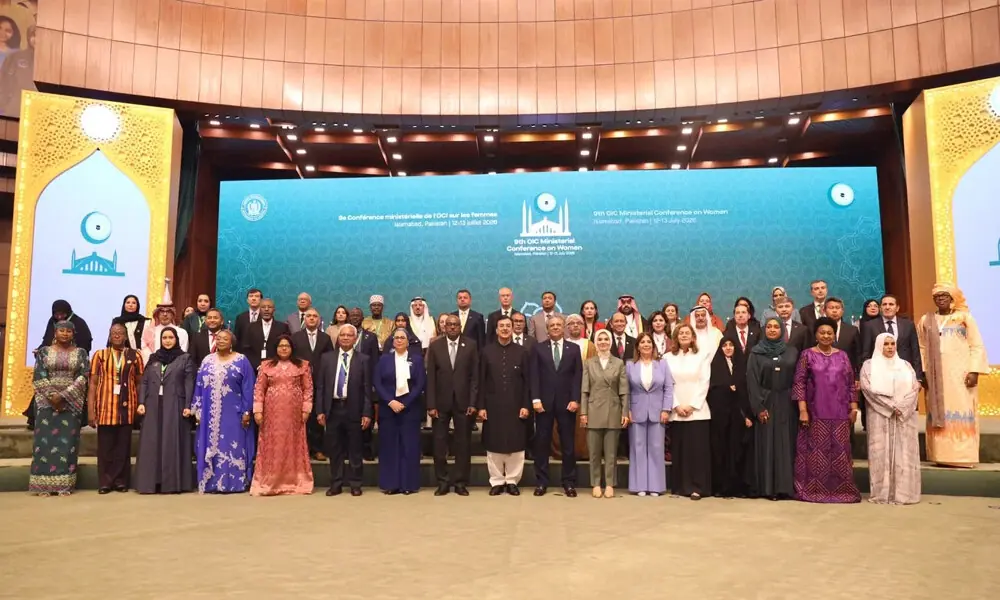
EDITORIAL: The repeated emphasis at the 9th OIC Ministerial Conference on Women on translating commitments into action reflects an uncomfortable reality: the condition of women across much of the Muslim world continues to fall far short of the aspirations repeatedly articulated at international forums.
While the conference produced encouraging statements from Pakistan’s leadership and representatives of other member states, the real test lies in governments’ willingness to pursue sustained and measurable reforms.
Too often, ministerial gatherings conclude with ambitious declarations that generate little follow-up, leaving structural barriers to women’s advancement largely intact.
The calls by the Punjab Chief Minister for equal access to education, healthcare, economic opportunities and leadership, and by the Senate Chairman for measurable targets and accountability mechanisms, therefore, address a longstanding weakness in the OIC’s approach.
Women’s empowerment is no longer simply a matter of social justice; it is increasingly recognised as indispensable to economic growth, good governance and social stability.
Countries that invest in girls’ education, remove barriers to women’s employment and create opportunities for meaningful participation in public life are better placed to reduce poverty, improve public services and strengthen their institutions.
The examples presented by Egypt, where targeted programmes and institutional reforms have expanded women’s participation in economic and public life, demonstrate that meaningful progress is possible when political commitment is matched by practical action. Sharing such experiences through greater cooperation, capacity-building and the exchange of best practices would serve OIC member states better than periodic reaffirmation of principles on which there is already broad agreement.
Pakistan’s hosting of the conference is significant, but it also invites introspection. Although the country has made notable advances in recent decades — from greater representation of women in legislatures and the judiciary to stronger legal protections in certain areas — progress remains uneven. Millions of girls remain out of school, particularly in underserved districts, while female labour force participation continues to lag behind regional averages. Workplace discrimination, unequal access to financial resources and the persistence of gender-based violence continue to limit women’s opportunities and contributions. Addressing these challenges requires not only better implementation of existing laws but also sustained policy interventions that expand educational, economic and leadership opportunities. The conference was also right to highlight the disproportionate burden borne by women in conflict-affected societies, particularly in Palestine, where violence and displacement continue to undermine access to education, healthcare and livelihoods.
The OIC does not suffer from a shortage of declarations on women’s rights and development. What has been lacking is sustained implementation, rigorous monitoring and the political resolve to dismantle entrenched social and institutional barriers. If this conference succeeds in encouraging member states to adopt measurable targets, commit adequate resources and hold themselves accountable for results, it will have served a meaningful purpose. Otherwise, it will risk joining a long list of well-intentioned declarations whose ambitions were never matched by action.
Copyright Business Recorder, 2026
















Comments