


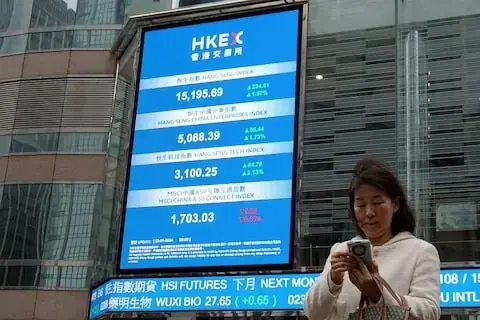

BENGALURU: Most emerging Asian equities lost ground on Monday, led by a 5 percent drop in South Korean shares as the AI trade unravelled further, while a widening Gulf conflict pushed oil prices higher and rekindled inflation worries across the region.
Seoul shares closed down 4.5 percent after sliding as much as 5.1 percent as markets reopened after Friday’s holiday, taking the benchmark KOSPI’s losses for the month to more than 22 percent and pushing it firmly into bear-market territory.
Taiwan’s tech-heavy index rose as much as 1 percent before erasing gains to close down 0.5 percent.
The MSCI EM Asia equities index slipped to its lowest since early May in the session. The South Korean and Taiwanese benchmark gauges together account for about 60 percent of the index.
Citi analysts cut Korea to “neutral” in their EM country allocation from the “overweight” rating the country has had since July 2025, citing volatile trading conditions even as the market continues to rank strongly in their fundamentals-based models.
Jason Lui, head of APAC equity derivative strategy at BNP Paribas, said the latest moves suggested investors may be unwinding a once-popular “long North Asia, short South Asia” strategy, as concerns over crowded AI exposure prompt a reassessment of regional positioning.
In Southeast Asia, stocks in Jakarta rose as much as 1.2 percent to their highest point since mid-June, and stocks in Manila clocked similar gains to hit their highest level since March 3.
India’s equities were down around 0.7 percent.
Among currencies in the region, the Indonesian rupiah weakened to 17,991 against the dollar at open, before strengthening to as much as 17,960.
Markets are also turning their attention to Bank Indonesia’s policy meeting later this week, where the central bank is expected to raise rates for a fourth time in an effort to stabilize the rupiah.
The Thai baht weakened to as much as 33.715 per dollar, hitting its lowest since late April 2025.
The currency has been pressured by low carry and a weakening current account, Maybank analysts said, adding they expect it to remain among the region’s weaker performers this month with few supportive catalysts. The baht has fallen 1.2 percent in July so far.

















Comments