


India’s designs to curtail water flows: Senate body to convene meeting of all stakeholders
The Senate Committee on Water Resources discussed India's alleged water blocking and Pakistan's critical water security, emphasizing the urgent need for new reservoirs and addressing stalled projects amid declining water levels.
- India's alleged blocking of Pakistan's water share.
- Pakistan's critical water security and urgent need for new reservoirs.
- Stalled major water projects and declining groundwater levels.
- Inadequate funding for crucial water and power projects.
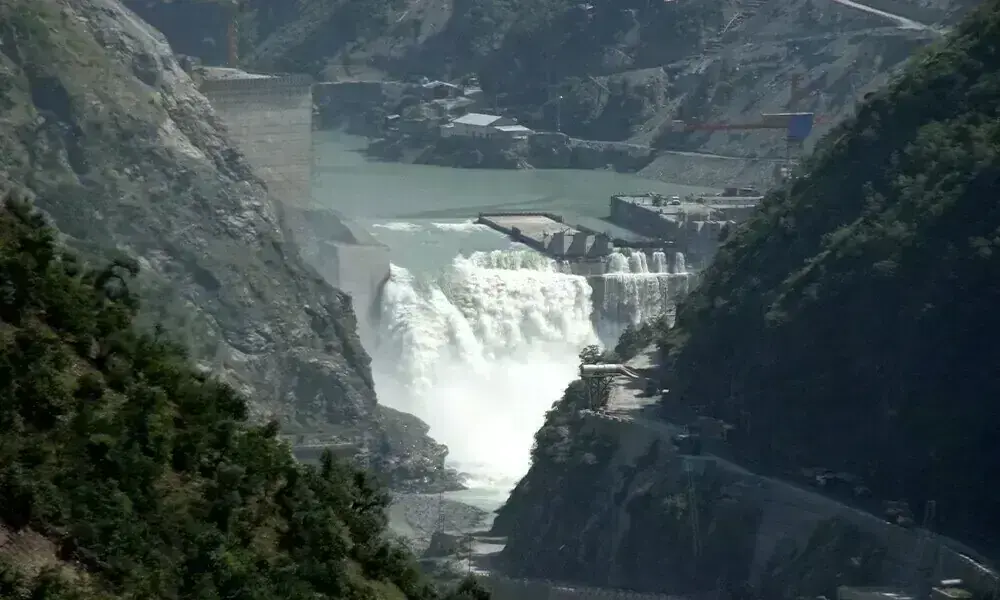

ISLAMABAD: The Senate Standing Committee on Water Resources on Friday decided to convene a meeting of all relevant stakeholders for a detailed briefing on India’s reported moves to block Pakistan’s water share at the upper Chenab, as well as the government’s future strategy to construct reservoirs for storing surplus water.
The meeting, presided over by Senator Jam Saifullah Khan, held an in-depth discussion on water-related issues, government strategy, and compliance with previous decisions. Additional Secretary/Acting Indus Water Commissioner Mehar Ali Shah and Chairman Wapda, Lt Gen Muhammad Saeed (Retd), along with his team, including Member Finance Naveed Asghar Chaudhary, briefed the committee.
READ MORE: FO says putting IWT in abeyance violation of world laws
On India’s alleged designs to curtail water flows — an act the Government of Pakistan considers tantamount to aggression — the Acting Indus Water Commissioner proposed that representatives from the Ministry of Foreign Affairs, the Attorney General for Pakistan, the Ministry of Law, and the Punjab government be invited to the next meeting.
However, the committee chairman, who hails from Sindh, suggested that representatives of the Sindh government and the lawyer who represented Pakistan at the World Bank should also be included.
The Ministry of Water Resources agreed to the proposal, requesting that the meeting be held in-camera. A similar meeting is also scheduled by the Standing Committee on Kashmir Affairs next week.
The Wapda chairman stressed the urgency of adopting serious measures, warning that Pakistan is heading toward a critical water security situation. He noted that no major reservoir has been constructed after Tarbela and Mangla, whereas India has built over 5,000 dams.
“Billions of litres of water are flowing into the sea unused,” he added.
He further emphasized that both the National Assembly and Senate Standing Committees on Water Resources should play an active role in formulating a comprehensive national strategy. “I have briefed top political leadership, including the Prime Minister and PPP Chairman Bilawal Bhutto Zardari, and remain available for further briefings. If the current situation persists, Pakistan could face severe water shortages by 2050,” he warned, citing international assessments.
The committee also received a briefing from SUPARCO on the removal of obstructions from river waterways. However, members expressed dissatisfaction, terming the briefing unclear and lacking substance.
The chairman Wapda informed the committee that the prime minister has constituted a committee in the context of the monsoon season, which has made significant progress in removing obstacles from river channels.
The committee directed that a detailed briefing on water storage projects on the Chenab River be presented at the next meeting.
The committee was informed that a draft report on dam safety has been prepared with the assistance of the Asian Development Bank. According to officials, the draft dam safety bill will be finalized soon.
Committee member Aslam Abro stated that populations have been relocated from the River Ravi, while Senator Khalil Tahir highlighted that previous floods in the river caused losses worth billions of rupees in Ruda without naming the project. The chief engineer, Punjab confirmed that encroachments along the river have been removed.
The chairman directed officials to ensure accuracy in reporting on encroachments, warning that any concealment or misinformation could lead to the matter being referred to the Privileges Committee.
The Punjab government officials informed the committee that groundwater levels are declining in Lahore, Okara, Sahiwal, Pakpattan, Multan, and Vehari. Committee member Asad Qasim demanded written data on water tables for each province and district.
Reiterating concerns over water scarcity, the chairman called for urgent and serious efforts to ensure water security. The chairman Wapda again underscored that while Pakistan has built no major dams in recent decades, India has constructed thousands.
Officials further revealed that the Nai Gaj Dam project, initiated in 2009, is currently stalled due to litigation stemming from fake bank guarantees. Verification of these guarantees has taken five years.
The project, which has already consumed around Rs 23 billion, could help prevent flooding in Dadu and Sehwan and irrigate 28,000 acres of land.
The chairman Wapda also informed the committee that the 969 MW Neelum-Jhelum Hydropower Project is currently non-operational due to tunnel faults, with investigations underway. He noted that earlier studies had identified the area as seismic. The project is expected to be restored by March 2028.
He maintained that about 80 percent of the project cost has already been recovered and, if operational for another two years, it would fully recover its cost. The committee chairman directed that any negligence in the project must be thoroughly investigated.
The chairman Wapda described Neelum-Jhelum as a technically sound and relatively economical project.
The Wapda officials added that the authority supplies electricity to the national grid at an average cost of Rs 3.83 per unit and generates approximately 32 billion units annually.
The committee expressed concern over the slow implementation of several recommendations and emphasized the need for timely compliance by all concerned organizations. While reviewing the compliance report, the committee was informed that work on the river encroachment monitoring system is underway through satellite imagery.
The Committee noted that Khyber Pakhtunkhwa had reported 227 encroachment points, of which imagery had been obtained for only 18 locations, while Punjab had reported 2,737 encroachment points. The Wapda informed the committee that provincial authorities were actively removing encroachments through district administrations.
The committee also received updates on several major water projects, including Hingol Dam, Harpo Dam, Kachhi Canal, RBOD-I and RBOD-III, and reviewed issues relating to waterlogging and drainage infrastructure.
Reviewing PSDP allocations for the current financial year, the committee expressed serious concern over the substantial shortfall in funding for both water and power projects.
The members observed that inadequate allocations would adversely affect the timely completion of strategically important projects and called for enhanced financial support to the water sector.
Concluding the meeting, Chairman Senator Jam Saifullah Khan directed that a separate meeting be convened to comprehensively examine the Right Bank Outfall Drain (RBOD) projects and their operational challenges. The Committee discussed 11 recommendations from previous meetings, while the remaining recommendations will be taken up in the next sitting.
The meeting was attended by Senators Khalil Tahir, Poonjo Bheel, Asad Qasim, Muhammad Aslam Abro, and senior officials from the relevant departments.
Copyright Business Recorder, 2026





















Comments