


Volatility at PSX, KSE-100 sheds nearly 400 points
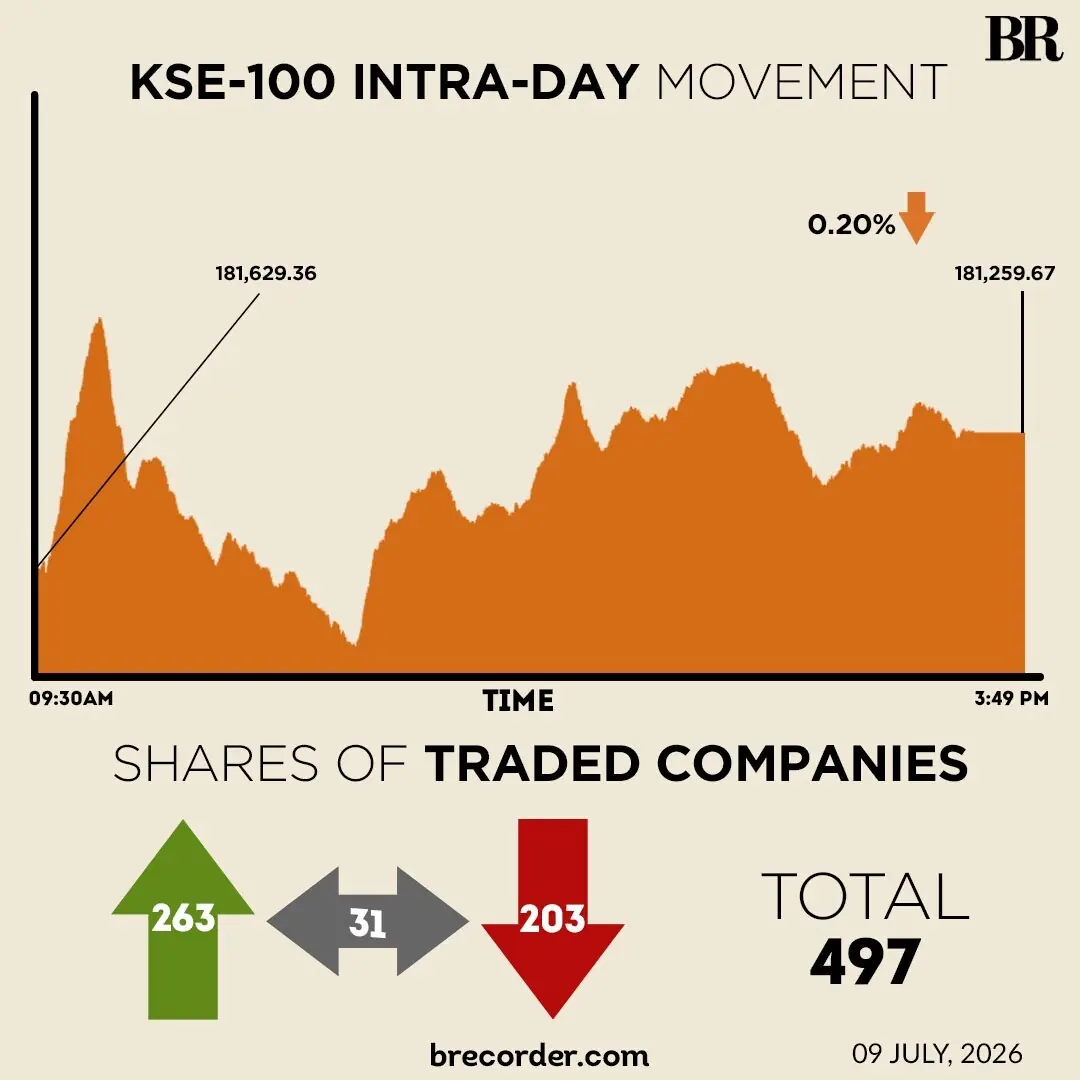
- Benchmark index settles at 181,259.67
The Pakistan Stock Exchange experienced significant volatility and a plunge due to escalating geopolitical tensions in the Middle East, which also drove up oil prices and impacted global markets.
- Pakistan Stock Exchange's volatile session.
- IMF's economic growth forecast for Pakistan.
- Geopolitical tensions and rising global oil prices.
- Impact on international bond and stock markets.
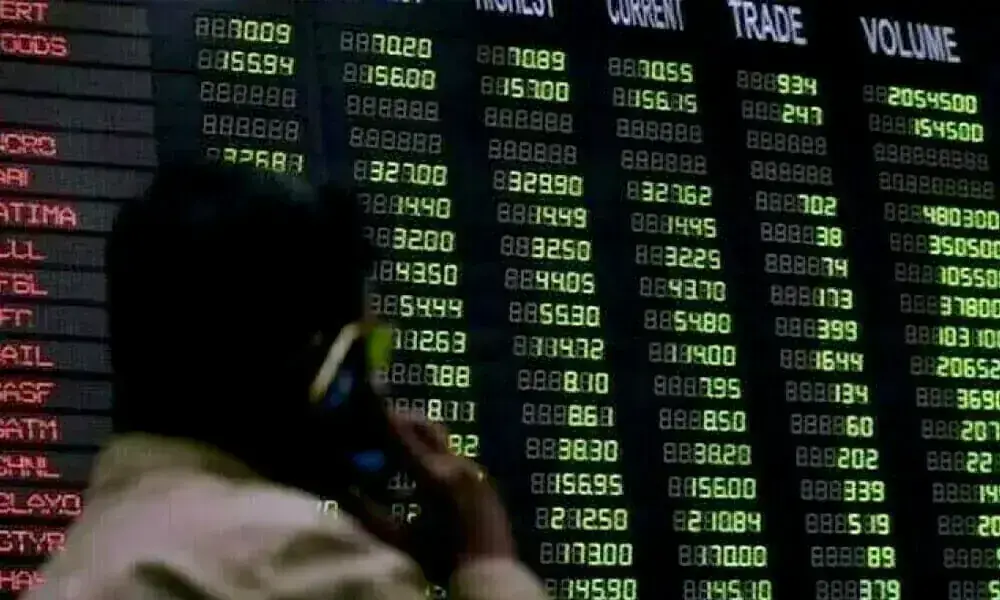
The Pakistan Stock Exchange (PSX) witnessed another volatile session on Thursday amid tense geopolitical situation, with the benchmark KSE-100 Index swinging sharply between gains and losses before ending the session marginally lower.
The market opened on a positive note, and the index surged to an intra-day high of 182,276.81, reflecting strong buying interest.
However, the momentum quickly faded as profit-taking emerged, dragging the benchmark to an intra-day low of 179,411.35 during late morning trade.
The market later staged gradual recovery, with sustained buying in select heavyweight stocks.
Despite the recovery, the KSE-100 settled at 181,259.67, down 369.69 points, or 0.20%.
“The benchmark KSE-100 Index remained under pressure on Thursday, extending its losing streak as persistent selling amid geopolitical concerns and cautious investor sentiment weighed on the market. The index traded in a volatile range, recovering partially from its intra-day lows but still ending the session in negative territory,” brokerage house Topline Securities said in its post-market report.
“Investor sentiment remained fragile as regional geopolitical tensions, elevated international oil prices, and uncertainty over global markets encouraged profit-taking and defensive positioning. Buying interest was observed in selected value stocks, helping the market recover from its day’s lowest level, though it was insufficient to reverse the overall bearish trend,” it added.
On the index contribution front, heavyweight stocks MEBL, MCB, PPL, ENGROH, and AKBL were the major drags on the benchmark index, collectively shaving approximately 521 points off the day’s performance, Topline said.
The International Monetary Fund (IMF) has projected Pakistan’s economy to grow by 3.5% in fiscal year 2026-27, falling short by 0.5 percentage points of the government’s 4% growth target.
In its latest World Economic Outlook (WEO) Update, released on Wednesday, the IMF also maintained its 3.6% GDP growth forecast for fiscal year 2025-26.
On Thursday, PSX suffered one of its steepest single-day declines as renewed geopolitical tensions in the Middle East sparked widespread panic selling, with investors rushing to reduce exposure after fresh US strikes on Iran and escalating concerns over a broader regional conflict pushed international oil prices sharply higher. The KSE-100 Index plunged 4,626.18 points, or 2.48%, to close at 181,629.37 points.
Internationally, Asian shares climbed on Thursday as semiconductors got a respite from heavy selling, though gains were capped by a surge in oil prices as a resumption of hostilities in the Gulf reignited inflation fears and hammered bonds.
Oil prices rose on Thursday as markets assessed the escalating conflict between the U.S. and Iran and its potential impact on efforts to end the war and fully reopen the Strait of Hormuz.
Brent crude futures were up 53 cents, or 0.68%, to $78.55 a barrel by 1148 GMT. US West Texas Intermediate crude futures gained 39 cents, or 0.53%, to $73.91 a barrel.
The Pakistani rupee posted marginal gain, against the US dollar in the inter-bank market on Thursday. At close, the local currency settled at 278.06, a gain of Re0.01 against the greenback.
Volume on the all-share index declined to 982.12 million from 1,551.04 million recorded in the previous close.
The value of shares decreased to Rs41.86 billion from Rs62.44 billion in the previous session.
Cnergyico PK was the volume leader with 211.68 million shares, followed by LSE Capital Ltd with 58.38 million shares, and Pak Refinery with 49.65 million shares.
Shares of 497 companies were traded on Thursday, of which 263 registered an increase, 203 recorded a fall, and 31 remained unchanged.
















Comments