


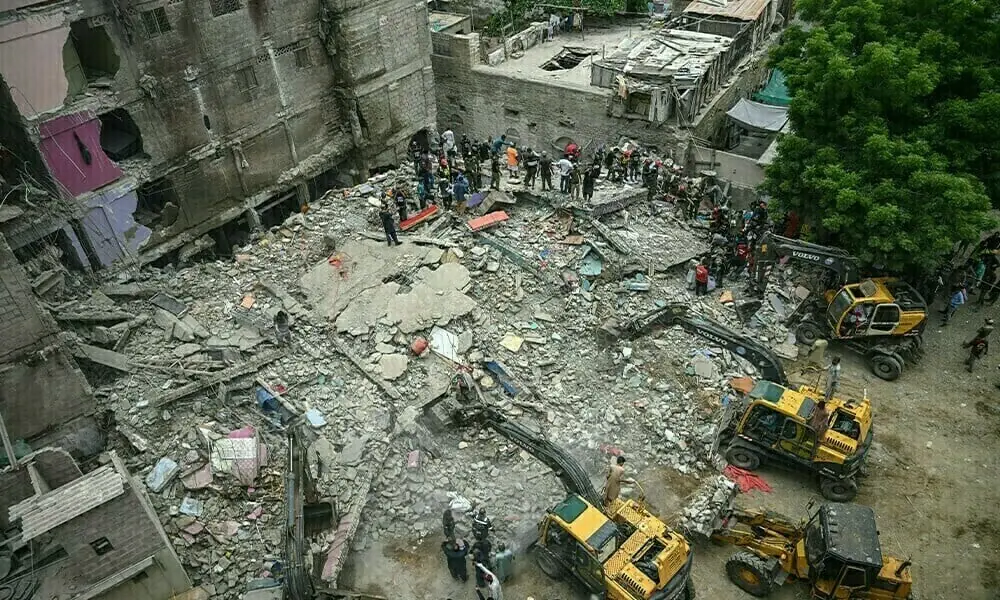

KARACHI: In a decisive move to avert potential loss of life, the Karachi administration has ordered immediate evacuation of all highly dangerous and dilapidated buildings in the city ahead of the monsoon season.
The decision was taken at a meeting chaired by the Commissioner of Karachi, Syed Hassan Naqvi, which was participated in by senior officials of the Sindh Building Control Authority, district administrations and the Sindh Culture Department.
Briefing the meeting, the SBCA revealed that a recent survey had identified 584 unsafe buildings in the city, of which 59 had been classified as extremely dangerous, and 29 of those fall under the category of heritage structures, posing additional challenges for the authorities.
A significant concentration of these buildings – over 90 percent – is located in District South. The district-wise breakdown includes 442 buildings in South, 73 in Central, 16 in East, 18 in Korangi, 28 in Keamari, 5 in Malir, and 2 in West.
The commissioner emphasized that safeguarding human lives was the administration’s foremost priority, directing immediate and coordinated action to evacuate occupants from the most dangerous structures.
He underlined the need for careful handling of heritage buildings while ensuring public safety.
The meeting decided that the SBCA would promptly issue evacuation notices for all extremely dangerous buildings and share a consolidated list with Deputy Commissioners. District administrations, in coordination with the SBCA, will launch targeted operations to ensure timely compliance.
Authorities also resolved that buildings deemed structurally unsafe would be demolished in accordance with their condition and legal requirements. Prior to enforcement, the SBCA will initiate a comprehensive public awareness campaign and widely publicize the list of hazardous buildings through multiple media channels.
It was further decided that non-compliance with evacuation notices would lead to strict enforcement measures, including disconnection of gas, electricity, and water services in coordination with relevant utility agencies.
To mitigate the impact on affected residents, the administration would undertake priority measures to facilitate temporary relocation and rehabilitation.
Copyright Business Recorder, 2026




















Comments