


Transactions above Rs100m in 6 months to be thoroughly scrutinized
- Govt will compare information of banks and tax department
From July 1, the government will scrutinize bank accounts with over Rs100 million transactions to cross-match data with tax records, aiming to combat under-reporting and non-compliance.
- New Section 165AB for financial transaction reporting by banks.
- Central Data Hub for algorithmic cross-matching of tax data.
- Confidentiality and digital processing of sensitive bank information.
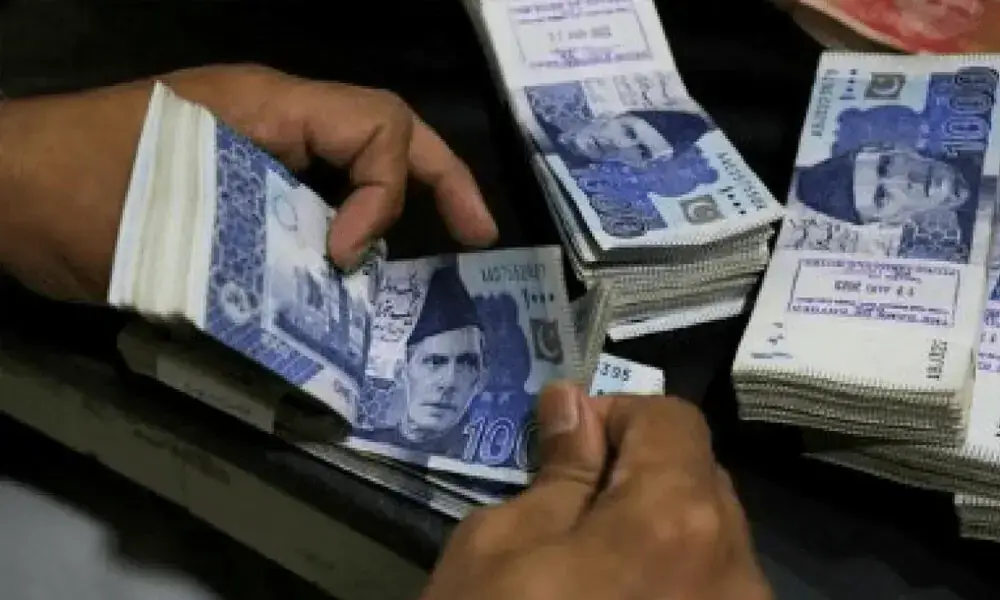

ISLAMABAD: The government, from July 1, will thoroughly scrutinize details of banks’ account holders whose deposits or withdrawals exceed Rs100 million during six months of a financial year to cross match information of banks and the tax department.
Finance Act 2026 issued on Monday has explained the procedure. The cross matching of data will be mainly used to check under-reporting of sales, overstatement of expenses and non-reporting of information.
Meanwhile, the State Bank of Pakistan (SBP) may establish, operate and maintain a secure centralised virtual repository of banking data, comprising such information, records, and financial transactions of persons maintained by the scheduled banks on the basis of unique identifiers, as may be prescribed by the Board and collect and provide data and results.
READ MORE: Digital banking: Q1CY26 transactions total Rs68trn: SBP
According to the details, a new Section 165AB (Reporting of financial transaction data by banking companies and financial institutions) has been inserted into the Income Tax Ordinance 2001.
Every banking company and Electronic Money Institution (EMI), notwithstanding any other law including the Banking Companies Ordinance, 1962, State Bank of Pakistan Act, 1956, and Protection of Economic Reforms Act, 1992, shall electronically upload specified financial transaction information to the Central Data Hub for algorithmic cross-matching of tax and bank data.
The information shall include details of account holders whose deposits or withdrawals exceed Rs100 million during a reporting period in any or all bank accounts, including particulars of deposits and withdrawals, opening and closing balances, peak credits and total credits.
The shared information shall be digitally processed and shall not be accessible to Income Tax Authorities during the cross-matching process.
In cases where a significant mismatch is identified, the Board’s digital system shall transfer the information to the Compliance Risk Management (CRM) system for further proceedings through the National Faceless Centre.
The Federal Board of Revenue (FBR) shall ensure strict confidentiality of information provided by banks and prevent any disclosure or misuse except as permitted under the law.
The reporting period shall comprise six months of a financial year, starting from July 1 to December 31 and January 1 to June 30, while the specified dates for reporting shall be January 31 and July 31 respectively.
The term “accounts” includes current, call, saving, fixed, term deposits and other forms of bank deposits; “peak credits” refer to the highest credit balance in all accounts of an account holder during the reporting period.
The “Central Data Hub” means the virtual data repository maintained by the Board through PRAL; and “Compliance Risk Management (CRM)” refers to a computer-based system for identifying and communicating compliance risks, including under-reporting of sales, overstatement of expenses and non-reporting of information.
Copyright Business Recorder, 2026






















Comments