




Pakistan has allowed remittances to compensate for stagnant exports, sluggish Foreign Direct Investment, low productivity, and weak industrial competitiveness.
This creates a dangerous illusion of stability.
Foreign exchange reserves supported by remittances and external borrowing can disappear rapidly if either source weakens.
Sustainable reserves are ultimately built upon internationally competitive exports and long-term productive local and foreign investment.
For much of the past years, Pakistan’s improving foreign exchange position has been presented as evidence that the economy is gradually stabilising. Official reserves have recovered, the exchange rate has become relatively stable, and fears of an immediate balance-of-payments crisis have receded.
While these developments deserve recognition, they also conceal a structural weakness that policymakers cannot afford to ignore. Pakistan’s external account today rests overwhelmingly on one variable over which the country exercises remarkably little control: workers’ remittances.
The numbers tell a compelling story.
In FY2025, overseas Pakistanis remitted approximately USD 38 billion, the highest annual inflow in the country’s history. Merchandise exports, despite repeated government promises of export-led growth, remained around USD 32 billion, reflecting years of stagnation. Foreign Direct Investment barely crossed USD 2 billion, underscoring the lack of investor confidence in Pakistan’s business environment.
The message is unmistakable. Overseas Pakistanis now generate substantially more foreign exchange than Pakistan’s exporters, while foreign investors have become almost irrelevant in financing the country’s external sector. This represents a profound transformation of Pakistan’s foreign exchange architecture.
Traditionally, a country’s reserves are sustained through a combination of export earnings, foreign investment, tourism receipts, services exports and prudent fiscal management.
Pakistan, however, increasingly relies on three sources: remittances, multilateral borrowing—particularly from the IMF and other international lenders—and occasional financial support from friendly countries.
This is hardly a sustainable model for a nation of nearly 250 million people.
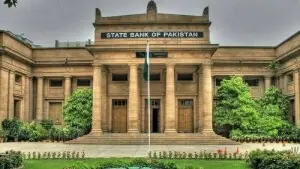
Strictly speaking, remittances do not become official reserves automatically. They are private transfers received by households through the banking system. However, these inflows improve dollar liquidity, strengthen the current account, reduce pressure on the rupee and enable the State Bank of Pakistan to purchase foreign exchange from the interbank market, thereby rebuilding official reserves.
In effect, overseas Pakistanis have become Pakistan’s largest external stabilisation fund.
Their contribution has been extraordinary. During every major economic crisis over the past two decades—from political instability to floods, the COVID-19 pandemic and repeated IMF programmes—they have continued to send money home, cushioning millions of households while indirectly protecting the country’s external finances.
Yet no serious economic strategy can rely indefinitely on the generosity of its diaspora.
The first concern is concentration risk. Nearly two-thirds of Pakistan’s remittances originate from the Gulf region, particularly Saudi Arabia and the United Arab Emirates. This geographic concentration exposes Pakistan to developments entirely beyond its control.
The Middle East is entering one of its most uncertain geopolitical phases in decades. The Iran-Israel confrontation, continuing instability across the wider region, and the possibility of disruptions to energy markets all create uncertainties for Gulf economies. Any prolonged regional conflict could slow economic activity, postpone infrastructure projects and affect employment opportunities for expatriate workers.
Equally significant are structural changes already underway.
Saudi Arabia’s Vision 2030 seeks to increase employment opportunities for Saudi nationals through progressive localisation of the workforce. Similar labour nationalisation programmes exist across several Gulf States. At the same time, automation, artificial intelligence and digital technologies are beginning to reduce demand for low- and semi-skilled foreign labour.
Pakistan has so far benefited from strong labour demand in the Gulf. There is no guarantee that this favourable environment will continue indefinitely.
A second vulnerability is demographic. Earlier generations of Pakistani migrants often regarded overseas employment as temporary. They worked abroad for a decade or two before returning home, maintaining strong financial ties with their families. Today’s migration patterns are different. Increasing numbers of skilled professionals migrate permanently with their families, acquire foreign citizenship and gradually integrate into their host societies.
Economic history suggests that permanent settlement eventually weakens remittance flows across generations.
Pakistan has failed to convert remittance inflows into productive investment. Most transfers understandably finance household consumption, healthcare, education and housing. While these expenditures improve living standards, they generate limited export capacity or industrial productivity. The country continues to consume foreign exchange rather than creating new sources of it.
Contrast this with East Asian economies, where export competitiveness, manufacturing and foreign investment became the principal engines of reserve accumulation. Workers’ remittance is an add-on to the main sources. No country can permanently outsource the financing of its balance of payments to its expatriate workforce. Until exports, productivity and investment replace remittances as the principal drivers of foreign exchange earnings, Pakistan’s reserves will remain stronger than they appear, yet more fragile than they seem.
Copyright Business Recorder, 2026
The writer is a former President OICCI; Global Business Leader and Strategic Affairs Analyst


















Comments