


Treaties, when convenient
India's actions regarding the Indus Waters Treaty threaten international agreements, raising concerns about the weaponization of shared resources and the stability of the global legal order.
- India's projects altering the Indus river system.
- The Indus Waters Treaty's resilience through past conflicts.
- Global implications of undermining international treaty obligations.
- Humanitarian and economic impact of water scarcity in Pakistan.
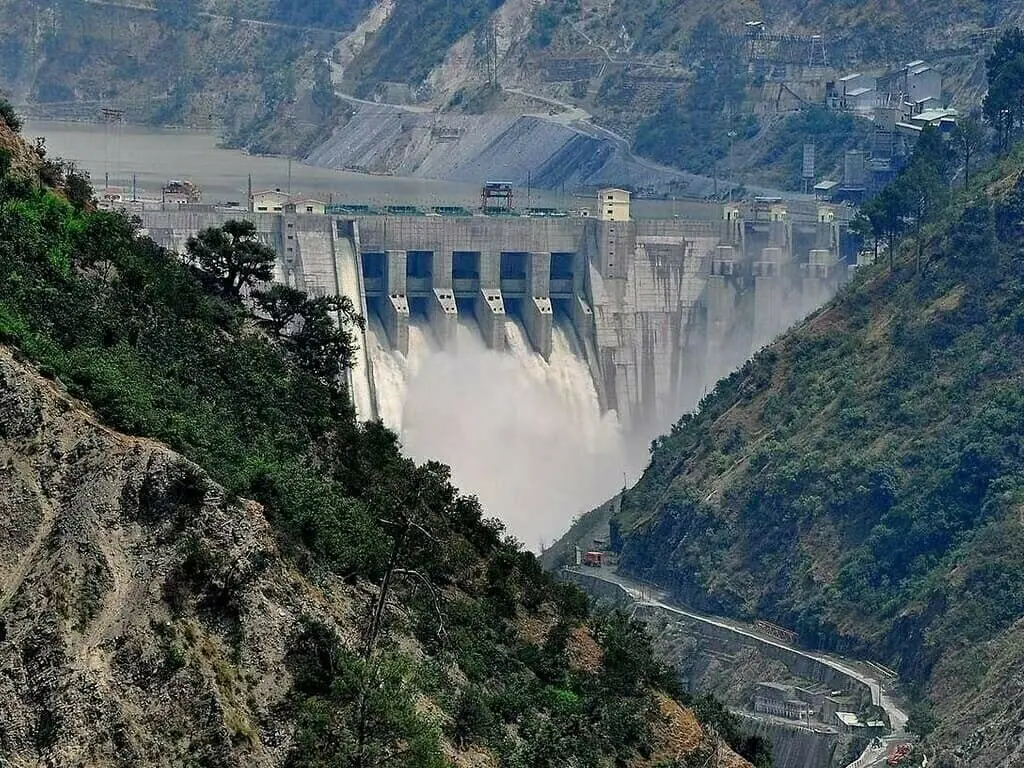
EDITORIAL: A treaty that survives wars, crises and decades of political hostility only to be set aside unilaterally when it becomes politically inconvenient raises uncomfortable questions about the future of international agreements.
India’s continuing attempt to undermine the Indus Waters Treaty has transformed what was once viewed as a bilateral dispute into a much larger issue concerning the sanctity of treaties, the weaponisation of shared resources and the stability of the international legal order itself.
Pakistan’s concerns are not hypothetical. They are rooted in actions as well as statements. Deputy Prime Minister Ishaq Dar’s warning that India is pursuing at least 17 projects designed to alter the Indus river system deserves serious international attention because the implications extend far beyond South Asia.
Water is not merely another strategic commodity. For millions of people it is a prerequisite for survival, agriculture, economic activity and public health.
The Indus Waters Treaty was specifically designed to insulate water cooperation from political disputes. That achievement was remarkable.
The agreement survived multiple wars between Pakistan and India, periods of intense hostility and numerous political crises. It became one of the few examples of a durable institutional arrangement functioning despite profound disagreements elsewhere in the bilateral relationship.
That history makes the current situation especially troubling. India’s decision to suspend participation in the treaty framework and pursue projects that Pakistan believes threaten the integrity of the river system represents a challenge not only to the agreement itself but also to the principle that treaty obligations should remain binding regardless of changing political circumstances.
The consequences of such a precedent could be far-reaching. Shared river basins exist across Asia, Africa, Europe and the Americas.
Upstream and downstream states routinely depend on agreements governing water allocation, storage, flood management and dispute resolution. If treaty obligations can be reinterpreted or suspended whenever they become politically inconvenient, the resulting uncertainty would extend well beyond the Indus basin.
Pakistan’s position is therefore entirely reasonable. The country is not calling for confrontation. It continues to seek resolution through dialogue, diplomacy and established legal mechanisms. That approach reflects the very framework envisioned by the treaty itself. Disagreements were always expected to arise.
The treaty contains mechanisms for addressing them. Unilateral action was never intended to be one of those mechanisms.
There is also a profound humanitarian dimension to the issue. The Indus river system supports the livelihoods of millions of Pakistanis and underpins one of the world’s largest irrigation networks. Any effort to manipulate, restrict or strategically leverage those flows inevitably affects food security, economic stability and human welfare. Water shortages in an already water-stressed country carry consequences that extend far beyond technical disputes over river management.
The timing makes the issue even more serious. Pakistan is already confronting declining per capita water availability, mounting climate pressures and increasing variability in water flows. Against that backdrop, uncertainty regarding trans-boundary water arrangements introduces risks that no responsible government can afford to ignore.
India’s actions also sit uneasily with its broader international aspirations. Countries seeking greater influence in global affairs are generally expected to strengthen international norms, not weaken them.
Respect for treaty obligations has long been considered one of the foundations of a predictable international order. Selective adherence undermines confidence not only in specific agreements but also in the broader system of rules upon which international cooperation depends.
The international community should therefore resist any attempt to normalise the weaponisation of water.
Today’s dispute involves the Indus basin; tomorrow’s could involve any number of trans-boundary river systems around the world. Once the principle is established, its application rarely remains confined to a single case.
The debate is ultimately larger than Pakistan and India. It concerns whether agreements remain binding when they become politically inconvenient, or whether power alone determines outcomes.
Pakistan is correct to insist that treaty obligations matter. The alternative would introduce a level of uncertainty that few regions of the world can afford and that no responsible international order should accept.
Copyright Business Recorder, 2026





















Comments