



Why a narrow, low-value and cotton-locked export base can no longer carry the economy
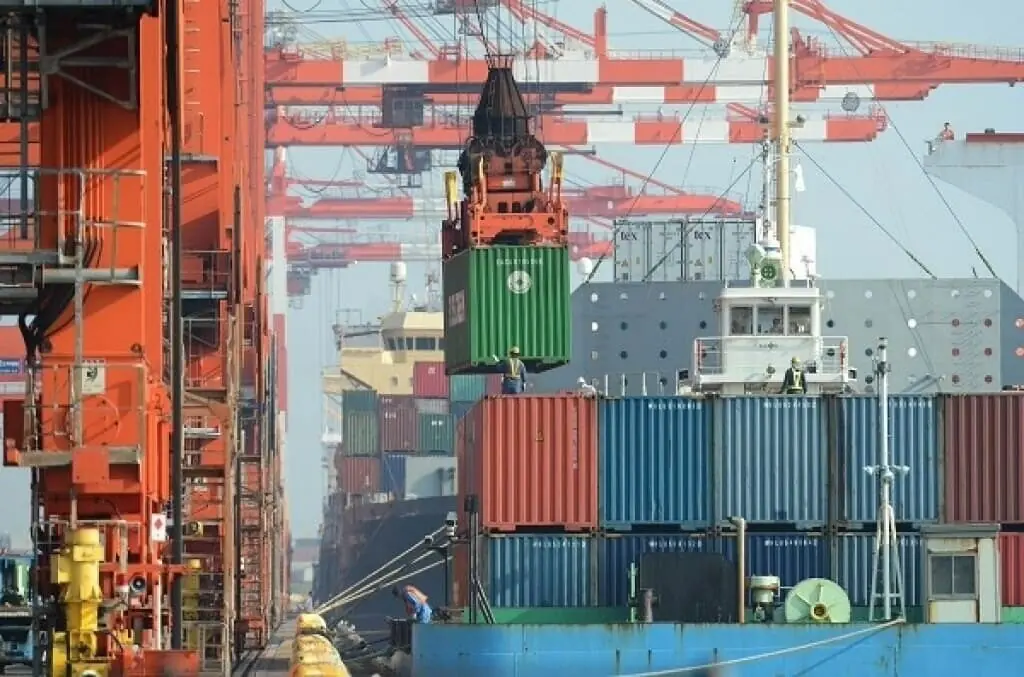
Pakistan does not merely have an export problem. It has an export model problem. The country sells too little, in too few categories, through too few firms, with too little innovation, too little capital-market discipline and too much dependence on a cotton base that has been allowed to collapse.
For years, Pakistan has spoken about exports as if they are a national priority. In practice, exports have been treated as a residual activity: useful when dollars are short, praised when remittances are weak, and punished whenever the fiscal system needs easy revenue. The result is visible in every balance-of-payments crisis. Pakistan imports like an economy plugged into the modern world, but exports like an economy still trapped in a narrow, low-value industrial past.
The numbers tell only part of the story. Export receipts may rise in some years, especially when cotton prices move up, rice prices spike, the rupee depreciates, or competitors face temporary disruptions. But this is not the same as genuine export competitiveness. Real competitiveness means higher productivity, better products, deeper markets, stronger firms, wider ownership, better quality, innovation and resilience. On those measures, Pakistan remains badly behind.
Exports as a share of GDP remain low by any serious standard. More importantly, they have not shown the sustained upward shift that an economy of Pakistan’s size and needs requires. A country with large external financing requirements, heavy energy imports, machinery needs, food import pressures and debt servicing obligations cannot survive on an export base that remains small, concentrated and fragile. Hoping that remittances, IMF programmes and occasional commodity windfalls will fill the gap is not policy. It is prayer with spreadsheets.
The illusion of export growth
Pakistan’s export performance often looks better in nominal dollars than it really is. Once adjusted for inflation, population growth, exchange-rate depreciation and commodity-price cycles, the picture is far less flattering. Much of the so-called growth has come from price effects rather than structural capability. Cotton gets more expensive, textile export values rise. Rice prices improve, export numbers look healthier. The rupee weakens, some exporters temporarily breathe easier. None of this proves that Pakistan has built a stronger export economy.
The economy remains stuck in a pattern where exports do not expand fast enough to finance imports, technology, energy and growth. That is why every few years Pakistan finds itself back in the same room, signing the same conditions, negotiating the same rescue packages and pretending that this time the cycle will be different. It will not be different until exports are different.
The basic failure is that Pakistan has not moved from selling basic goods to selling capability. It has not converted its firms into global competitors, its agriculture into a secure industrial base, its labour into a productive workforce, or its textiles into a diversified high-value platform. The country is still too dependent on low-margin production and buyer-driven supply chains. That keeps export receipts weak and bargaining power weaker.
A narrow export basket cannot carry a large economy
Pakistan’s export basket is painfully narrow. Textiles dominate. Rice, leather, sports goods, surgical instruments, some food products, chemicals and IT services add to the picture, but not enough to transform it. There are bright spots, but they are too few and too scattered. The palette of export items remains small, and the country has not developed enough presence in engineering goods, processed foods, branded consumer products, electronics, technical textiles, medical devices, industrial components or higher-value services.
This lack of diversity is dangerous. A country that depends on a handful of products is exposed to every shock in those products: raw material shortages, price swings, compliance changes, buyer pressure, energy costs, climate risk and policy mistakes. When more than half the export effort is tied to textiles and textiles themselves are tied to cotton, imported inputs, energy pricing and buyer margins, the economy becomes vulnerable by design.
Successful export economies do not remain trapped in one or two categories. They build ladders. They begin with basic production, then climb into design, components, branding, technology, logistics, quality systems and services. Pakistan has too often stayed on the lower rungs and then complained that the view has not improved.
Textiles are still central, but the old textile model is exhausted
Textiles remain Pakistan’s export backbone, but the backbone is under severe stress. The sector faces high energy costs, taxation uncertainty, delayed refunds, expensive finance, weak logistics, unpredictable policy, poor infrastructure and a domestic cost structure that has steadily eroded competitiveness. Many textile exporters have survived not because the ecosystem is supportive, but because they have developed private coping mechanisms around a broken public system.
That survival should not be mistaken for strength. A large part of the textile export base remains concentrated in yarn, fabric, towels, denim, knitwear, home textiles and basic garments. These products matter, but they do not provide enough value addition or pricing power. Global buyers are ruthless. They reward speed, compliance, design, traceability, innovation and reliability. They do not reward nostalgia.
Pakistan has continued to compete too heavily on low cost, currency adjustment and raw-material proximity. But low cost is no longer low when energy prices rise, taxes pile up, refunds are delayed, labour productivity remains weak and imported inputs become expensive. Currency depreciation may offer temporary relief, but it also raises the cost of imported cotton, machinery, dyes, chemicals and other inputs. Devaluation is not an industrial strategy. It is usually a symptom of not having one.
The cotton base has collapsed, and the industry did too little to protect it
Pakistan built its largest export industry on cotton. That natural advantage has now been badly weakened. Local cotton production has fallen sharply from historical levels, while the textile sector’s demand for cotton remains far higher than domestic supply. The result is growing dependence on imported cotton, larger working-capital requirements, greater exposure to international prices, and a weakening of domestic value addition.
This crisis did not appear overnight. The signs were visible for years: weak seed technology, pest attacks, climate stress, poor water management, contamination, declining farmer interest, competition from other crops and weak research-extension systems. Yet the industry did far too little to backward-integrate with cotton farming. Too many mills behaved as if cotton would continue to arrive at the gate regardless of what happened in the fields.
That was a strategic mistake. Large textile groups should have invested in contract farming, seed development, farmer extension services, mechanisation, better picking practices, cleaner ginning, bale traceability and quality premiums. Instead, the industry largely relied on imported cotton when the local crop failed. That may keep the machines running for a season, but it does not build national competitiveness.
A textile economy that does not secure its cotton base is living off borrowed time. Pakistan cannot call itself a textile powerhouse while treating cotton farming as someone else’s problem. The field and the mill are part of the same chain. Break the field, and sooner or later the mill pays the price.
Pakistan missed the global shift from cotton to man-made fibres
The deeper textile failure is not only the loss of cotton. It is also the failure to capture the global shift toward man-made fibres. World textile and apparel trade has moved heavily toward synthetic and man-made fibre materials. Polyester, viscose, nylon, blends, performance fabrics and technical textiles now dominate large parts of global demand. The world moved on. Pakistan stayed too cotton-minded.
This was not merely a private-sector failure. It was also a policy failure. Man-made fibre materials were never allowed to become a full part of Pakistan’s export chain because the taxation and customs regime made them expensive, complicated and unattractive. Instead of treating imported intermediate materials as export inputs that should flow freely into value-added production, the system treated them as revenue targets. That is how countries tax themselves out of export markets.
The consequences are obvious. Pakistan remained overexposed to cotton products while global demand shifted toward synthetic blends, active wear, performance wear, outdoor fabrics, technical textiles, non-wovens, functional apparel and recycled materials. Countries that adapted captured the change. Pakistan largely watched from the side-lines and then wondered why textile exports were not breaking out.
The problem is even worse for recycled materials. Recycled textile inputs are increasingly important in global supply chains because buyers demand sustainability, traceability and circularity. Yet recycled material is not properly classified as such for import purposes by FBR and therefore attracts full import duties. That is policy absurdity in its purest form: the world is rewarding recycled inputs, while Pakistan’s customs system is treating them like ordinary dutiable imports. The message to exporters is simple: innovate if you like, but pay first.
Non-traditional fibres and new products remain neglected
Pakistan has also failed to develop enough new export products using non-traditional fibres. Hemp, bamboo, linen, viscose, modal, lyocell, recycled polyester, organic blends and technical fibre combinations could have opened new market segments. Instead, the product base remained conservative and cotton-heavy. This limited Pakistan’s ability to serve premium, sustainability-focused and performance-driven buyers.
The future of textiles is not only spinning, weaving and stitching. It is material science, design, function, sustainability and brand positioning. Global buyers are looking for moisture management, stretch recovery, thermal properties, recycled content, biodegradability, low-water dyeing, traceability and certified supply chains. Pakistan still speaks too much in the language of bales and too little in the language of materials, margins and markets.
Without product development, Pakistan remains stuck in price competition. And price competition is a cruel game. There is always someone cheaper, someone closer to the market, someone with better logistics, or someone with better policy support. Innovation is the only way out.
The missing commercial importer culture
Another major obstacle has been the failure to develop a broad-based commercial importer culture for imported intermediate goods. Modern export industries do not operate by forcing every manufacturer to import every input directly. They rely on efficient markets for intermediate goods, specialised importers, bonded warehouses, trusted suppliers, digital inventory systems and fast transfer of duty-free inputs between firms.
Pakistan has not built that system properly. Imported intermediate goods often get trapped in customs complexity, documentation burdens, duties, taxes and firm-specific restrictions. Exporters who need specialised fabrics, fibres, trims, chemicals, accessories or recycled inputs cannot rely on a deep, flexible domestic market for imported intermediate goods. This keeps product development slow and expensive.
The absence of a digital platform where customs-free imported inputs can move legally and transparently from company to company has been a major barrier to export expansion. If one exporter imports a specialised input duty-free but another exporter needs it, the system should allow regulated transfer through a digital platform with full traceability. Instead, policy often treats flexibility as suspicion. The result is predictable: firms import less variety, develop fewer products and remain trapped in a narrow export range.
A modern export system needs a marketplace for inputs as much as it needs factories. Without intermediate-goods liquidity, there can be no serious diversification. A country cannot build broad textile exports if every new fibre, fabric, trim or recycled input has to fight a private war with customs before it can become part of production.
Ownership is too narrow and capital-market access is too weak
Pakistan’s export weakness is also an ownership problem. Too many exporting firms remain privately held, family-controlled and dependent on bank borrowing. The ownership base is narrow. Few exporters have used stock exchange listing to broaden capital, strengthen governance, professionalise management and reduce dependence on expensive debt. This has kept firms small, conservative and vulnerable to interest-rate shocks.
(To be continued)
Copyright Business Recorder, 2026

PUBLIC SECTOR EXPERIENCE: He has served as Member Energy of the Planning Commission of Pakistan & has also been an advisor at: Ministry of Finance Ministry of Petroleum Ministry of Water & Power
PRIVATE SECTOR EXPERIENCE: He has held senior management positions with various energy sector entities and has worked with the World Bank, USAID and DFID since 1988. Mr. Shahid Sattar joined All Pakistan Textile Mills Association in 2017 and holds the office of Executive Director and Secretary General of APTMA.
He has many international publications and has been regularly writing articles in Pakistani newspapers on the industry and economic issues which can be viewed in Articles & Blogs Section of this website.

















Comments