


Select Technologies bets on Pakistan’s appliance boom as IPO funds expansion
- Localisation key to maintaining competitive edge, says Air Link CEO says
Select Technologies' successful IPO will fund its expansion into Pakistan's consumer appliance market, driven by a strong localisation strategy and diversification beyond smartphones.
- IPO funding for new production facility expansion.
- Diversification into higher-margin consumer appliances.
- Strategic focus on localisation and domestic manufacturing.
- Untapped potential in Pakistan's appliance market.
- Enhanced corporate governance and investor confidence.
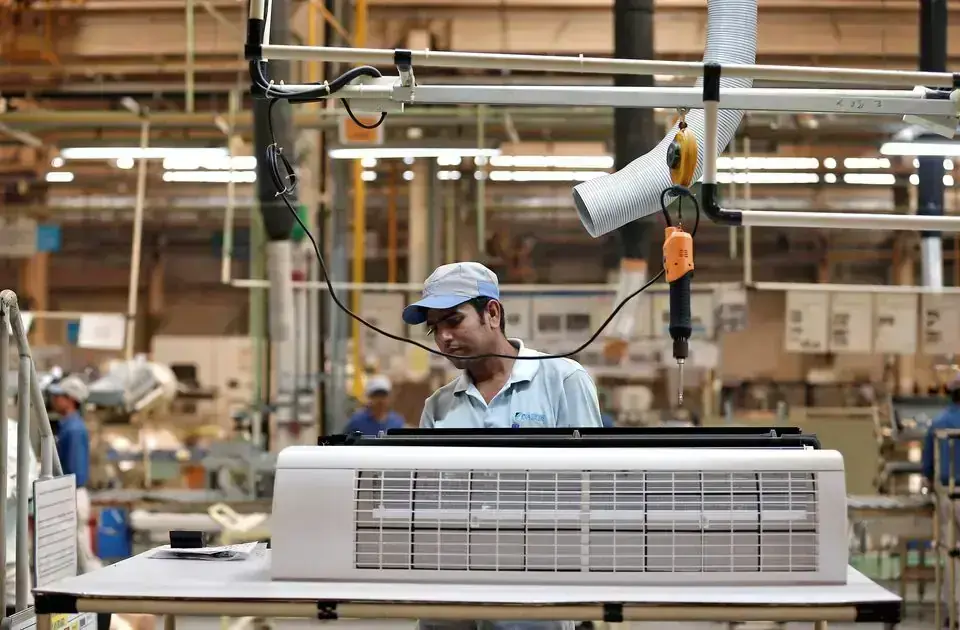

Select Technologies Limited, the manufacturing arm of Air Link Communication Limited, is betting on Pakistan’s consumer appliance market and a broader localisation strategy to drive its next phase of growth, as it conducted a successful initial public offering (IPO) at the Pakistan Stock Exchange (PSX).
The company is set to raise a total of Rs3.02 billion through its IPO as it achieved a price of Rs34 per share during the two-day Dutch bidding that ended last Tuesday.
The technology firm is selling a total of 88.88 million shares at the strike price of Rs34 per share to investors in the first IPO of the new fiscal year 2026-27, as shares of the company will be available for public trading at the stock market from July 2026.
The company, which manufactures Xiaomi smartphones and has recently partnered with Chinese electronics giant Hisense, plans to utilise the proceeds to expand production capacity at its new facility in the Sundar Green Special Economic Zone (SEZ), located in Punjab, while strengthening its position in televisions, air conditioners and other consumer electronics segments.
Speaking to Business Recorder, Muzzaffar Hayat Piracha, CEO of Air Link Communication Ltd, said the company decided to go public at a time when Pakistan is increasingly focusing on localisation and domestic manufacturing.
“To remain market competitive, localisation is essential. If you do not localise, you will not remain competitive in the future, whether in the domestic market or exports,” Piracha said.
He added that the listing would not only provide access to long-term capital but also strengthen corporate governance, manufacturing capabilities and investor confidence.
The IPO comes at a time when Pakistan’s capital market is exhibiting strong momentum, with recent listings on PSX delivering robust gains and reinforcing investor confidence. As of June 6, 2026, 13 new listings on PSX have delivered an impressive average return of 47%.
Meanwhile, Select seeks to diversify beyond smartphones and capitalise on what management views as a significantly larger growth opportunity in appliances.
While smartphones are expected to continue delivering stable growth, the company believes televisions and air conditioners will become key revenue drivers over the medium term.
“Appliances are a very vast world. From purifiers to refrigerators to washing machines, there are numerous product categories. We wanted to unlock the full potential of the company, and for that, access to financial markets is important,” Piracha said.
According to the company, the new Sundar Green SEZ facility will expand annual production capacity to seven million smartphones, 360,000 Smart TVs and 400,000 air conditioners. The project also benefits from SEZ incentives and tax exemptions available until 2035.
The management views the move to Sundar Green, offering multiple benefits including tax incentives, location, and operational, as a strategic necessity, citing infrastructure constraints at its existing facility.
The company expects appliances to play an increasingly important role in future earnings due to their superior margins. While smartphone margins are projected at 8-9% under normal conditions, televisions and air conditioners are expected to generate margins of 15-20%, helping lift overall profitability.
Select argues that Pakistan’s appliance market remains significantly underpenetrated. Company estimates show that only 16.5% of households own air conditioners compared with smartphone penetration of around 72%, offering significantly more upside and faster growth potential.
Piracha believes changing consumer behaviour, rising temperatures and widespread solar adoption are creating favourable demand conditions.
“There was a time when products like air conditioners were considered luxury items. Today, because of increasing temperatures and solarisation, they have become necessities for many households,” he said.
The company also sees significant growth potential through its partnerships with Xiaomi and Hisense, both of which have extensive product ecosystems beyond their flagship categories.
“Xiaomi alone has hundreds of products globally. Hisense also has a complete range of home appliances. If we successfully introduce more of these categories over the next four to five years, we believe we can outperform our current projections,” Piracha said.
Management has projected approximately Rs120-122 billion in revenue over the next five years, although exports are not included in the current financial model.
The company maintains that exports could emerge as a meaningful upside if government policies support outbound shipments of locally manufactured electronics.
“Exports are an added benefit. Our immediate focus is to meet domestic demand, which remains substantial. Once localisation reaches meaningful levels, exports will become a natural next step,” Piracha said.
Localisation remains a central pillar of the company’s long-term strategy. Select is targeting around 40% localisation in its air-conditioner business through the domestic sourcing of plastic parts, metal components, packaging materials and other inputs.
The company believes local manufacturing will not only reduce foreign exchange outflows but also improve competitiveness and support Pakistan’s broader industrialisation efforts.
Piracha argued that Pakistan’s long-term economic sustainability depends on strengthening manufacturing and exports.
“Without manufacturing, Pakistan cannot export. If the country does not expand exports, it will remain dependent on external financing. Local manufacturing and localisation are essential for reducing the trade deficit and creating jobs,” he said.
The company also expects its expansion plans to contribute to employment generation. Direct workforce numbers are projected to increase from roughly 1,800-2,000 employees currently to around 3,000 workers following the new facility’s expansion, while additional jobs are expected to be created across supporting industries.
Reflecting on Air Link’s own listing in 2021, Piracha said public ownership helped strengthen governance standards and transform the company into a professionally managed enterprise.
“When a company becomes listed, it moves beyond a family structure and becomes part of a corporate system. That is one of the biggest lessons we learned from Air Link’s listing,” he said. “Our objective is not just to raise money. We want to build a company with strong governance, transparency and the ability to scale over the long term.”






















Comments