


The price of power
Pakistan's energy crisis is a "crime scene" rooted in exploitative power contracts, signed repeatedly since 1994, guaranteeing payments to producers regardless of demand, leading to massive circular debt and public burden.
- Pakistan's power contracts designed for extraction, not illumination.
- The origins and growth of Pakistan's circular debt.
- How Pakistan's power policies differ from its neighbors.
- The burden of capacity payments and petroleum levies.
- Political will needed to dismantle exploitative power agreements.
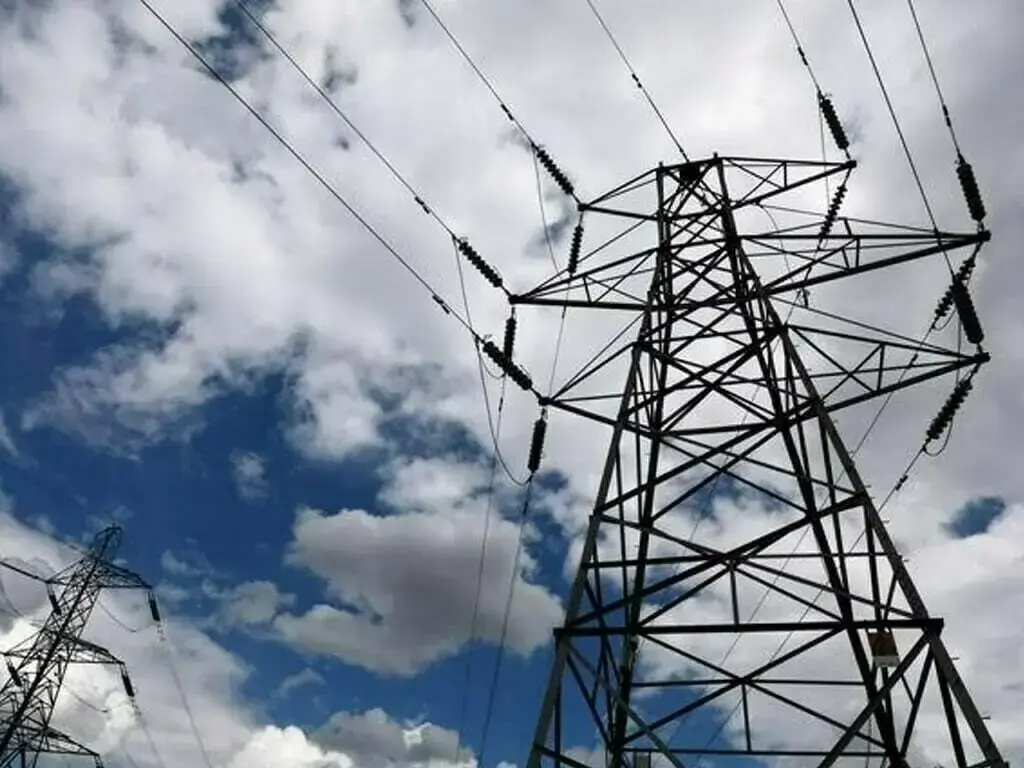

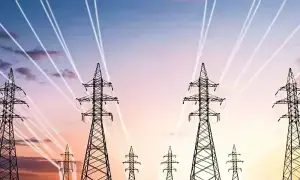
Pakistan does not have an energy crisis. It has a crime scene. The lights flicker — not because there is no electricity, but because the machinery built to deliver it was designed, from the very beginning, to extract rather than illuminate.
The wires run through every home, but the money runs only one way: outward, relentlessly, toward investors seated in comfort while 260 million souls pay for power they often never receive. This is the story of how a nation was shackled — not by enemies at its borders, but by the hands of its own ministers, their signatures drying on contracts that should never have been signed.
When the World Bank arrived in South Asia in the 1990s with its model for Independent Power Producers, it carried a standard template: take-or-pay contracts, capacity payments guaranteed regardless of actual electricity dispatched, sovereign guarantees to protect investors, and arbitration seated not in Islamabad, not in Pakistan, but in London. It was a document written for investors, by investors. India read that template and rewrote it.
Bangladesh read it and localised it. Pakistan signed it whole — no clause altered, no comma shifted, no protection written for its people. India, under its Electricity Act of 2003, placed all dispute resolution within its own regulatory framework, ensuring no power producer could bypass the national regulator to invoke foreign arbitration. Disputes stayed home. Sovereignty stayed intact. Bangladesh followed the same instinct — in late 2025, its High Court halted international arbitration proceedings in Singapore, asserting that matters of national interest belonged to national courts. Both neighbours looked at the same dangerous document and said: Not in our house. Pakistan said: Come in, make yourself comfortable, here are the keys.
The Power Policy of 1994 was Pakistan’s first great surrender, where capacity factors for thermal plants were set at 60 percent — meaning investors were guaranteed payment for 60 percent of maximum possible output, whether the grid needed the electricity or not. The state borrowed. Circular debt was born in that moment, a quiet monster that would grow with every passing year. Then came 2002, and the same architecture was rebuilt, brick by identical brick. Somewhere, in some archive, there must be men who signed both documents and slept soundly afterwards. But the cruelest chapter was yet to come, because in 2015, when India’s reforms were decades old and Bangladesh’s legal innovations were publicly documented, Pakistan signed again. Word for word. Comma for comma. The same World Bank template from the 1990s, arbitration in London. Only this time, for the new wave of coal and LNG plants, the capacity factor was not 60 percent. It was raised to 80 percent. It was not negligence. Negligence does not repeat itself so precisely across three decades.
To understand what the 80 percent capacity guarantee means in human terms, imagine paying your neighbour’s full salary every month — whether he works or not, whether you need him or not. Now multiply that neighbour by dozens of coal and LNG plants, each guaranteed 80 percent of their maximum possible earnings, regardless of whether a single Pakistani home needed a single unit of their electricity. Pakistan’s installed generation capacity today exceeds 45,000 megawatts, yet actual demand — the electricity that homes, factories and hospitals genuinely require — is far lower. The grid cannot absorb what has been built. Yet the contracts do not care about demand. They care only about the guarantee. The result is a cascading catastrophe: capacity payments for electricity never generated, debts piled upon debts, tariffs raised upon tariffs, and the circular debt metastasizing into something that now infects every artery of the national economy.
And, as the circular debt swelled beyond the reach of ordinary taxation, it gave birth to another affliction: the petroleum levy. A charge quietly imposed on every litre of petrol and diesel that every Pakistani buys, every single day — a tax not announced in parliament with honesty, not debated in public with transparency, but engineered in the shadows to plug the haemorrhage that the IPP contracts had opened. The citizen who cannot pay his electricity bill now also cannot afford to fill his motorcycle. The mother who cuts meals to manage the monthly tariff also pays the levy at the pump without knowing why. The circular debt that was born in the Power Policy of 1994 has now reached into every pocket, making the life of 260 million people something that can no longer be called living. It is endurance. It is bare, grinding, daily endurance.
Here lies perhaps the most damning indictment of all: the Government of Pakistan established two state-owned entities — the National Power Parks Management Company, which sells electricity, and the Central Power Purchasing Agency, which buys it. Both operate under the same Secretary of Power. They are, in every meaningful sense, arms of the same state, negotiating with each other on behalf of the same public. Yet when these two arms of the Pakistani state wrote their Power Purchase Agreements, they too placed arbitration in London. What does it say about a government when it does not trust its own courts to settle disputes between its own companies? Pakistan’s judiciary ranks among the lowest in the world, but that ranking was not handed down by God — it was constructed, deliberately, by the same political class that chose London over Islamabad and told the world, and its own people, that Pakistani justice was not worth having.
From 2013 to 2018, Pakistan’s media were flooded nightly with the faces of ministers — the Minister of Planning, the Minister of Petroleum, the Prime Minister himself — announcing megawatts, celebrating investment, promising a future lit by Pakistani ambition. They spoke of a game-changer. Behind those words, behind that curtain of slogans and statistics, were contracts that mortgaged generations. And today, those who beat the drums of renegotiation, who stand at podiums and declare the IPP agreements are being reformed, who promise that bills will fall, the bills continue to rise. What happened behind that iron curtain must be made public. Every amendment, every side letter, every clause quietly dropped or added — the 260 million who paid for these contracts have earned the right to know what was done in their name.
The myth of unbreakable PPAs. It is widely believed that Power Purchase Agreements are like holy books sent from heaven. However, contrary to this popular belief, these contracts are not sacred, divinely ordained texts; they are entirely breakable. To claim that these agreements cannot be dismantled by a skilled engineer is patently false.
Based on my 38 years of rigorous contract management—having scrutinised every single page—I can confidently assert that these PPAs can be dismantled. Embedded deep within their own clauses, sub-clauses, and annexures lie the exact legal instruments needed to secure relief.
However, extracting that relief demands fierce political will. And that will can only exist if the government possesses the courage to expose exactly what was done—and precisely who did it. The Government of Pakistan will not do it. It cannot acknowledge the crime without implicating itself. And so the circular debt grows, the bills rise, the petroleum levy bleeds the poor at every filling station, the darkness deepens, and 260 million people continue to pay — for electricity they did not receive, under contracts they never read, negotiated in a city they will never visit, arbitrated in a court they cannot afford.
These PPAs with IPPs were not merely bad policy. They were the original sin from which every subsequent suffering descended — the circular debt, the capacity payments, the petroleum levy, the unaffordable bills, the borrowed future. And to those who signed them, who renewed them, who celebrated them on television while the nation quietly drowned — there is a reckoning that no London arbitration clause can delay, no sovereign guarantee can block, and no ministry can escape.
Copyright Business Recorder, 2026
The writer is water and climate change expert, is co-founder of Energy Excellence Centres at NUST and UET Peshawar












Comments