


Balochistan Budget
Balochistan's new budget presents optimistic figures for fiscal discipline and development, but its credibility hinges on effective implementation and translating these promises into tangible improvements for the underdeveloped province.
- Balochistan's extraordinary development needs despite its resource wealth.
- The impact of federal fiscal constraints on provincial budget allocations.
- Public skepticism regarding budget promises and project implementation challenges.
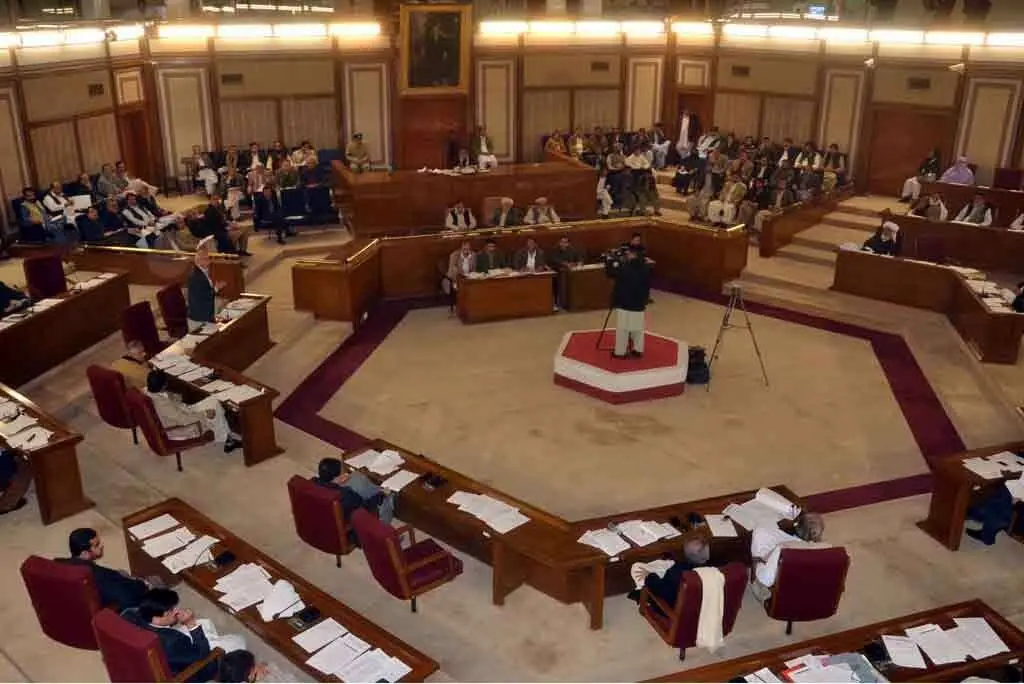
EDITORIAL: Balochistan’s latest budget arrives wrapped in the language of fiscal discipline, development and prudent management. A projected surplus of Rs45.66 billion, no new taxes, increased allocations for health and education, investment incentives and claims of record development spending would ordinarily provide reasons for optimism.
Yet the budget season in Pakistan has a way of encouraging caution. The country has seen too many ambitious promises; impressive projections and glowing official statements fail to survive contact with reality.
That does not mean the budget should be dismissed. The provincial government deserves some credit for presenting what appears, on paper, to be a relatively balanced financial plan under difficult circumstances. Provinces are operating under growing fiscal constraints, particularly as the federation seeks larger provincial surpluses to help meet commitments under the IMF programme. The room for manoeuvre is considerably narrower than it once was, making development spending and social sector allocations harder to sustain.
This broader context is important. Provincial budgets can no longer be viewed in isolation from the federal government’s fiscal challenges. Efforts to maintain primary surpluses and satisfy external financing requirements inevitably shape spending decisions across the federation. In that sense, Balochistan is attempting to balance competing pressures: fiscal restraint on one side and immense development needs on the other.
The challenge is that Balochistan’s needs remain extraordinary. It is Pakistan’s largest province by area, yet it continues to lag behind in infrastructure, education, healthcare and economic opportunity. The opposition’s criticism that a development allocation of roughly Rs206 billion remains inadequate for a province of such scale cannot simply be dismissed as routine political point-scoring. The province’s development deficit is real, and addressing it requires resources on a scale that annual budget exercises alone cannot easily provide.
Questions surrounding federal transfers further complicate the picture. Opposition lawmakers have argued that reductions in federal allocations have constrained development spending and limited the province’s ability to address longstanding challenges. Government representatives, meanwhile, contend that negotiations helped prevent even deeper cuts. Regardless of where responsibility ultimately lies, the debate highlights an uncomfortable reality: Balochistan remains heavily dependent on decisions made elsewhere.
That dependency sits uneasily alongside the province’s resource wealth. The recurring argument that Balochistan contributes significantly to the national economy while remaining underdeveloped has become a permanent feature of the province’s political discourse. Whether the issue is natural gas, minerals, fisheries or major infrastructure projects, questions regarding resource ownership, revenue sharing and development outcomes continue to shape relations between the province and the federation.
The budget’s claims also warrant careful scrutiny. The government’s assertion that development utilisation reached 115 percent during the outgoing fiscal year is certainly notable. It is also a figure that demands verification through completed projects, improved services and measurable outcomes. Budget documents are filled with numbers. Yet citizens experience governance through roads that function, schools that teach, hospitals that heal and jobs that materialise.
That distinction is particularly important in Balochistan, where ambitious announcements have often struggled to translate into visible improvements on the ground. Long-delayed projects, incomplete infrastructure and recurring governance concerns have understandably produced a degree of public scepticism. The opposition’s complaints regarding unfinished schemes, recruitment delays and persistent security challenges reflect frustrations that cannot be resolved through accounting presentations alone.
The budget therefore deserves neither uncritical praise nor summary dismissal. It should be judged against the same standard that applies to every provincial and federal budget in Pakistan: IMPLEMENTATION.
The figures may appear encouraging today. The allocations may seem reasonable. The projections may be achievable. But budgets are ultimately promises written in numbers. Their credibility emerges only when those numbers translate into tangible outcomes.
Balochistan has heard ambitious promises before. This time, as always, the proof will be in the spending.
Copyright Business Recorder, 2026




















Comments