


A crisis decades in the making
Pakistan faces a severe, long-predicted water crisis due to rapid population growth, poor management, and climate change, impacting millions and threatening its economy.
- Declining water availability and its shift to severe scarcity.
- Impacts on public health, agriculture, and economic stability.
- Decades of ignored warnings and lack of political will.
- Climate change exacerbating Pakistan's water crisis.
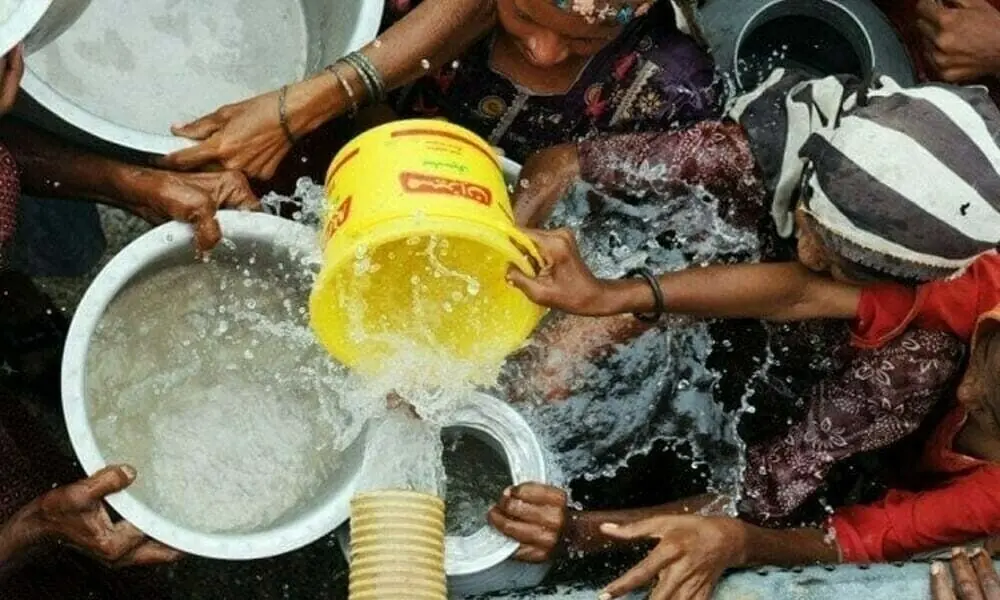
EDITORIAL: Few national failures have been forecast as accurately and ignored as consistently as Pakistan’s water crisis. Generations of policymakers were warned that rapid population growth, inadequate storage capacity, poor water management and chronic under-investment would eventually push the country from water abundance towards scarcity. The latest United Nations reports merely quantify the scale of a decline that has been unfolding in plain sight for decades, with per capita water availability falling from more than 5,000 cubic metres at Independence to below 1,000 cubic metres today.
The significance of that figure cannot be overstated. Pakistan has effectively crossed from relative abundance into water stress and is now edging towards conditions associated with severe scarcity. This has happened at precisely the moment when the country’s population has expanded to become the fifth largest in the world. Demand for water has risen relentlessly, yet the systems needed to secure, store, manage and distribute this critical resource have failed to keep pace.
What makes the situation particularly frustrating is that the warning signs were visible long ago. Successive governments commissioned studies, convened committees and listened to experts explain the dangers of declining water availability. International institutions repeatedly highlighted the risks. Environmental specialists warned about groundwater depletion. Agricultural experts stressed the need for more efficient irrigation. Yet the response remained fragmented, inconsistent and frequently overwhelmed by short-term political considerations.
The result is visible across the country. According to the UN assessments, 55 percent of Pakistanis still lack access to safely managed drinking water, while more than 58 percent of the rural population remains without safely managed sanitation services. These are not merely development indicators. They represent daily realities affecting public health, educational outcomes, economic productivity and quality of life for millions of citizens.
The crisis extends far beyond household access to water. Agriculture consumes the overwhelming majority of available supplies and remains heavily dependent on practices that waste substantial quantities of water. Urban centres continue to expand rapidly while infrastructure struggles to meet growing demand. Groundwater extraction has accelerated to compensate for shortages, often without adequate regulation or replenishment. Meanwhile, storage capacity remains insufficient despite decades of discussion regarding the need for additional reservoirs and modernised water infrastructure.
Climate change has also made an already difficult situation even more dangerous. Pakistan now faces greater exposure to floods, droughts and shifting precipitation patterns. The country has already experienced devastating floods that displaced millions and caused enormous economic damage. It is now confronting the equally serious challenge of water scarcity. Together, these extremes expose the weaknesses of a system that has struggled to adapt to changing realities.
Let’s not forget that there is also a profound economic dimension to the problem. Water insecurity threatens agricultural output, industrial activity and energy generation. It raises the costs of development and places additional pressure on already constrained public resources. Countries can overcome many economic challenges through policy adjustments and financial reforms. Water shortages are considerably harder to reverse once they become entrenched.
The policy solutions themselves are not particularly mysterious. Pakistan clearly requires greater investment in water infrastructure, improved storage capacity, modern irrigation techniques, stronger groundwater regulation and more effective management of urban water systems. Public awareness regarding conservation must improve, while institutions responsible for water governance require better coordination and accountability.
What has been missing is the political will to treat water security as the national priority it has always deserved to be.
The latest UN findings should therefore be regarded as more than another warning. They should be viewed as evidence of the cumulative consequences of decades of neglect, inefficiency and poor governance. The country still has an opportunity to change course, but that opportunity is narrowing with each passing year.
Pakistan’s water crisis is no longer a future threat. It is a present reality. The alarm has been sounding for decades. The question now is whether anyone is finally prepared to listen.
Copyright Business Recorder, 2026


















Comments