


China's tech shares rally on policy support; Hong Kong slips on US rate outlook
- The benchmark Shanghai Composite index eased 0.4%, while the blue-chip CSI300 index edged 0.1% higher
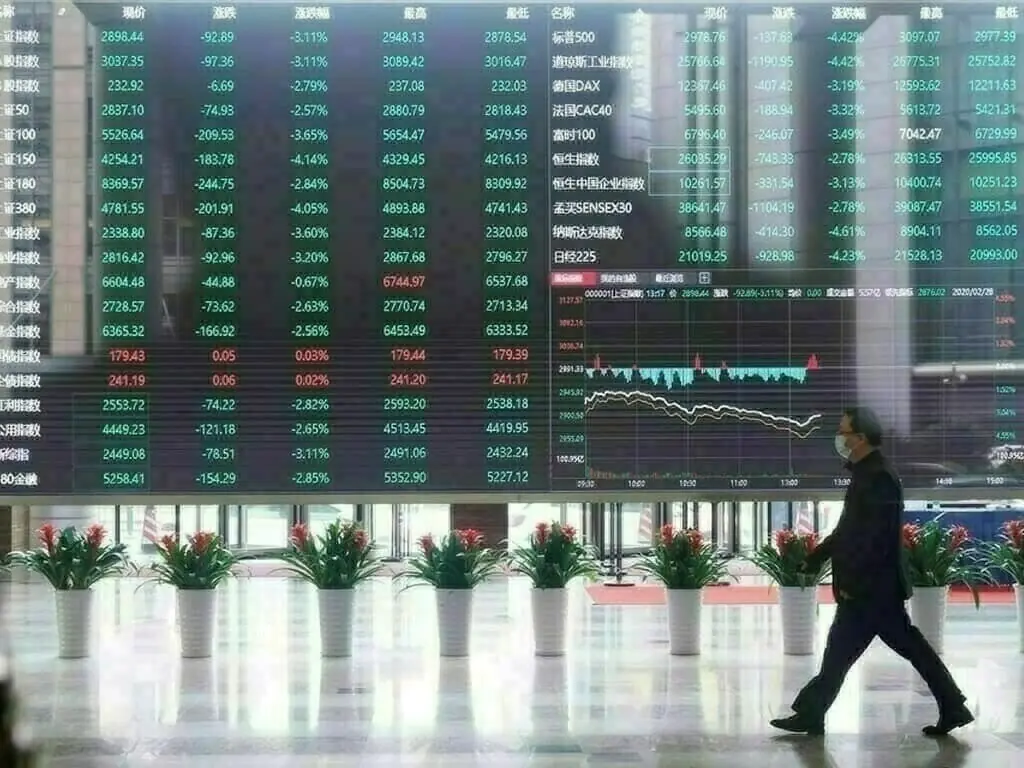
SHANGHAI: Tech shares rallied in mainland China on Thursday as investors cheered the securities regulator’s pledge to support innovation, while Hong Kong stocks slid on rising prospects of US rate hikes later this year.
China took fresh steps a day earlier to fund tech innovation amid an intensifying rivalry with the US, saying it would support listings of startups in “future industries” such as quantum technology, nuclear fusion and brain-computer interfaces.
At the midday break, China’s tech-focused STAR 50 was up 3.6%, while the start-up board ChiNext Composite index rose 1.4%.
The benchmark Shanghai Composite index eased 0.4%, while the blue-chip CSI300 index edged 0.1% higher.
“A new wave of technological revolution, led by AI, is being integrated into production and daily life at an unprecedented pace,” said Wu Qing, chairman of the China Securities Regulatory Commission (CSRC), at a forum in Shanghai. In Hong Kong, the benchmark Hang Seng Index lost 1.7%, while the city’s tech shares slipped 1.4%.
The weakness in Hong Kong markets tracked losses on the Wall Street, as the S&P 500 and Nasdaq closed down by more than 1% on investor bets that the Fed’s next move would be a rate hike.
The US central bank held rates steady in a 3.50%-3.75% range as new chair Kevin Warsh opened his era with a sweeping policy review on Wednesday. New quarterly projections showed nine of 19 Fed officials now anticipate a hike in rates by the end of 2026.
The Fed funds futures market has now priced in an 83% chance of Fed tightening in December, according to CME FedWatch, with a strong retail sales reading further adding to hawkish bets.
“We expect Asian markets to initially follow the US in reacting to the risk of higher rates,” said Tai Hui, APAC chief market strategist at J.P. Morgan Asset Management.
“That said, with a US-Iran deal on the horizon, investors would interpret the Fed’s hawkishness as pre-cautionary, which should help reverse the US dollar’s strength and be more supportive of Asian equities. ‑Reuters
















Comments