


NA body endorses creation of ‘Independent Case Scrutiny Committees’
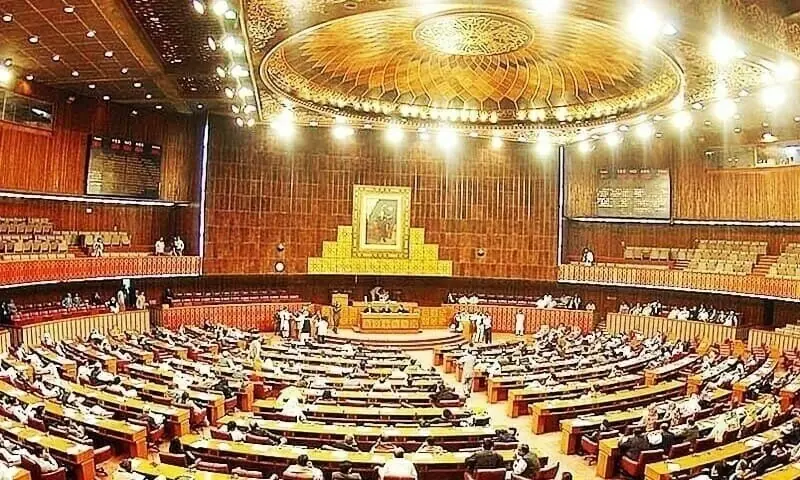

ISLAMABAD: To end litigation of trillions in court against taxpayers, National Assembly Standing Committee on Finance Tuesday endorsed Finance Bill’s 2026 proposal to create “Independent Case Scrutiny Committees” in all federal taxes to end filing of frivolous appeals at the High Courts by the Federal Board of Revenue (FBR).
Tax authorities informed the committee on Tuesday that it is a practice in the field formations of the FBR to file appeals against the orders of the taxpayers in high courts whether the appeal has legal grounds or not. This is due to fear of NAB, suspension or disciplinary proceedings against the tax officials in case appeals are not filed in higher courts against the taxpayers.
To end this practice, Finance Bill 2026 has introduced “Independent Case Scrutiny Committees” in all federal taxes to end filing of frivolous appeals by the tax department before the High Courts.
The Standing Committee on Finance and Revenue, chaired by Syed Naveed Qamar, MNA, met Tuesday at Parliament House, Islamabad, to continue its clause-by-clause consideration of the Finance Bill, 2026. The Committee reviewed a range of proposed amendments relating to customs and sales tax laws, tax administration reforms, penalty regimes, enforcement mechanisms, and measures aimed at improving compliance and dispute resolution.
The Committee examined various reform proposals, including the introduction of faceless adjudication and faceless appeals to minimize direct interaction between taxpayers and tax officials, algorithm-based settlement mechanisms for the resolution of tax disputes.
The Committee also reviewed amendments to the definition of Tier-1 retailers by removing the condition relating to debit and credit card machines, a proposal for reward-based tax collection for digitally compliant taxpayers, and the establishment of an Independent Scrutiny Committee headed by a retired Judge of the Supreme Court or High Court to determine whether tax litigation should be pursued.
The Committee deliberated extensively on a proposal to increase the penalty on terminal operators from Rs. 0.5 million to Rs. 10 million for non-compliance with customs certificates exempting demurrage charges.
The Committee Members expressed serious reservations regarding the magnitude of the proposed increase, observing that such a steep penalty could discourage investment, create uncertainty for businesses, and potentially lead to discretionary enforcement practices. Emphasizing the need for proportionality and fairness, the Committee recommended reducing the proposed penalty to Rs. 5 million and establishing an impartial forum or committee to adjudicate disputes, thereby ensuring a balanced approach that protects the interests of both importers and terminal operators.
A detailed discussion was also held on the proposal to permit third-party outsourcing of customs auctions. The Committee was informed that the measure was intended to facilitate the disposal of accumulated goods and reduce congestion at ports.
FBR Member said that complicated audits of telecom and banking sectors would be done by external audit firms.
While acknowledging the need to address operational bottlenecks, Members stressed that transparency, competition, and accountability must remain paramount. The Committee therefore emphasized that all outsourcing arrangements should strictly comply with PPRA rules and recommended the inclusion of pre-qualification criteria for auction houses to safeguard the integrity of the process.
The Committee further considered a proposal empowering customs authorities to take possession of non-duty-paid goods seized by other law enforcement agencies without awaiting the conclusion of criminal proceedings.
The Committee expressed concern that such a provision could adversely affect ongoing investigations, compromise evidentiary requirements, and interfere with the administration of justice. The Chairman observed that the proposal required further examination and directed that appropriate safeguards be incorporated, including conditions ensuring that any goods disposed of through auction remain traceable and available for judicial proceedings whenever required.
While discussing the proposed retailer scheme, Members underscored the importance of understanding its operational framework, enforcement safeguards, technological architecture, and compliance mechanisms before reaching a final decision. The Committee, therefore, directed that a detailed presentation be arranged prior to the next meeting. The Hon. Chairman agreed to allocate dedicated time for a comprehensive briefing to enable informed consideration of the proposal.
Committee Members also raised broader concerns regarding the continued reliance on advance taxes, withholding taxes, and minimum tax regimes. It was observed that a significant portion of revenue collection is increasingly dependent upon upfront extraction of taxes rather than assessments based on actual income and profitability. Members emphasized that such practices place undue burdens on businesses and taxpayers, particularly those operating with low profit margins or facing financial difficulties.
The Committee would undertake a detailed examination of these issues during the ongoing review of the Finance Bill, with a view to promoting a more equitable, transparent, and growth-oriented taxation framework.
Copyright Business Recorder, 2026

























Comments