




The economic team proudly said that GDP growth is at a four-year high. Well, growth is still not at 4 percent in as many years of their regime. One may wonder whether to be jubilant or sad upon knowing this fact.
Well, it is yet another year of stabilization. Nothing else. As someone aptly put it, the economy is being kept in an induced coma without the needed operation. That is the art of economic management of the current team.
They say the glass is half full. However, almost every other stakeholder sees it as half empty — evident from investment-to-GDP hovering at a low rate of 13-15 percent. FDI is at a record low. Unemployment is creeping up and inflation is on the rise again after coming down to SBP’s medium-term range of 5-7 percent. Call it stabilization or stagflation — the bottom line is that the misery of the common man is nowhere close to over enough to appreciate the encouraging picture presented by the government.
The finance minister wants investment to be in the high teens and desires local investment to take the lead, with foreign investment to follow. He knows the solution lies in lower taxation, energy, and financing costs. He is looking at the finer points of doing away with regulatory hurdles and has emphasized policy consistency.
The only consistency about him is repeating all the pep talks, but without delivery. Taxation on formal corporates and individuals — including all super taxes and surcharges — has only moved up in his regime and is currently at the highest-ever level in history. Financing cost has come down over the last year, but there is not much liquidity left in the system to lend to the private sector, as the government borrows it all.
Now the private sector and free-market champions are talking about boosting concessionary finance as the way to go. Well, not many years ago, they bashed the subsidy model presented by the previous regime — perhaps the next may say the same for the incumbents.
They talk about the decline in the debt-to-GDP ratio. However, they have little to say about the problem of the propensity to service debt. They do not talk much about growing domestic debt beyond the banking sector’s capability, as SBP’s OMO injections have quadrupled in the last three years to over Rs15 trillion.
They blame external factors for worsening macro indicators lately. They are right. Indeed, the situation has changed after the Iran-US war. However, they have a role to play, as overreliance on the petroleum levy in days of skyrocketing international oil prices has contributed to jacking up inflation, which pushed SBP to increase the policy rate and, in turn, increased the government’s debt-servicing bill.
That leaves less room for fiscal accommodation. There is nothing to talk about on tax reforms. When the question was posed to the FBR chairman, he used his intelligence to outsmart the reporter by framing the answer in absolute numbers. They explain numbers in dollars in days when the currency is overvalued, which may change in a jerk when there is a jerk in the currency.
However, he had no concrete response to the tax shortfall of Rs2.2 trillion in the last two years. The finance team has no answer to its inability to expand the tax base and bring traders and others into the tax net.
The story is the same. Live day by day. Comply with IMF targets by taxing the same base and ask for more time before we can think of growth, as next year’s growth is likely to be below 4 percent too.
Having said that, one may appreciate that the government is not making silly mistakes, as a few previous regimes did. But the question is for how long, as the patience of the powers that be is said to wearing thin and stabilisation fatigue is seeping in. And the only thing that can change this is tax reforms. Let’s see what the government has in its kitty today to positively surprise us in the budget speech. Let’s hope against hope.
Copyright Business Recorder, 2026
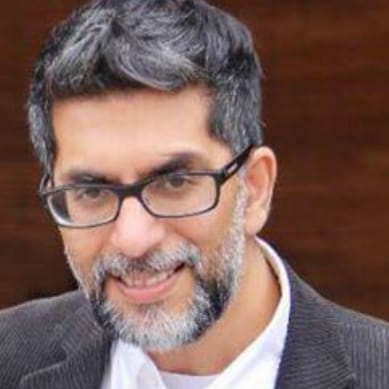
Ali Khizar is the Director of Research at Business Recorder. His Twitter handle is @AliKhizar





















Comments