


A fragile truce
Despite US-Iran de-escalation efforts, Israel's military actions are escalating regional tensions, risking a wider conflict. Both Washington and Tehran seek a deal, but Israel's strategy challenges this.
- Israel's military strategy undermining regional de-escalation.
- Iran's calibrated missile response to Israeli actions.
- Widening geographic scope of the Middle East crisis.
- President Trump's public criticism of Israel.
- US and Iran's shared interest in preserving negotiations.
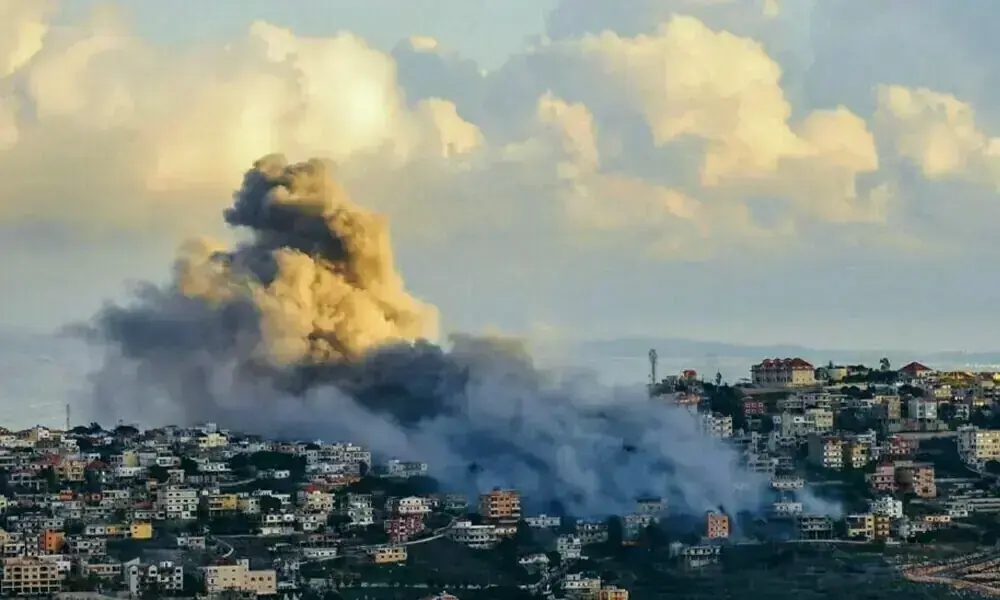
EDITORIAL: The uneasy calm that followed the Iran-US truce agreed in April, and included a halt to hostilities in Lebanon, is once again under severe strain, exposing a fundamental contradiction at the heart of the current crisis. While Washington and Tehran appear increasingly invested in de-escalation, Israel continues to pursue a military strategy that risks undermining efforts to secure a broader regional settlement. The latest Israeli strike on Beirut’s southern suburbs marks a dangerous escalation.
It was the first attack on the Lebanese capital since Washington announced an extension of the ceasefire arrangements in Lebanon, and it comes amid growing concerns that Israel is steadily expanding its military footprint in southern Lebanon despite commitments to ceasefire under the broader truce framework. Unsurprisingly, Tehran has interpreted these actions as a direct challenge to the tenuous regional understanding that has prevented a wider war.
Iran’s missile response on Sunday against northern Israel, while carefully calibrated to avoid casualties, carried an unmistakable political message. By describing the attack as a “warning,” Tehran sought to signal both restraint and resolve. The Iranian leadership appears keen to avoid a full-scale confrontation, yet equally determined not to allow repeated Israeli actions to pass unanswered. The danger lies in the fact that even calibrated responses can quickly spiral beyond the control of those who initiate them.
Particularly alarming is the widening geographic scope of the crisis. The involvement of the Houthis in Yemen and their threat to disrupt maritime navigation in the Red Sea raises the spectre of renewed regional warfare, with potentially serious consequences for global trade and energy markets. What began as a localised exchange increasingly risks evolving into a multi-front conflict stretching across the region.
Against this backdrop, President Donald Trump’s unusually public criticism of Israel deserves attention. His remarks suggest growing frustration within Washington over actions that could derail negotiations with Tehran at a moment when both sides reportedly stand on the verge of a significant agreement. Trump’s assertion that the Iranian strikes caused no casualties and therefore do not warrant further retaliation reflects eagerness to wrap up a deal to end the highly unpopular Iran war before the November midterm elections.
Indeed, the most striking feature of the current crisis is that Washington and Tehran appear more aligned in their desire to preserve negotiations than many would have imagined only a few months ago. Both need an off-ramp from confrontation, and neither wishes to see a prospective agreement collapse because of developments on another front. This emerging convergence, however limited and transactional, sits uneasily with Israel’s long-standing view that any US-Iran rapprochement could constrain its hegemonic ambitions and alter the regional balance of power. Benjamin Netanyahu’s government therefore has an incentive to try and challenge diplomatic initiatives that run counter to its strategic calculations.
The coming days will be critical. If the ongoing negotiations produce an agreement, they could provide a foundation for wider regional de-escalation. If they fail, the Middle East may once again find itself trapped in a familiar cycle of retaliation and counter-retaliation. The overriding imperative for all parties should be clear: diplomacy must not become collateral damage in a conflict that has already consumed too many lives and destabilized too many societies.
Copyright Business Recorder, 2026




















Comments