


Weekly Cotton Review: New crop season brings mixed price trends
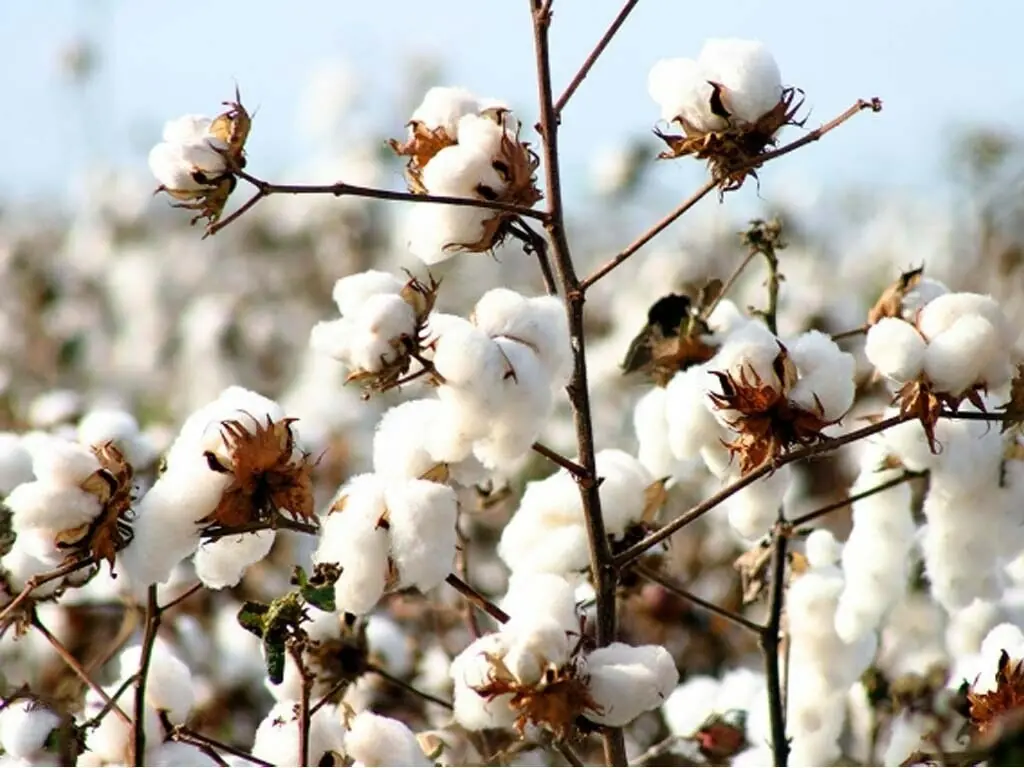

KARACHI: Pakistan’s cotton sector is navigating a turbulent period as the new crop season brings mixed price trends, tightening supplies, and record-low cultivation figures that have collectively raised alarm across the textile industry. The overall trading activity in seed cotton has once again become restricted due to declining supply, compounding the challenges already facing one of the country’s most vital agricultural commodities.
On the international front, New York cotton futures have been registering a sustained and significant downward trend, sending ripple effects through domestic markets and further dampening trader sentiment. The persistent weakness in global futures pricing has added another layer of uncertainty for local stakeholders who are already grappling with domestic supply pressures.
Perhaps the most concerning development is that cotton cultivation in Pakistan has fallen to a historically unprecedented low, drawing sharp reactions from textile mills that depend heavily on domestic cotton as a primary raw material. The All Pakistan Textile Mills Association has also brought to light a reduction in the interim benchmark rate concerning cotton pledged with banks, raising additional financial concerns for growers and lenders alike.
In response to the deepening crisis, Federal Minister Rana Tanveer has announced that a comprehensive roadmap for the revival of the cotton sector has been prepared. He confirmed that the discriminatory tax on cotton has been abolished and that significant focus is now being directed toward improving seed quality, which experts widely regard as a foundational element of any meaningful recovery in crop yields.
APTMA has formally written to the government expressing profound concern over the record decline in the area under cotton cultivation in Punjab, urging immediate policy intervention to reverse the alarming trend before it causes irreparable damage to the textile supply chain.
Amid these challenges, there is a silver lining. Textile exports have posted a healthy growth of 10.43 percent, with their total value climbing to 1,650 billion dollars, reflecting strong international demand for Pakistani textile products despite the raw material pressures at home. The daily cotton spot rate has also shown early signs of recovery, offering a measure of cautious optimism to market participants.
In a separate legal development, the Sindh High Court has reserved its judgment in the case pertaining to the Karachi Cotton Exchange building, a decision that is being closely watched by industry stakeholders awaiting clarity on the matter.
The All Pakistan Textile Mills Association (APTMA) has stated that Pakistan’s textile exports have the potential to reach $25 to $30 billion, but the federal government’s failure to address the sector’s core concerns remains a major obstacle to achieving this target.
APTMA expressed frustration over what it described as Islamabad’s indifference, saying that either the federal government cannot hear their concerns or simply does not want to understand the problems facing the industry. The association stressed that the textile sector needs electricity and gas tariffs comparable to those available in competing regional countries, arguing that the current energy costs put Pakistani manufacturers at a severe disadvantage in the global market.
The association also called for a consistent and stable economic policy spanning at least five years, emphasizing that short-term and unpredictable policy changes have made long-term investment and planning virtually impossible for the industry.
The local cotton market witnessed a generally mixed trend in new crop cotton prices during the past week. Ginners have partially begun opening their ginning factory gates, with approximately 10 to 12 factories in Sindh resuming operations and around 7 to 8 factories in Punjab initiating partial ginning activity.
In a swift move, forward contracts for approximately 25,000 to 30,000 bales were also concluded. However, given the current volume of seed cotton arrivals, barely 4 to 5 ginning factories are managing to produce 50 bales per day, which has effectively brought business to a near standstill with very few new deals being struck. The supply of seed cotton remains severely limited relative to the number of operational factories, further dampening market activity.
Following Eid ul-Adha, cotton prices declined by Rs. 1,500 to Rs. 2,000 per maund, though prices have since shown an upward tendency due to the extremely limited arrival of seed cotton compared to ginning capacity. Several factories that have failed to commence operations have already sold cotton on an advance basis, resulting in deliveries not being made on the agreed dates. Overall, the supply of early-picked cotton remains restricted in Sindh, while Punjab continues to record very low seed cotton arrivals.
Promises are being made regarding the revival of cotton cultivation in the country, but in reality no meaningful effort is being made in this direction. Every year, instead of genuine recovery, the cotton sector continues to witness further deterioration.
Meanwhile, the Pakistan Cotton Ginners Association and APTMA have jointly prepared a standardised cotton contract, and efforts will be made to put it into practical implementation.
The Karachi Cotton Exchange building remains under illegal occupation by the Evacuee Trust Property Board (ETPB) with the assistance of the Federal Investigation Agency (FIA). A petition challenging this occupation is currently pending before the Sindh High Court, which has reserved its verdict. Until the court delivers its ruling, the occupation will continue to be regarded as unlawful.
As a consequence of this dispute, the Karachi Cotton Association (KCA) has not been issuing daily cotton spot rates since December 6, continuing through December 12, 2025. This suspension has created significant difficulties for ginners and textile mills across the country.
The All Pakistan Textile Mills Association (APTMA) has formally complained that the absence of daily spot rate announcements is seriously hampering their operations. However, according to the latest reports, the KCA has resumed the issuance of daily cotton spot rates effective today.
In the provinces of Sindh and Punjab, the price of new crop cotton for 2026–27 is currently ranging between Rs. 21,500 and Rs. 22,500 per maund, while raw unginned cotton is trading between Rs. 10,500 and Rs. 12,000 per maund.
Karachi Cotton Brokers Forum Chairman Naseem Usman stated that international cotton futures remained bearish during the period under review. New York cotton futures traded between 73 and 78 US cents per pound. According to the USDA weekly export and sales report, a total of 185,300 bales were sold for the 2025–26 season. Vietnam led all buyers with purchases of 109,900 bales, followed by Pakistan in second place with 16,500 bales, and Turkey in third with 14,200 bales.
For the 2026–27 season, total sales stood at 77,100 bales. Mexico topped the list with purchases of 24,000 bales, Indonesia came in second with 14,100 bales, and Pakistan ranked third with 12,300 bales.
Federal Minister for Food and Agricultural Production Rana Tanvir Hussain has stated that a comprehensive roadmap for the revival of Pakistan’s cotton sector has been prepared. Speaking to Jang/The News, he said that the discriminatory tax system on cotton has been abolished, serious attention is being paid to seed quality, and the government has approved the import of hybrid cotton seeds. He emphasized that the government is fully aware of the importance of cotton and is implementing a series of reforms to reverse the declining trend in its production.
The National Seed Development and Regulatory Authority is actively working to resolve the technical and regulatory bottlenecks that have long hindered cotton production. The approval of the National Seed Policy has been described as a significant milestone, while the approval of the National Agricultural Biotechnology Policy is expected to promote research, attract private investment, and facilitate the development of new crop varieties capable of withstanding the challenges posed by climate change.
Pakistan’s cotton, once celebrated as the country’s “white gold” and the backbone of its textile exports, has lost much of its former glory. Over the past fifteen years, the sector has suffered a catastrophic decline. In 2011-12, cotton was cultivated across approximately 2.861 million hectares, with total production exceeding 14.8 million bales and yield standing at 880 kilograms per hectare. At that time, Pakistan was largely considered self-sufficient in cotton. However, by 2025-26, the area under cotton cultivation had shrunk to just 1.777 million hectares, a loss of over one million hectares. Production fell to a mere 5.3 million bales, representing a decline of approximately 64 percent, while yield per hectare dropped sharply from 880 kilograms to just 507 kilograms. The situation has deteriorated to the point where Pakistan is now forced to import billions of dollars worth of cotton every year to meet the demands of its textile industry.
According to Minister Rana Tanvir Hussain, Prime Minister Shehbaz Sharif had constituted a high-level committee under the chairmanship of Deputy Prime Minister Ishaq Dar, which, following consultations with provincial governments, agricultural experts, the textile industry, and other relevant stakeholders, prepared a detailed roadmap for the revival of the cotton sector.
To address longstanding grievances from farmers, the Ministry abolished the discriminatory tax structure applied to cotton, which had been distorting market equilibrium and eroding farmers’ incomes. The government is also considering tax reductions on cottonseed and cottonseed cake in the upcoming federal budget to improve profitability for growers. Furthermore, the import of hybrid cotton seeds has been approved to enable farmers to benefit from modern genetic traits and advanced production technologies.
At the institutional level, the Pakistan Central Cotton Committee has been merged into the Pakistan Agricultural Research Council to improve coordination in research activities and ensure more effective utilization of resources. An industry-led Cotton Board is also being established to strengthen linkages among farmers, researchers, and the textile industry.
Punjab, historically the heart of Pakistan’s cotton economy, has been the hardest hit by this crisis. In 2011-12, the province cultivated cotton over 2.534 million hectares, producing more than 12.1 million bales, but by 2025-26, the cultivated area had contracted to just 1.171 million hectares while production fell to only 2.54 million bales, reflecting a staggering decline of approximately 79 percent. Yield per hectare also fell from 814 kilograms to a mere 368 kilograms.
Sindh, by contrast, has shown a remarkable improvement. In 2011-12, only 286,000 hectares were under cotton cultivation in the province, with production standing at 2.682 million bales. By 2025-26, both the cultivated area and production had expanded significantly, rising to 606,000 hectares and 2.893 million bales respectively, making Sindh a rare bright spot in an otherwise troubled sector.
Copyright Business Recorder, 2026




















Comments