


Oil retreats from above $100, still set for weekly rise on Middle East escalation
- Brent futures fell $3.59, or 3.57%, to $97.10 a barrel
Oil prices fell Friday but are set for weekly gains due to escalating Middle East tensions, Houthi attacks in the Red Sea, and fears of wider conflict impacting global supply.
- Houthi attacks on Saudi oil tankers in the Red Sea.
- Escalating US-Israeli conflict with Iran and its allies.
- Impact of Middle East tensions on global oil supply.
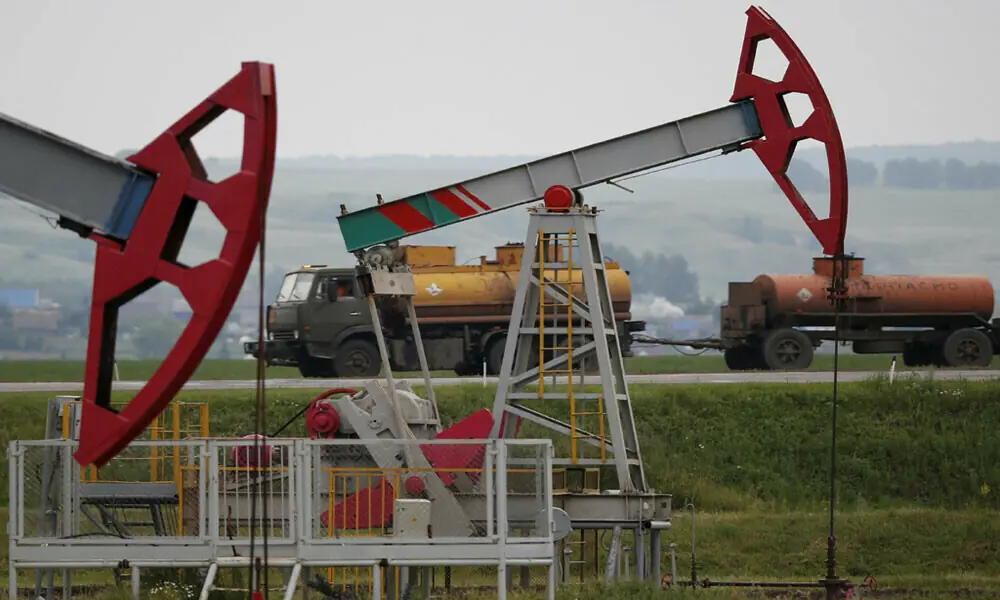
LONDON: Oil futures prices fell over 3% on Friday but are still set for hefty weekly gains because of worsening disruption to energy flows in the Red Sea and fears of further escalation in the U.S.-Israeli war with Iran.
Brent futures fell $3.59, or 3.57%, to $97.10 a barrel at 1240 GMT, having settled above $100 in the previous session for the first time since May after Houthis said they struck two Saudi oil tankers in the Red Sea.
The contract remained on course for more than a 10% advance this week.
West Texas Intermediate (WTI) futures were down $3.14, or 3.41%, at $89.05 a barrel, on track for a nearly 8% weekly rise.
“Tensions in the Middle East from the continued U.S. attacks on Iran, additional Houthi involvement in the Red Sea and CPC outages have inevitably driven prices up as supply becomes squeezed once again,” said Rystad analyst Janiv Shah, adding that current disruption in the Strait of Hormuz appears to be nearing the peak levels in March.
U.S. President Donald Trump promised “major military punishment” for Iran and its Houthi allies after the strikes in the Red Sea.
Iran had been pressing the Houthis to close the Bab el-Mandeb gateway to the Red Sea if the U.S. continued to attack Iranian power infrastructure. It is the second most important route for energy shipments after the Strait of Hormuz at the mouth of the Gulf.
Additionally, the Houthis had declared on Monday that they were imposing a naval blockade on Saudi Arabia, which had been diverting its oil via pipeline to get around Iran’s closure of the Strait of Hormuz.
Daily vessel transits through the Strait of Hormuz were steady at three for each of the past three days, preliminary ship-tracking data from Kpler showed. Another two ships — including empty very large crude carrier Noble — also entered the Gulf via the strait on Thursday.
Meanwhile, at the Bab el-Mandeb strait, commodity vessel transits totalled 32 on July 23, up from 26 the day before, Kpler data showed, with two crossings for July 24 so far.
“In the right seas, ships are still moving… so it’s not a complete blockade as some might have feared,” said Giovanni Staunovo, a UBS analyst.
Analysts at JPMorgan said in a note that each additional month of disruption to oil supply would add around $7 to $8 a barrel to Brent, lifting monthly average prices to around $114 a barrel if disruptions extend to three months.
Elsewhere, Russia said on Friday that its forces had struck three Ukrainian ports overnight targeting infrastructure — including loading and unloading facilities and fuel reserves — which supported Kyiv’s armed forces.
On Thursday, Kazakhstan’s energy ministry said oil companies temporarily reduced production after suspected Ukrainian drone attacks forced the country’s main Black Sea export terminal to close.



















Comments