


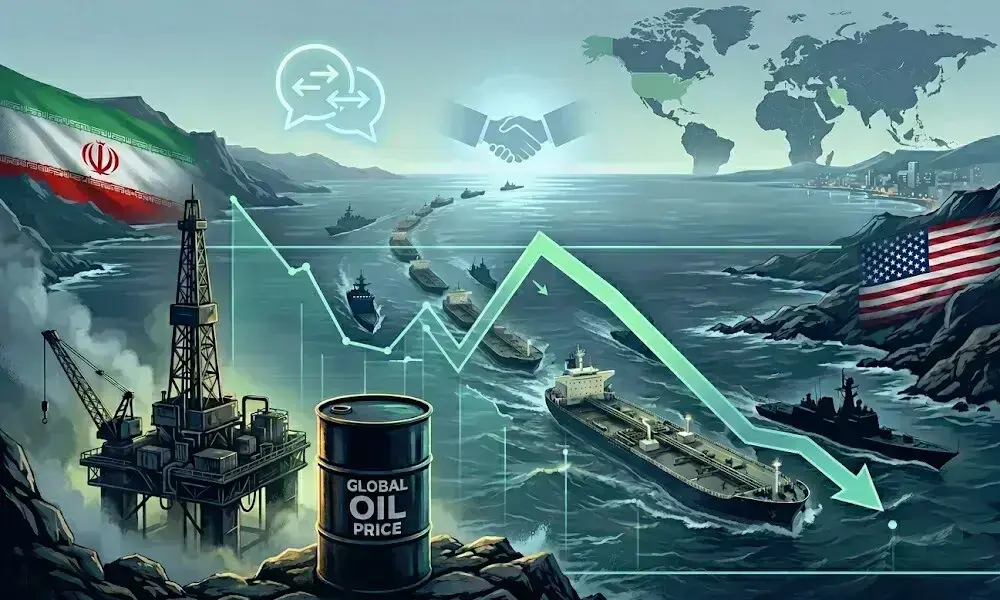

HOUSTON: Oil futures fell more than 2 percent on Friday, closing out their steepest weekly decline since early April as traders awaited word that the US, Israel and Iran had reached agreement on a ceasefire.
Brent crude futures for July, which expired on Friday, settled at USD92.05 a barrel, down USD1.66, or 1.8 percent. WTI US oil futures finished at USD87.36 a barrel, down USD1.54 or 1.7 percent. “Obviously, the market thinks the ceasefire will be all easy-peasy and is done and dusted,” said John Kilduff, partner with Again Capital.
The three-month war between the US and Iran has been marked by frequent chatter of an impending end to the conflict that would open the crucial Strait of Hormuz, used to transit one-fifth of the world’s oil and gas supply. Even with both sides suggesting an agreement was forthcoming, their characterizations of the deal were still somewhat different.
READ MORE: Oil prices settle in mixed direction on conflicting reports of US-Iran ceasefire deal
Iran’s Fars news agency said the agreement - which it has not decided yet to approve - required Iran to open the strait without restrictions but the Islamic Republic would reopen the waterway “according to its own pre-determined arrangements.” Iran has said after the conflict that it would regulate traffic through the strait, charging fees to transit.
US President Donald Trump has said called again on Iran to immediately re-open the strait. The closure of the waterway has driven energy prices sharply higher worldwide. Recent sessions have been volatile, with swings by as much as USD6 for both benchmarks on conflicting signals over a potential reopening of the strait.
“The questions are when are we going to open the strait? I wonder when are we going to hit the bottoms of the tanks,” Kilduff said. “I’m surprised prices aren’t higher.”
Brent has plunged by about 11 perent this week, its steepest weekly decline in seven weeks. WTI has dropped by more than 9 percent for its biggest weekly loss in six. Both benchmarks hit their lowest price since mid-April.
“While oil flows through the Strait of Hormuz remain restricted and oil inventories keep falling, the market focus remains on the possibility of a deal between the US and Iran,” said UBS analyst Giovanni Staunovo.
“The price drop could be forcing some market players to close their long positions.” The US and Iran reached a tentative agreement on Thursday to extend a ceasefire and lift restrictions on shipping through the Strait of Hormuz, sources told Reuters. Traffic through the maritime chokepoint remains a small fraction of levels before the conflict. Analysts at ING said a reopening of the waterway would offer some immediate relief to the oil market, but a recovery is still uncertain.
Japan, which relies heavily on oil from the Middle East, last month registered a 66 percent drop in crude oil imports compared with April last year.
Commerzbank raised its Brent forecasts to USD90 a barrel by the end of September and USD85 by the end of the year, based on a scenario in which the strait remains closed to normal shipping for another two months.
US crude, gasoline and distillate stockpiles fell last week, the Energy Information Administration said on Thursday, as demand from refiners and consumers rose, while exports fell by 1.16 million barrels per day to 4.4 million bpd.

























Comments