


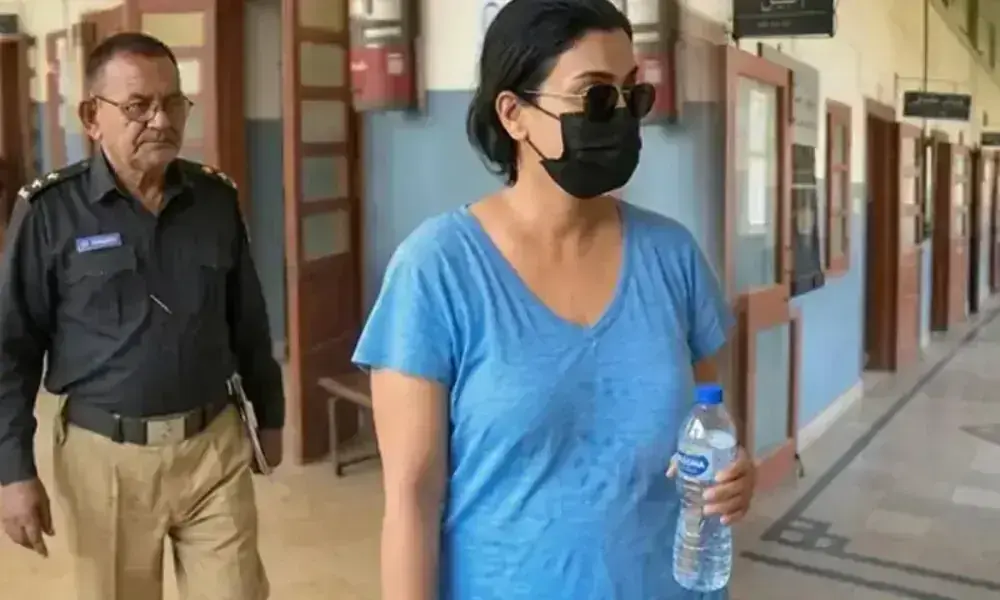
EDITORIAL: The recent controversy surrounding the arrest of an alleged drug dealer, Pinky, in Karachi has once again exposed the troubling inconsistencies in Pakistan’s policing and criminal justice system.
At a time when public confidence in law enforcement is already fragile, the perception that influential or well-connected suspects receive preferential treatment only deepens distrust and fuels suspicions of institutional bias.
Only days before this episode, Karachi police had come under sharp criticism for their harsh handling of Aurat March activists whose “offence” was merely attempting to hold a press conference at the Karachi Press Club. The contrast between that aggressive conduct and the unusual leniency shown to an accused narcotics dealer is difficult to ignore. Such contradictions create the impression that the law is enforced not in conformity with principle, but according to the status, influence, or connections of those involved.
According to reports, Pinky was arrested with 1.5 kg of cocaine, 6.9 kg of precursor chemicals allegedly used in the manufacture of narcotics, and an unlicenced firearm. These are serious allegations involving offences with devastating social consequences, particularly for young people increasingly vulnerable to drug addiction. In such cases, the public expects professionalism, transparency, and strict adherence to procedure from the police. Instead, what followed was a series of disturbing irregularities.
The viral footage showing the accused being escorted to court without handcuffs immediately raised questions. The incident generated sufficient public concern to compel the suspension of the police personnel involved. No less disconcerting, however, was the initial refusal of the judicial magistrate to grant police remand despite the investigating officer’s argument that wider drug networks needed to be traced through custodial interrogation. The district court’s subsequent observation that adequate reasons had not been provided for judicial remand only added to public confusion and suspicion.
Sindh Senior Minister Sharjeel Memon has rightly described the special treatment accorded to the accused as “regrettable.” Yet the issue goes far beyond regret. The central question remains unanswered: could junior police officers independently decide to relax standard procedures in such a high-profile narcotics case? In a rigidly hierarchical policing structure, such deviations rarely occur without tacit approval or external pressure. This is precisely why the matter demands an impartial and transparent inquiry.
Selective enforcement of the law is among the most damaging forms of injustice because it corrodes the legitimacy of state institutions. When peaceful activists are handled harshly while individuals accused of grave criminal offences appear to receive courtesy and comfort, citizens inevitably begin to question inconsistencies in the application of law.
The Sindh police need to recognise that public trust cannot be restored through suspensions alone. Accountability requires determining who authorised the preferential treatment, why standard procedures were ignored, and whether external influence played any role. Without clear answers, this episode will remain yet another confirmation of a justice system viewed as uneven, politicised, and vulnerable to privilege.
Copyright Business Recorder, 2026




















Comments