


Investment needs reform, not another institution
Pakistan's investment woes stem from a dysfunctional economic ecosystem and poor policy choices, not institutional structure. Merging investment bodies won't solve the core issues.
- Government's merger of investment bodies.
- Pakistan's persistently low investment-to-GDP ratio.
- Systemic issues hindering investment, from fiscal to energy.
- Need for difficult structural and political choices.


The news that went a little less noticed last week was about the government accelerating the merger between the Board of Investment (BOI) and the Special Investment Facilitation Council (SIFC).
The latter was constituted in 2023 to speed up investment, especially FDI, as BOI and other government bodies could not attract investment. However, since the formation of SIFC, over the last three years, FDI has hovered around 0.5-0.6 percent of GDP.
The overall investment-to-GDP ratio has remained at 13-14 percent, the lowest since the 1970s.
Although the merger is to be done at the behest of the IMF, the government must also be realizing that creating new institutions does not work. The key is to make existing institutions effective.
The investment puzzle is not solved by adding another layer of bureaucracy; rather, the need is to thin it. Economic theory also suggests that investment responds more to policy certainty, institutional quality, and ease of doing business than to the mere creation of coordinating bodies. SIFC may have helped some existing investors solve petty issues involving provincial or other regulatory bodies. Beyond that, fresh investment requires the overall ecosystem to function effectively.
That ecosystem is missing.
It has many components, from the legal to the regulatory framework. It has many competitive factors, from energy to human resource availability. It faces macroeconomic challenges, from fiscal to exchange rate policies. There are political choices successive governments keep making, and without addressing those, investment may remain subdued.
Investors, both domestic and foreign, seek predictability and long-term policy consistency. Where uncertainty dominates, capital tends to remain on the side-lines.
Pakistan has a fiscal problem. Everyone knows that. The country has a low tax-to-GDP ratio. The issue is being addressed by further taxing the income of the formal sector while there is no real focus on adequately taxing real estate, agriculture, and wholesale- and retail-based income. It is a political choice the government is making. This creates distortions in resource allocation, as overtaxing documented sectors discourages productivity and formalization while undertaxed sectors continue to absorb capital inefficiently.
Within fiscal policy, the core objective is to reduce the fiscal deficit. Strong buy-in is required from the provinces, as they get the lion’s share of tax resources after the 7th NFC Award.
Yet they do not reduce their lavish spending, nor do they tax enough of the income that falls within their jurisdiction. The so-called one-page regime is based on providing provincial fiscal autonomy to two ruling political parties so they can run a bankrupt federal government. It is a political choice the ultimate decision-makers have made.
Then there is the Punjab-centric development focus. The province may have better governance and road infrastructure, but that has not yielded growth at the national level. Economic expansion ought to come from the south, which has proximity to the port. Karachi ought to be the growth engine, with the whole of Pakistan, including Punjab, benefiting from it.
Economic geography also supports the idea that port cities naturally become hubs of industrialization and export-led growth due to lower logistics costs and greater connectivity with global markets. But there is no focus on that.
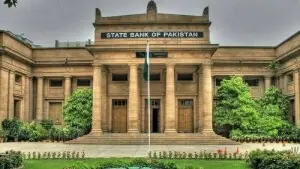
Within the central bank’s domain, a key responsibility is to maintain a delicate balance between monetary and exchange rate policies.
The SBP has chosen to maintain high positive real interest rates to protect the sticky exchange rate. At a time when currencies in almost all oil-importing countries are coming under pressure, Pakistan is relying primarily on interest rate tightening. It is a choice.
High real interest rates may stabilize the currency in the short run, but they also raise the cost of capital and suppress private investment and industrial expansion.
Meanwhile, many oil-importing economies are lowering taxation on petroleum products to limit the inflationary impact while focusing on other areas to create fiscal space. Pakistan, on the other hand, is doubling the levy on petrol to compensate for the absence of a levy on diesel because, unlike other taxes, 60 percent of tax revenues are shared with the provinces while 100 percent of the levy is retained by the federal government.
Instead of asking provinces to share the burden, the government is passing it entirely on to consumers. It is a choice.
The power sector is full of such lopsided decisions. Grid costs are high due to elevated distribution and transmission losses and front-loaded capacity payments on the generation side. Instead of addressing those structural inefficiencies, the government is forcing industries to move to the grid by making alternative fuel options, such as gas and furnace oil, exorbitantly expensive.
The finance ministry imposed a hefty levy on furnace oil to secure the IMF’s RSF funding without considering the limitations of local refineries and the investment already made by local businesses. It is a choice between boosting the domestic economy and securing another loan tranche.
There are many other such anomalies and lopsided policy choices keeping investment at bay. No supra body can deal with these issues.
There is no magic wand. Sustainable investment does not emerge from administrative shortcuts.
What is required is reducing the size of government to limit expenditure and cut red tape. Adding another layer is the opposite of what is needed. The overall economic framework is not ready to absorb investment.
Lack of investment is not SIFC’s fault; the ecosystem itself does not encourage investment. Unless policymakers are willing to make difficult structural and political choices, investment will remain weak regardless of how many new institutions are created.
The government should focus on fixing the underlying framework because, without that, nothing else will matter.
Copyright Business Recorder, 2026
Ali Khizar is the Director of Research at Business Recorder. His Twitter handle is @AliKhizar














Comments