


Supporting SMEs and exports: govt still searching for roadmaps
Pakistan's government is criticized for repeatedly issuing directives for SME support and export growth without effective implementation, highlighting a chronic disconnect between policy and execution.
- Government's repeated directives for SME support and export growth.
- Chronic failure to implement economic policies effectively.
- Structural challenges faced by SMEs and the IT sector.
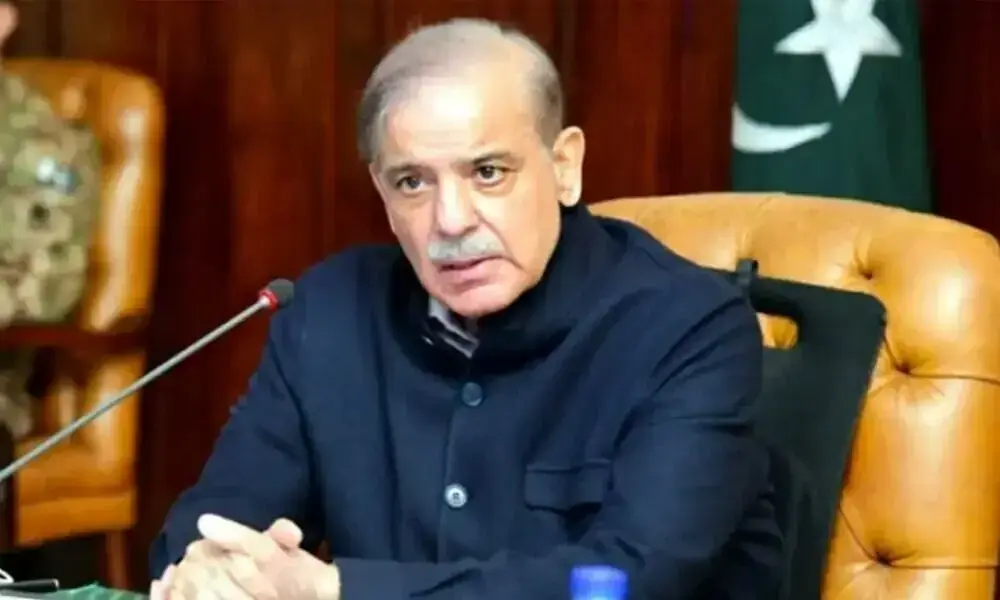
EDITORIAL: Prime Minister Shehbaz Sharif’s latest directive to formulate a “comprehensive roadmap” for supporting SMEs and boosting exports would have sounded far more convincing had successive governments not spent decades issuing nearly identical instructions.
The problem is no longer the absence of plans, frameworks, or policy intentions. The problem is the chronic inability to translate them into sustained execution on the ground.
Small and medium-sized enterprises have long been recognised as the backbone of modern economies.
Across successful export-oriented states, SMEs drive employment, innovation, industrial diversification and domestic value creation. Pakistan has known this for decades. Yet the country still struggles with limited access to financing, excessive regulatory burdens, inconsistent taxation and unreliable infrastructure that continue to suffocate smaller businesses before they can scale.
Against that backdrop, another call for a roadmap inevitably raises a difficult question: what exactly has prevented implementation all these years?
This is particularly relevant because the current political setup is not inheriting these problems for the first time. The ruling coalition and its parent parties have governed Pakistan, directly or indirectly, for much of the last four decades.
The same themes return repeatedly in official meetings: exports must increase, SMEs must be facilitated, refunds must be processed quickly, and innovation and research must be encouraged. Yet each cycle of promises seems to produce another cycle of consultations rather than measurable transformation.
The same pattern is visible in the IT sector. Pakistan’s IT exports may indeed approach USD 4.5 to USD 4.6 billion this fiscal year, and that growth deserves recognition. The expansion of internet connections and investment in digital infrastructure are also positive developments. But these gains continue to coexist with structural weaknesses that policymakers rarely confront directly.
Reliable internet connectivity remains inconsistent across large parts of the country. Businesses regularly face disruptions, slow speeds and uncertainty surrounding digital access.
More importantly, recurring concerns over internet restrictions and online censorship continue to undermine investor confidence in precisely the sectors the government claims it wants to promote.
Technology investment depends heavily on predictability. International firms and local start-ups alike require confidence that digital infrastructure will remain stable, accessible, and free from sudden interruptions.
Repeated disruptions or regulatory uncertainty send the opposite signal. They increase operational risk in a sector where speed, reliability and uninterrupted connectivity are fundamental requirements rather than optional advantages.
There is also a broader credibility issue emerging from the repetition of policy language itself. Governments cannot continue presenting long-recognised priorities as though they were newly discovered challenges.
SMEs have always been central to economic growth. Export diversification has always been necessary. Digital infrastructure has long been essential for competitiveness in a modern economy. These are not fresh insights requiring another round of strategic reflection. What businesses increasingly need is consistency rather than conferences, implementation rather than announcements and predictability rather than recurring policy resets.
Exporters still struggle with high energy costs, delayed refunds, expensive financing and fluctuating tax regimes. SMEs continue navigating bureaucratic complexity that larger firms are often better positioned to absorb. Meanwhile, the IT sector still operates within an uncertain digital environment despite official rhetoric emphasising its importance.
This disconnect between policy declarations and operational realities has become one of the defining weaknesses of economic governance.
Every few months, another high-level meeting produces another commitment to exports, innovation or industrial revival. Yet structural impediments remain largely intact. None of this diminishes the importance of supporting SMEs or expanding IT exports. Both are essential if Pakistan hopes to achieve sustainable growth and reduce dependence on debt-driven stabilisation cycles.
The concern is that the country appears trapped in a perpetual planning phase while competitors move ahead with execution.
At some point, the debate must shift from identifying priorities to delivering outcomes. Pakistan does not lack policy papers or strategic intentions. It lacks institutional continuity, administrative follow-through and the political willingness to remove obstacles that have already been diagnosed repeatedly.
The real test is therefore no longer whether another roadmap can be drafted. It is whether the government is finally prepared to back its familiar promises with durable action.
Copyright Business Recorder, 2026




















Comments