


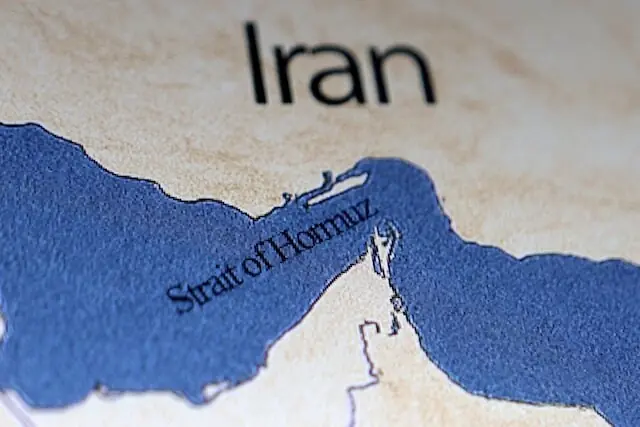

TEHRAN: Iran has announced plans to introduce a new system to manage maritime traffic through the Strait of Hormuz, one of the world’s most critical shipping routes for global energy supplies.
Ebrahim Azizi, spokesperson for the Iranian parliament’s National Security and Foreign Policy Committee, said the mechanism would regulate vessel movement along a designated route and be formally unveiled in the near future. Azizi stated that the framework has been developed “within the framework of national sovereignty and the guarantee of international trade security”, and would operate as a professional traffic management system for ships passing through the strategic waterway.
According to Azizi, the proposed system would apply only to commercial vessels and those cooperating with Iran. He added that participation in the arrangement would determine eligibility to benefit from the route.
He further indicated that fees would be collected for what he described as specialised services provided under the mechanism, signalling a shift towards a structured toll-based model for passage through the strait. Azizi also noted that the route would not be available to operators linked to what he referred to as the “freedom project”, without providing additional details.
In a post on X, he reiterated that the system would be designed to manage traffic along a specific maritime corridor and would be introduced publicly once finalised.
Meanwhile, Iranian Foreign Minister Abbas Araqchi said Tehran is consulting with Oman on the development of a suitable framework to manage the Strait of Hormuz, noting that both countries lie on either side of the strategic passage.
He argued that the strait lies within the territorial waters of Iran and Oman and suggested that its management should be determined bilaterally between the two nations. Oman has not yet issued a public response to the remarks.
The United States has previously opposed Iranian control over the waterway and has rejected the idea of Tehran imposing transit fees on vessels passing through the strait, according to official positions cited in recent discussions. The Strait of Hormuz, located between Iran and Oman, is a vital global energy corridor, with around 20 per cent of the world’s oil and gas shipments passing through it. It also serves as a key route for fertiliser transport used in global agriculture supply chains.
Tensions around the waterway have periodically intensified. Following joint US-Israeli strikes on Iranian territory on 28th February, Iran’s Islamic Revolutionary Guards Corps announced the closure of the Strait of Hormuz.




















Comments