


Pakistan's textile sector presents budgetary proposals to Aurangzeb
- Pakistan's textile sector urged for 2026-27 budget reforms to cut costs, boost exports and modernise
Pakistan's Finance Minister met with the textile sector to discuss budget proposals for 2026-27, focusing on competitiveness, export growth, and addressing industry challenges, while also introducing digital monitoring.
- Textile sector's comprehensive budget proposals for 2026-27.
- Industry recommendations for export competitiveness and cost reduction.
- Government's plan for digital monitoring and transparency.
- Finance Minister's commitment to ongoing industry consultations.
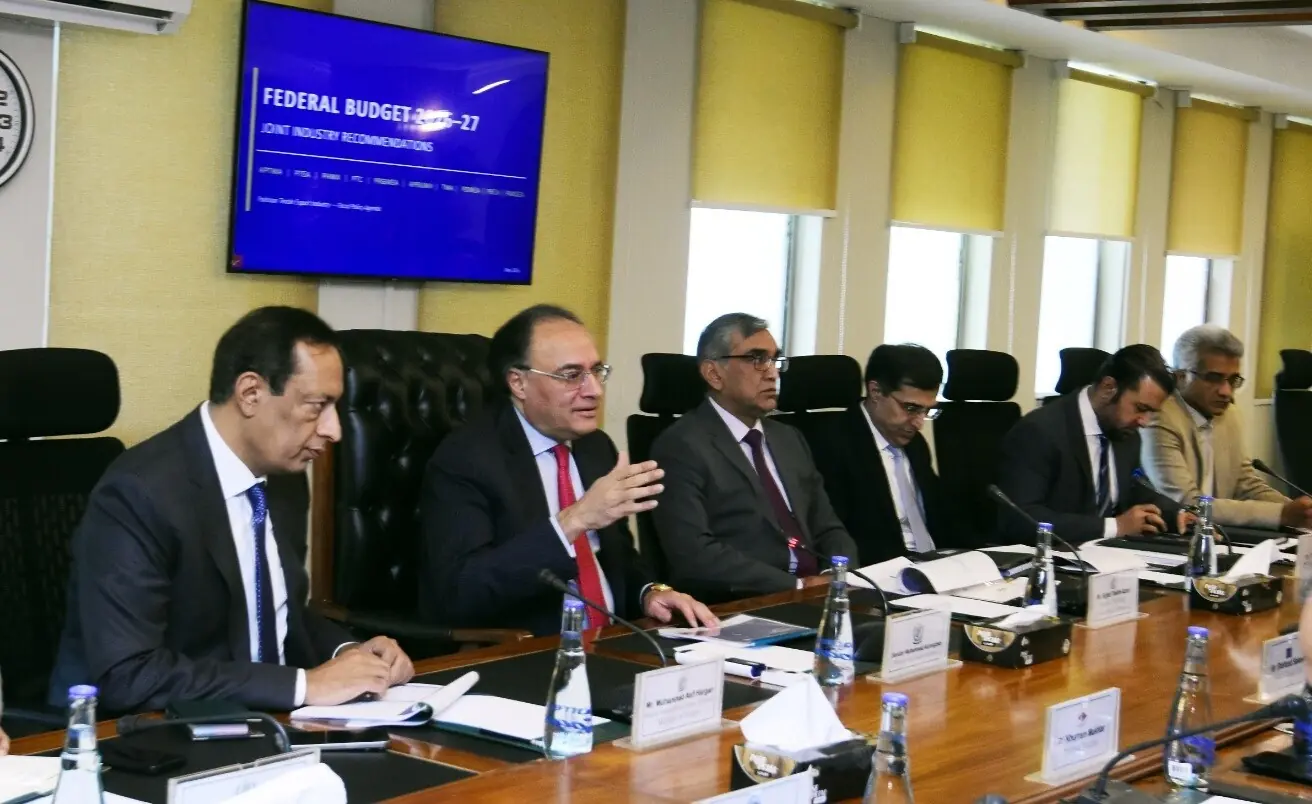

Finance Minister Muhammad Aurangzeb on Tuesday held an extensive meeting with a high-level delegation representing Pakistan’s textile and apparel sector, comprising leading chambers, associations, exporters and industry stakeholders from across the country.
The delegation presented a comprehensive set of proposals and recommendations for the Federal Budget 2026–27 aimed at strengthening the competitiveness, sustainability and long-term growth of the country’s textile sector and export industry, read an official statement.
During the meeting, the delegation emphasised the importance of maintaining a stable, growth-oriented and internationally competitive policy environment to enable the industry to effectively respond to evolving global market dynamics and increasing regional competition.
The delegation shared a broad range of policy recommendations focusing on taxation reforms, energy affordability, export facilitation, industrial modernisation, liquidity management, investment promotion and ease of doing business.
The proposals were aimed at reducing the cost of production, improving industrial efficiency, enhancing exporters’ liquidity position, encouraging technological upgradation and creating a more predictable and investor-friendly business environment.
The industry representatives stressed that timely policy support and structural reforms would help strengthen Pakistan’s export competitiveness, promote value-added manufacturing, attract fresh domestic and foreign investment and facilitate greater integration into international supply chains.
They noted that improving the operating environment for exporters would support industrial expansion, employment generation and economic growth while also contributing positively towards fiscal stability and foreign exchange inflows.
The delegation also emphasised the importance of addressing long-standing operational and structural challenges affecting industrial productivity and export performance, including the need for efficient refund mechanisms, rationalised energy pricing structures, facilitation for exporters and measures aimed at reducing the compliance burden on businesses.
It was highlighted that such reforms could significantly improve cash flow management, enhance investor confidence and enable industries to allocate greater resources towards expansion, modernisation, and workforce development.
The proposals further underscored the importance of a policy framework that supports innovation, encourages value addition, facilitates small and medium enterprises and promotes industrial diversification in line with changing global demand patterns.
The delegation noted that strengthening the competitiveness of Pakistan’s textile sector would have positive multiplier effects across the wider economy through increased exports, higher industrial output, enhanced job creation and stronger economic resilience.
Aurangzeb appreciated the engagement and reaffirmed the government’s commitment to maintaining regular and meaningful consultations with the business community through the dedicated Tax Policy Office of the Ministry of Finance to institutionalise continuous engagement with chambers, trade bodies and associations throughout the year.
He stated that the initiative is intended to move beyond the previous practice of engaging with stakeholders only in the few months preceding the federal budget and instead ensure a sustained consultative process to support more informed, transparent and responsive economic policy-making.
The finance minister also discussed the government’s ongoing efforts to promote transparency, documentation and improved compliance through digital monitoring systems across key sectors of the economy.
He informed the delegation that digital monitoring mechanisms had already been introduced in several major sectors, including sugar, cement, beverages and tobacco, emphasising that the initiative had been implemented across the board without exception, including in sectors where business units owned by the Prime Minister’s family also operate.
He stated that the objective of the initiative is to improve transparency, enhance efficiency, promote fair competition and strengthen revenue administration through technology-driven systems.
The finance minister invited the textile sector to extend its cooperation towards the gradual implementation of similar digital monitoring mechanisms within the textile industry.
During the discussion, it was shared that certain textile sector associations and industrial units had already been engaging with FBR teams on the matter and that pilot initiatives relating to digital monitoring had also commenced in some units.
Representatives of the textile sector acknowledged the importance of transparency and documentation and agreed to continue consultations with the government and relevant authorities to explore workable solutions that take into account the unique operational structure, supply chain dynamics and complexities of the textile industry.
The meeting was attended by leading representatives of the textile sector, including Khurram Mukhtar, Javed Bilwani, Fawad Anwar, Rehman Naseem, Shahzad Asghar, Amer Abdullah, Kamran Arshad, Shahzad Saleem, Sohail Pasha and Khawaja Masood. The joint industry presentation was submitted by representatives of APTMA, PTEA, PHMA, PTC, PRGMEA, APBUMA, TMA, PDMEA, PBEA and PAKSEA as part of the textile sector’s unified recommendations for the Federal Budget 2026-27.

























Comments