


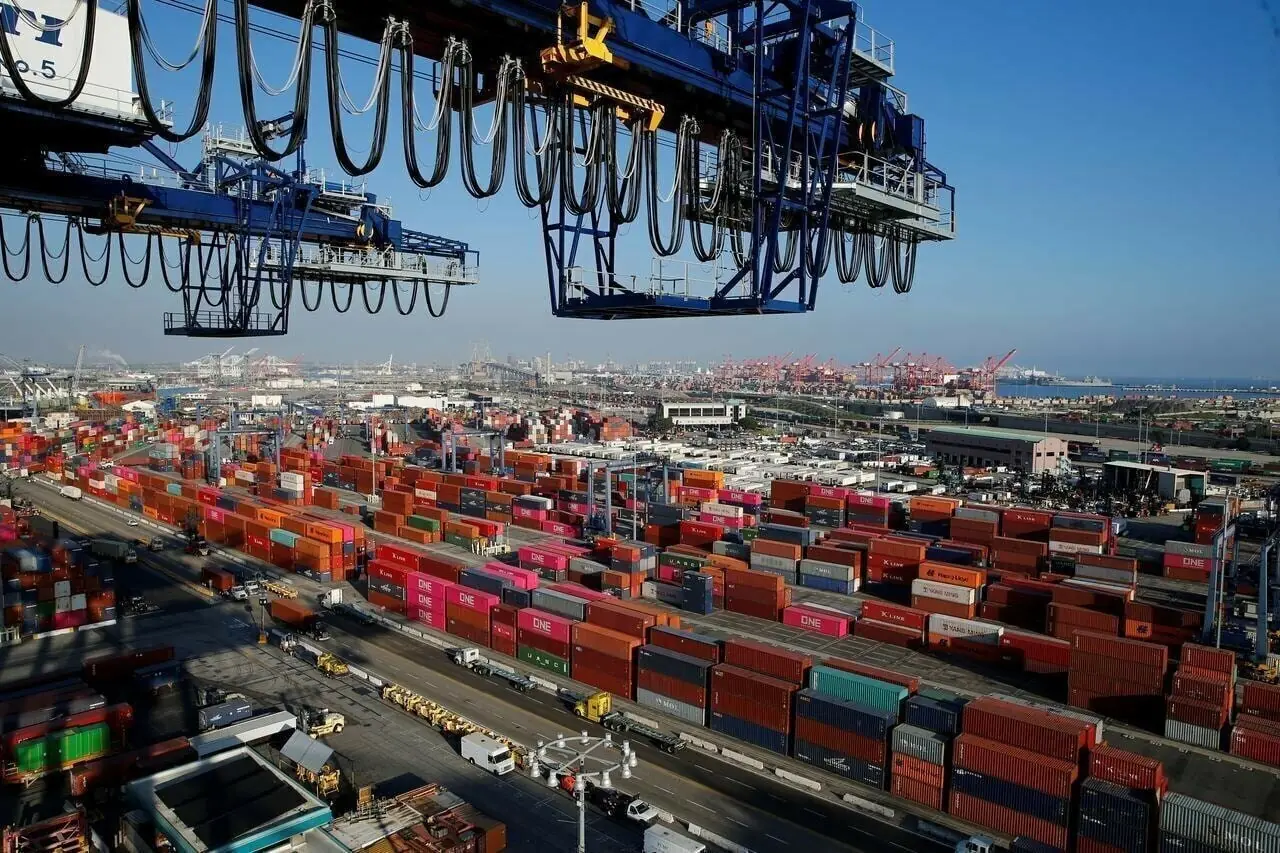
Pakistan’s export challenge is not merely about selling more; it is about upgrading what and how we produce. Despite decades of trade liberalisation, Pakistan’s exports remain narrowly concentrated. Nearly one-third of exports go to the European Union, with sizeable shares going to the United States and GCC markets.
On the product side, textiles account for more than half of export earnings, while the remainder is dominated by rice and other agricultural products, along with footwear, plastics, electrical goods, and surgical instruments.
This concentration reflects a deeper structural issue: limited diversification and slow firm-level upgrading.
Tariffs remained at the core of international trade policy until they had been lowered considerably under the WTO’s successive rounds of trade liberalisation. While the recent geopolitical shifts have resurfaced the tariff debates, the structure of global trade has been substantially changed. Currently, non-tariff-measures and compliance with international standards have come to the forefront as an additional, and often more binding, layer of policy aspects.
In the current world, standards related to process and product attributes play a pertinent role in market access, determining who enters global supply chains, and who remains excluded.
There is a wide variety of international standards and product certification schemes. Certain certifications such as ISO 9001 for quality management and ISO 14001 for environmental management, focus on internal management systems. Other standards address product-specific regulatory requirements, including CE marking in the European Union, REACH chemical regulations, and the G-Mark required for certain products entering the GCC markets. In addition, there are buyer-driven standards within global supply chains. In this category, for example, the Global G.A.P. standard has emerged as a de facto mandatory requirement for agricultural exports to retail markets in European Union. Some standards are legally mandatory, while others are formally voluntary but operate as de facto requirements because global buyers demand them. Similar sector-specific certification schemes are in place in other industries such as textiles and other manufacturing sectors.
Certification, therefore, is not a decorative label; it is a market access instrument.
ISO certifications provide a useful indicator of how far firms invest in internationally-recognised management systems. In 2014, Pakistan had 314 ISO 14001 certifications and 2,512 ISO 9001 certifications. By 2024, these numbers had increased to 1,326 and 3,484 respectively. While this represents progress, the comparison with competitors is revealing. Over the same period, Vietnam increased its ISO 14001 certifications from 828 to 3,465 and ISO 9001 from 3,781 to 7,762. South Korea recorded even stronger expansion, while China’s certification base grew at a much larger scale.
Certification intensity is closely associated with industrial upgrading and export competitiveness. Countries that invest in compliance infrastructure tend to integrate more deeply into global value chains.
One of the main barriers to certification, particularly for small and medium enterprises, is cost. Compliance involves consultancy services, documentation systems, audits, testing, and periodic renewal. These represent fixed costs of entry into export markets. For smaller firms, such fixed costs can be prohibitive, preventing them from exporting or limiting their ability to scale.
Export dynamism depends not only on established large exporters but also on new firms entering foreign markets and existing firms expanding in scale. If SMEs cannot meet international standards, the country’s export base remains narrow and stagnant.
Large firms are generally better placed to meet international standards, since the cost of compliance is easier to absorb at scale. Their established buyer relationships and brand value also make them more resilient when market conditions change. In a shifting trade environment, including developments such as the EU–India trade agreement that may strengthen competing exporters, smaller firms face greater vulnerability. This is precisely why targeted support for SME certification matters.
A recent initiative by SMEDA to provide a 70 percent matching grant under its SME Certification and International Accreditation Grant Programme is a timely intervention. By covering 70 percent of certification costs up to Rs800,000 and consultancy expenses up to Rs200,000, the programme lowers the financial barrier to compliance. If effectively implemented, such support can enable more SMEs to obtain internationally-recognised certifications and enter export markets.
While grant support can help firms overcome the initial cost of certification, a broader long-term policy approach lies in strengthening domestic quality infrastructure. Expanding testing facilities and certification services can lower the cost and difficulty of meeting international standards and reduce reliance on grant support over time.
The long-term impact, however, will depend on implementation. Certification support should be linked to sectors with high export potential. There should be mechanisms to track whether supported firms enter new markets or expand exports after certification. Capacity building must complement financial support, ensuring firms internalise compliance systems rather than treating certification as a one-time exercise.
Pakistan’s export revival will not come solely from exchange rate adjustments or tariff negotiations. It will require systematic upgrading of production processes, quality systems, and compliance capabilities. In this effort, small firms have a big role to play. Certification to global standards is one of the gateways to that transformation, and it warrants sustained policy attention.
Copyright Business Recorder, 2026
The writer is a Chief of Research at the Pakistan Institute of Development Economics (PIDE). He can be reached at [email protected]
















Comments