



History seldom repeats itself exactly, but it often rhymes. The Suez Crisis of 1956 was a pivotal moment in global affairs: Britain and France achieved a swift military success yet suffered a profound strategic setback. Today, as the United States confronts Iran, there are notable similarities—but also important differences.
During Suez, Britain, and France intervened after Gamal Abdel Nasser nationalised the canal. Their military actions initially succeeded, but within days, financial pressure, diplomatic isolation at the United Nations, and geopolitical signalling from the Soviet Union forced Britain into a humiliating withdrawal. The crisis underscored a fundamental reality: military strength is unsustainable without economic and diplomatic backing. Britain’s decline as a global power had begun decades earlier and accelerated through two world wars; Suez merely confirmed its repositioning.
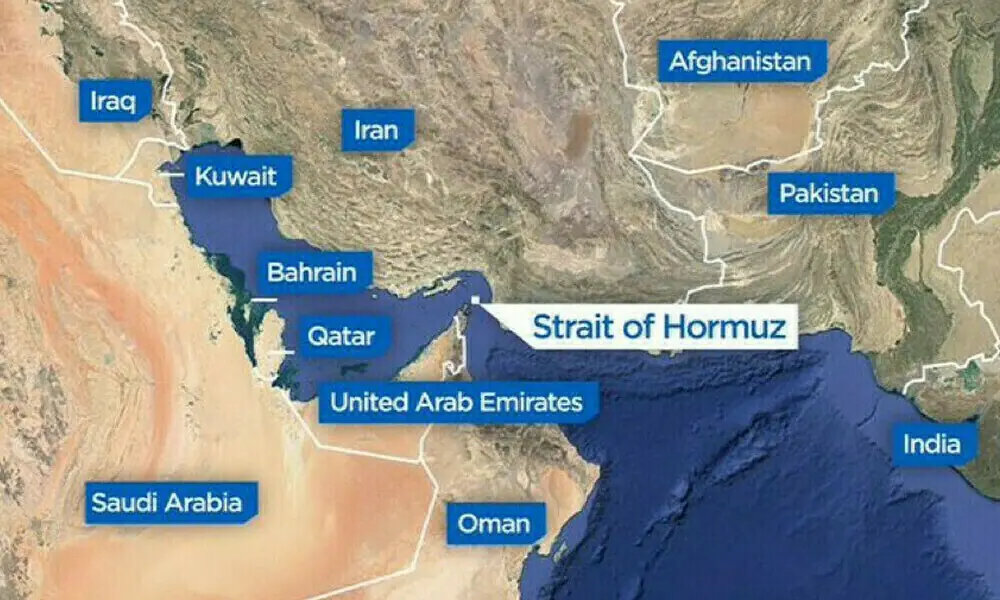
The United States retains overwhelming military superiority over Iran. However, Iran is not aiming for a conventional victory. Instead, it is leveraging geography and asymmetric tactics—most notably its ability to disrupt the Strait of Hormuz, through which nearly one-fifth of global oil supply passes. Just as Egypt closed the Suez Canal in 1956, Iran’s strategy is not to defeat a stronger adversary militarily, but to raise the economic cost of conflict to a level that becomes politically untenable. Having endured sanctions for nearly four decades, Iran is unlikely to succumb quickly to economic pressure imposed by the United States through restrictions on vessels linked to it. It is also plausible that China, as a major buyer of Iranian oil, will act to preserve supply channels. This could widen the conflict beyond the Middle East—something the United States would wish to avoid, just as Britain did when the Soviet Union signalled its opposition to the Suez intervention.
A further parallel with Suez lies in Israel’s role. In 1956, Israel’s security concerns and strategic objectives aligned with those of Britain and France, helping to trigger and shape the intervention. Today, Israel’s confrontation with Iran, driven by concerns over missile capability and regional influence, has similarly intersected with US strategic decision-making. The current conflict has, in effect, evolved into a closely coordinated US–Israel military engagement, raising familiar questions about how far the priorities of regional allies shape the actions of larger powers.
This dynamic is now feeding into domestic debate within the United States. Public opinion towards Israel has shifted sharply, with a marked deterioration in sentiment in recent years. At the same time, polling suggests that a significant share of voters believes Israel exerts excessive influence over US foreign policy. These perceptions are reinforced by the view that the war with Iran is a joint US–Israel initiative, even as its economic costs are borne domestically through higher fuel prices and inflation.
The economic consequences of the conflict are already visible. Rising oil prices have fuelled inflation, delayed interest rate cuts, and increased the burden on consumers—both in the United States and globally. With high debt and fiscal strain, these pressures are likely to intensify. Unlike Suez, where Britain’s vulnerability stemmed from dependence on US financial support, the United States sits at the centre of the global financial system. Yet this advantage is not unassailable. Prolonged conflict, elevated commodity prices, and widening fiscal deficits could accelerate de-dollarisation and diversification of reserves, gradually eroding America’s structural dominance.
Crucially, domestic political constraints—largely absent in Britain’s elite-driven Suez decision—are emerging as a binding factor for Washington. Public opinion in the United States is increasingly wary of a prolonged conflict with Iran, particularly as its economic costs become more visible. With midterm elections approaching, the risk of losing control of one or both houses is likely to weigh heavily on policy choices. The political calculus, therefore, may favour de-escalation over a drawn-out confrontation, irrespective of military capability.
Alliances offer another point of comparison. In 1956, Britain mistakenly assumed US support, only to find itself diplomatically isolated. Today, while the United States does not face outright opposition from allies, it encounters hesitation. NATO members and other partners have shown limited appetite for direct involvement, resulting in a narrower coalition and increasing both financial and political strain on Washington.
Strategic competitors also stand to gain. The Soviet Union capitalised on Suez to expand its influence in the Middle East. Today, Russia benefits from elevated energy prices and a distracted United States, while Russia and China position themselves as alternatives to the US-led order—without direct confrontation.
Perhaps the most enduring lesson from Suez is the unintended strengthening of the adversary. Nasser emerged politically stronger despite Egypt’s military losses, his stature across the Arab world enhanced. External intervention galvanised nationalism and consolidated domestic support. A similar effect is visible in Iran, where external pressure has reinforced regime legitimacy and narrowed space for internal dissent. Military action intended to weaken a regime can, paradoxically, entrench it.
There are, of course, important differences. The United States is not Britain of 1956. It remains the world’s leading military and financial power, with far greater capacity to sustain a prolonged conflict. Nor is the current confrontation likely to follow Suez’s short trajectory; it is instead a multi-domain contest involving proxies, cyber operations and economic disruption that may persist for months. This is the bad news for countries like Pakistan, which need to proactively act to limit damage.
The greater risk for the United States is not immediate defeat, but gradual erosion. Suez did not abruptly end Britain’s global influence, but it exposed its limits. Likewise, a prolonged conflict with Iran may not decisively diminish US power, but it could reveal fiscal, political and geopolitical constraints that reshape perceptions of America’s global role.
In both Suez and the Gulf today, the limits of power are not set on the battlefield, but by economics, alliances, and the court of domestic opinion.
Copyright Business Recorder, 2026
The writer is a former CEO of Unilever Pakistan and of the Pakistan Business Council




















Comments