


Property mutation case: Time-barred claims cannot be revived by successors: LHC
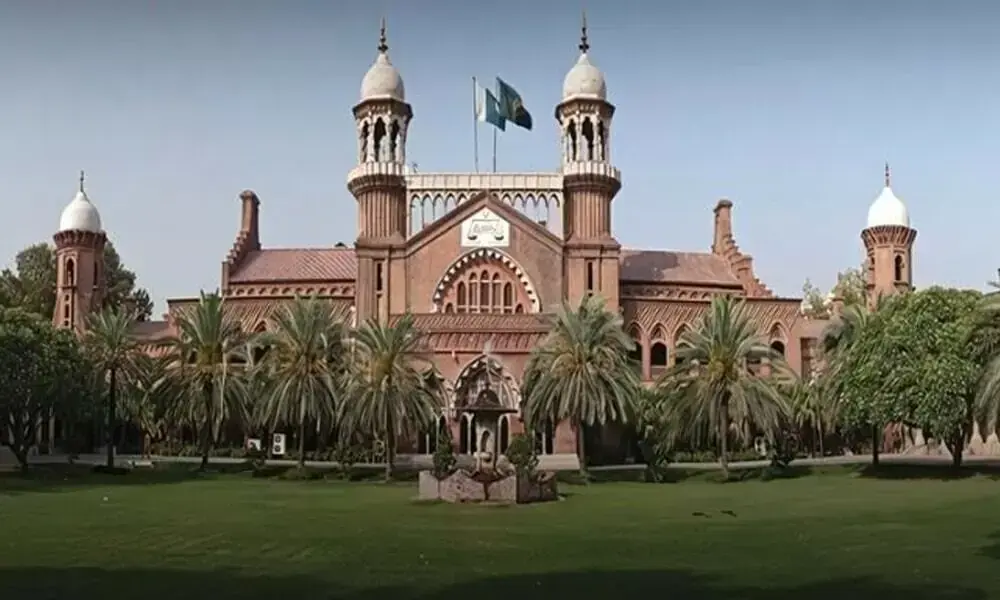

LAHORE: The Lahore High Court has held that if a predecessor himself fails to challenge the mutation during his lifetime, the successors cannot be permitted to resurrect stale and time-barred claims.
The court said that inheritance rights may, in certain circumstances, be recurring in nature but this principle is not absolute and is invariably subject to equitable considerations, including delay, acquiescence and the conduct of the parties, the court added.
The court passed this order in a petition of Jan Muhammad who challenged the mutation of an inherited property after about eight decades.
The court observed that in the instant case, it stands amply established through both oral as well as documentary evidence that the rule of inheritance at the relevant time was governed by custom.
READ ALSO: LHC suspends Punjab property ordinance, 2025
Prior to 1948 a person acquiring an agricultural land became its absolute owner, the court added.
The court also observed that prior to the enforcement of the Punjab Muslim Personal Law (Shariat) Application Act, 1948, agricultural land devolved under custom, the person acquiring such land shall be deemed to have become its absolute owner by virtue of section 2-A of the West Pakistan Muslim Personal Law (Shariat) Application Act, 1962. The court said the petitioners have failed to establish any jurisdictional defect, illegality, or material irregularity in the impugned judgment and decree warranting interference by this court in exercise of its revisional jurisdiction. The court said, the long-standing entries in the revenue record made in favour of the respondents are protected under section 52 of the West Pakistan Land Revenue Act, 1967.
Upon the efflux of the prescribed limitation period, a vested right accrues in favour of the opposite party, the court added.
The court said another significant facet of the case is that numerous mutations and transfers have taken place on the basis of the impugned mutation, thereby creating valuable rights in favour of third parties, including subsequent purchasers.
Longstanding entries in the revenue record carry a presumption of correctness, which becomes fortified and strengthened with the passage of time, the court added.
The court remarked that any attempt to unsettle such entries after several decades would inevitably result in uncertainty, instability, and chaos in property relations.
The court observed that appellate court has undertaken a comprehensive, penetrating, and judicious appraisal of the evidence and has recorded findings which are not only well reasoned but also firmly anchored in law.
No misreading or non-reading of evidence has been demonstrated, the findings are neither perverse nor arbitrary, the court added.
The court said in the present case, the delay spans nearly eight decades, which is not only extraordinary but wholly inexcusable, and cannot be condoned under the garb of inheritance.
The appellate court committed no illegality in passing the impugned judgment and decree, the court concluded.
Copyright Business Recorder, 2026




















Comments