


Pakistan naval chief calls for stronger defence innovation at future warfare conference
- Describes Indian Ocean as a key region where future of warfare is being shaped due to its major role in global trade flows
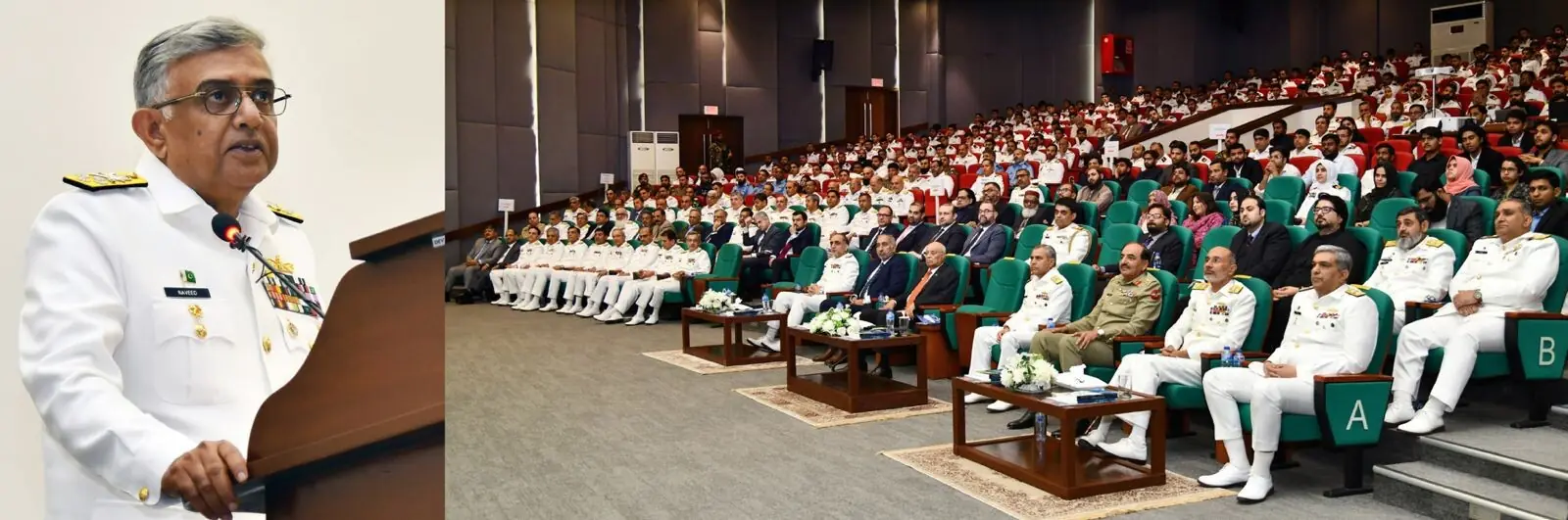
Chief of the Naval Staff Admiral Naveed Ashraf on Thursday called for stronger collaboration between industry, academia and military institutions to boost indigenous defence innovation and prepare for the changing nature of modern warfare.
He was addressing the concluding session of a two-day international conference titled “Emerging Technologies and the Future Warfare,” hosted by the Maritime Centre of Excellence (MCE) in Karachi, according to the Inter-Services Public Relations (ISPR).
The conference brought together maritime experts, academics, policymakers and defence industry representatives to discuss evolving geostrategic trends and the growing impact of advanced technologies on warfare.
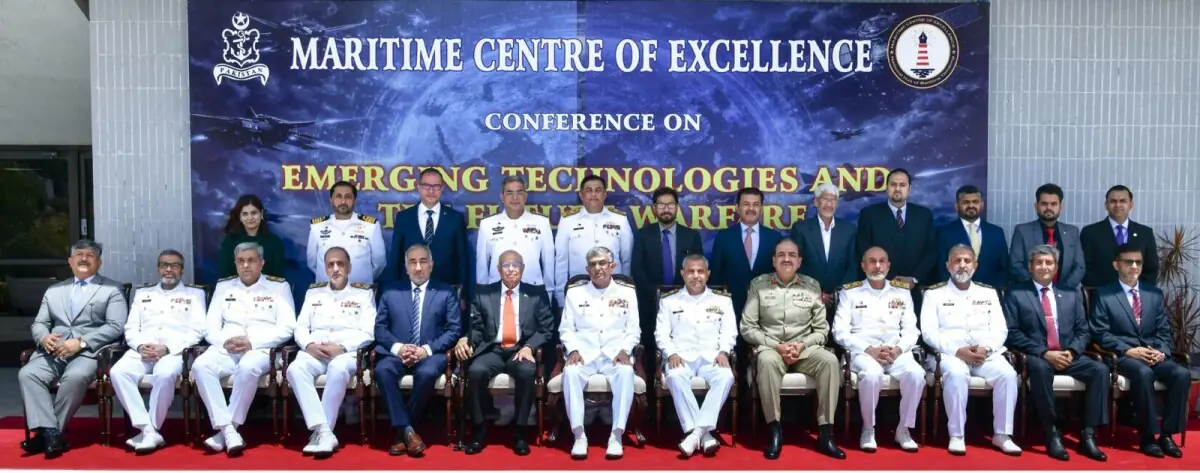
Admiral Naveed Ashraf said close coordination among industry, end-users and academia was essential to ensure innovation, adaptability and operational relevance in the defence sector.
READ MORE: Pakistan Navy successfully test-fires indigenous ‘Taimoor’ Air-Launched Cruise Missile
He said such cooperation would promote indigenisation and self-reliance, helping Pakistan build a cost-effective and globally competitive defence ecosystem with export potential.
Highlighting the strategic importance of the Indian Ocean, he said the region was where the future of warfare was being shaped due to its central role in global trade flows.
He warned that any disruption in the Indian Ocean could significantly affect global supply chains, energy prices and economies linked to international maritime trade.
The conference also examined the increasingly blurred lines between civil and military applications of advanced technologies, describing them as both an opportunity and a challenge for Pakistan’s defence ecosystem.
Participants discussed how rapid technological innovation was transforming warfare by reshaping operational concepts, force structures and battlefield outcomes.
Senior military officials, diplomats, policymakers, industry experts and students from various universities attended the event, which concluded with a renewed call for sustained intellectual collaboration to address technology-driven transformations in future warfare.
















Comments