


Meezan Bank loan: Govt extends SNGPL sovereign guarantee till June 2027
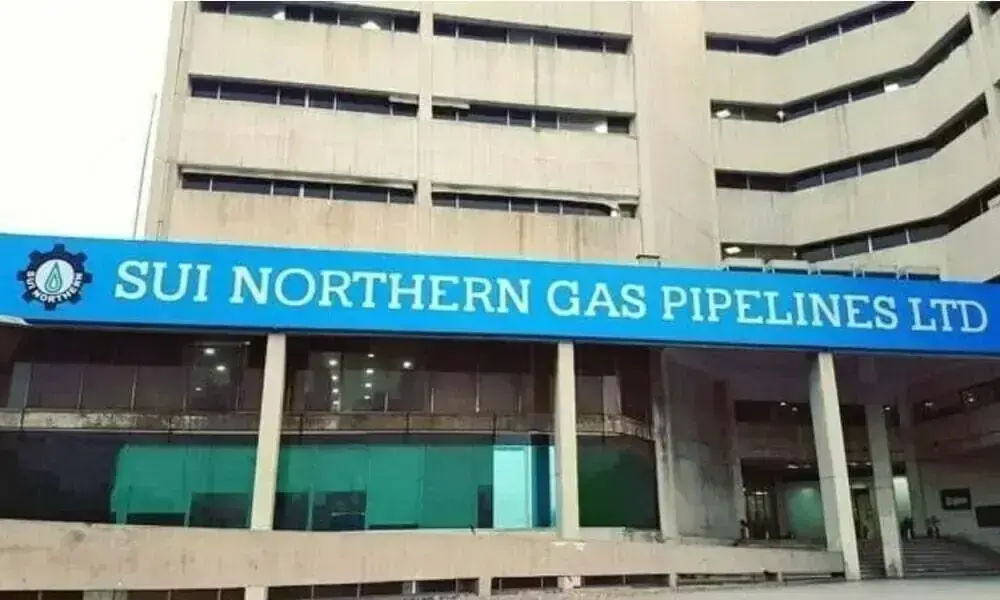

ISLAMABAD: The federal government has approved extension in the validity of sovereign guarantee backing a Rs50 billion financing facility obtained by Sui Northern Gas Pipelines Limited (SNGPL) from Meezan Bank Limited, till June 30, 2027, amid the company’s worsening financial health and its inability to retire the loan.
The decision was taken after detailed deliberations on a summary submitted by the Ministry of Energy (Petroleum Division), which highlighted structural financial challenges in the gas sector, persistent circular debt, and SNGPL’s constrained cash flows.
The sources said the financing arrangement was dates back to March 2023, when the Committee had directed the Finance Division to provide sovereign guarantee along with a letter of comfort to facilitate immediate commercial borrowing of Rs50 billion by SNGPL. The borrowing was primarily meant to ensure timely payments of RLNG liabilities to Pakistan State Oil (PSO) and Pakistan LNG Limited, in order to maintain continuity of gas supply.
In pursuance of the ECC decision, the Finance Division in July 2023 issued sovereign guarantees in favour of a banking consortium comprising Allied Bank Limited (Rs20 billion), Faysal Bank Limited (Rs20 billion) and National Bank of Pakistan (Rs10 billion) against running finance facilities secured by SNGPL.
Upon expiry of the initial guarantee, the Petroleum Division moved a fresh summary in April 2025 seeking extension. The ECC, in its decision dated May 5, 2025, allowed extension of the guarantee till June 2026, with conditions that the facility would be treated as a new exposure and that the Petroleum Division would comply with Finance Division’s guidelines governing sovereign guarantees. The ECC had also directed submission of SNGPL’s cash flow projections to assess its repayment capacity.
However, the Petroleum Division subsequently informed that SNGPL was unable to demonstrate a credible repayment mechanism. The company attributed its financial stress to multiple factors, including accumulation of gas circular debt, diversion of RLNG to subsidised domestic consumers, and demand destruction in the captive power sector, which significantly reduced revenue streams.
The situation further evolved when one of the consortium members, Faysal Bank Limited, reportedly sought early settlement of its share of financing. This prompted SNGPL to explore refinancing options, following which Meezan Bank Limited expressed willingness to take over the entire Rs50 billion exposures on comparatively favourable terms.
According to the Petroleum Division, Meezan Bank offered financing at 3-month KIBOR minus 30 basis points, compared to the earlier arrangement of 1-month KIBOR plus zero basis points. This restructuring was expected to generate annual savings of approximately Rs150 million in financing costs.
Consequently, the Finance Division issued a letter of comfort in October 2025, valid for 60 days, supporting the new financing arrangement with Meezan Bank for the period ending June 30, 2026. The Finance Division, however, emphasized that the primary responsibility for repayment of the loan, along with mark-up, rests solely with SNGPL.
During the process, the Finance Division raised objections regarding the structure of the sovereign guarantee, particularly Clause-7, noting that it did not qualify as a “continuing guarantee” as envisaged in the ECC decision and instead had a fixed expiry date. The Petroleum Division was asked to revise the guarantee document accordingly.
After multiple exchanges, the Finance Division in June 2026 issued revised and signed copies of the guarantee document, incorporating necessary amendments. In parallel, SNGPL, on behalf of Meezan Bank, also approached the State Bank of Pakistan seeking exemption from certain prudential regulations to cover the period during which sovereign guarantee was not in place.
The Petroleum Division underscored before the ECC that the financial difficulties of SNGPL are rooted in long-standing structural issues in the gas sector. Since FY2013, the sector has been grappling with accumulation of circular debt due to delayed or inadequate increases in consumer gas tariffs, which prevented full cost recovery.
While the flow of circular debt has largely been contained since November 2023 owing to periodic tariff revisions, the stock of debt and associated late payment surcharge (LPS) continue to rise. As of December 2025, SNGPL’s receivables stood at Rs1.095 trillion, while LPS had reached Rs931 billion.
Out of total receivables, approximately Rs819 billion pertains to tariff differential claims arising from government decisions, including sale of gas at subsidised rates and diversion of expensive RLNG to domestic consumers at lower tariffs.
The Petroleum Division also informed the ECC that despite tariff adjustments, no dedicated mechanism exists to retire the accumulated stock of circular debt, further aggravating the financial position of gas utilities like SNGPL.
In addition, the ECC was apprised that a comprehensive Circular Debt Management Plan (CDMP) for the gas sector has been developed with the support of a Task Force on Power Reforms and consultants, including KPMG. The plan has been shared with the International Monetary Fund (IMF) during the third review of the Extended Fund Facility (EFF) in March and May 2026.
According to the Petroleum Division, the IMF has raised queries on the CDMP, which have been responded to, and final feedback is awaited. The plan is expected to be rolled out in FY2026-27 after obtaining necessary approvals.
Given SNGPL’s inability to retire the Rs50 billion loan and the broader financial constraints facing the gas sector, the Petroleum Division proposed extension in the validity of sovereign guarantee till June 30, 2027.
After detailed discussion, the ECC approved the proposal, effectively allowing continuation of the government-backed guarantee for another year to ensure financial stability of SNGPL and uninterrupted gas supply operations, while longer-term reforms for addressing circular debt are pursued.
Copyright Business Recorder, 2026









Comments