


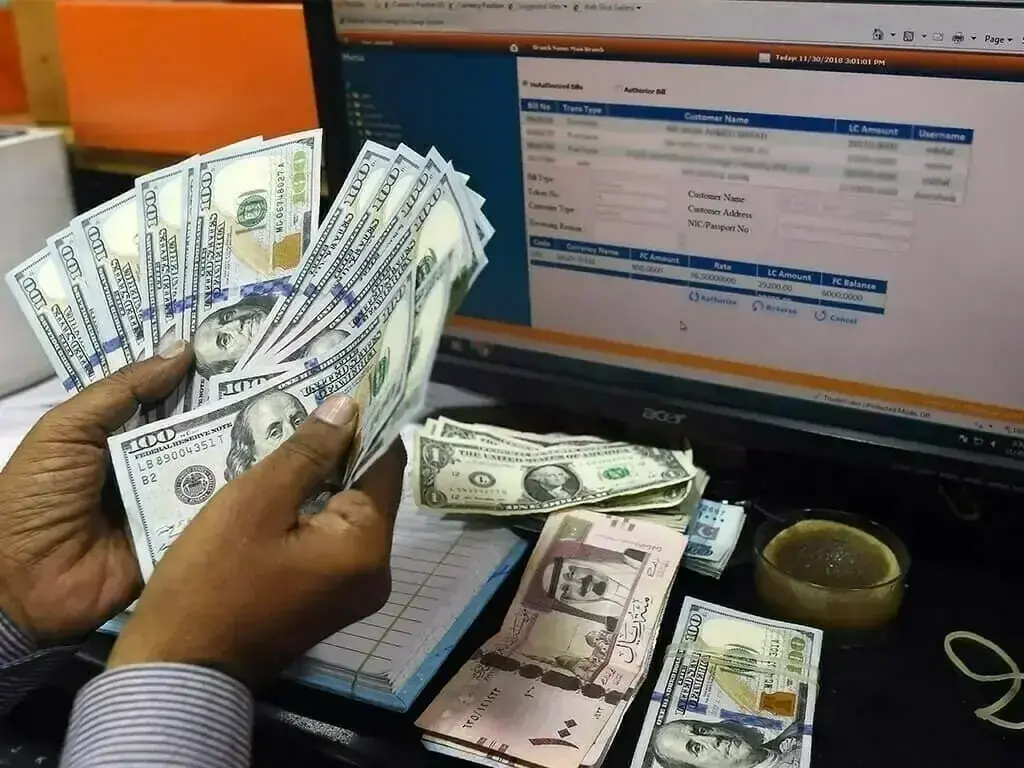
EDITORIAL: A monthly inflow of $3.83 billion in March, up 17 percent from February, has once again underlined the central role remittances play in keeping Pakistan’s external account afloat at a time when other channels remain weak. Reportedly, the State Bank of Pakistan (SBP) had anticipated the pre-Eid surge, and the outcome reflects both seasonal patterns and effective positioning by the central bank in maintaining a stable remittance pipeline.
The cumulative picture reinforces this stability. Remittances have reached $30.3 billion in the first nine months of the current fiscal year, marking an 8.2 percent increase over the same period last year. In an economy where export earnings have struggled to gain traction and foreign direct investment remains limited, to say the least, this steady flow of funds has become the most reliable support for the balance of payments.
That dependence, however, is a double-edged reality. While remittances continue to ease pressure on the current account and support foreign exchange reserves, they also reflect a structural imbalance in the economy. Pakistan’s external stability rests heavily on the income of its workforce abroad rather than on domestic productivity gains. This has been the case for years, but the current environment has made that reliance even more pronounced.
The March data also contains a note of caution. Despite the strong month-on-month increase, remittances declined by around 5 percent compared to the same month last year. This divergence between short-term strength and annual contraction points to emerging risks that cannot be ignored. The bulk of Pakistan’s remittance inflows originate from the Gulf region, with Saudi Arabia and the United Arab Emirates accounting for a significant share. Developments in that region, therefore, carry direct implications for Pakistan’s external position.
The ongoing conflict involving Iran, the United States and Israel has already introduced a degree of uncertainty into regional economies. Energy markets have been disrupted, fiscal priorities are shifting and labour markets may face pressure if instability persists. In such a scenario, remittance flows are unlikely to remain insulated. And even a modest disruption in inflows can have a disproportionate impact on a system that relies so heavily on them.
This raises the stakes for Pakistan’s diplomatic engagement. The country’s efforts to position itself as a mediator in the conflict are often viewed through a geopolitical lens, but there is also a clear economic dimension. A prolonged conflict in the Middle East would not only sustain volatility in energy prices but also risk weakening the remittance stream that underpins Pakistan’s external stability. A quicker resolution, therefore, carries tangible benefits beyond regional security.
At the same time, near-term obligations add to the urgency. With around $5 billion in external debt repayments due in April, including maturing deposits that require rollover or settlement, the margin for disruption remains limited. Strong remittance inflows help bridge this gap, but they cannot be assumed to remain at current levels if external conditions deteriorate.
The role of the State Bank of Pakistan in managing this environment deserves recognition. Anticipating seasonal inflows and maintaining confidence in formal channels has helped sustain remittance growth despite broader uncertainties. Policy continuity and exchange rate stability have also contributed to keeping flows within the documented system rather than diverting them to informal routes.
Yet the broader challenge remains unresolved. Remittances can stabilise the external account, but they cannot substitute for a diversified inflow base. Exports must expand, investment must recover and domestic productivity must improve if the economy is to move beyond its current dependence. Until that transition occurs, fluctuations in remittance flows will continue to carry outsized importance.
For now, the March numbers offer reassurance at a critical moment. They provide breathing space as the country navigates external repayments and regional uncertainty. But they also serve as a reminder of the vulnerabilities embedded in the current model. Stability built on a single pillar is inherently fragile, particularly when that pillar is linked to conditions beyond the country’s control.
The immediate priority is to sustain these inflows while managing the risks emerging from the regional environment. The longer-term task is to ensure that remittances remain a support, not the foundation, of external stability.
Copyright Business Recorder, 2026





















Comments