


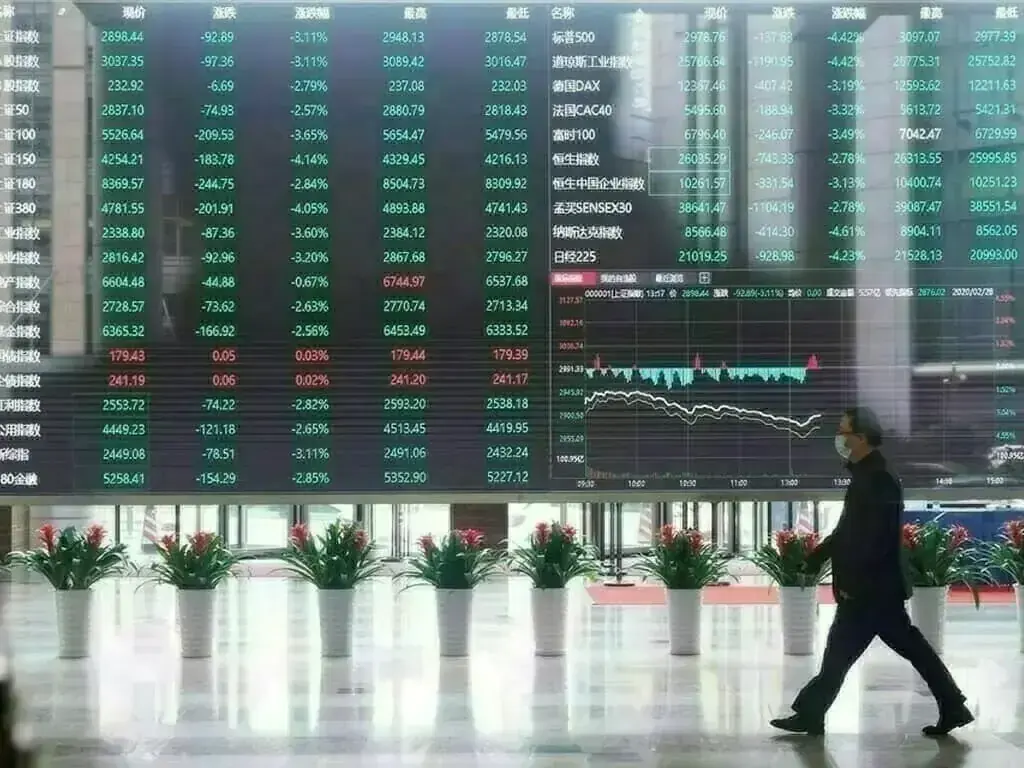

SHANGHAI: Stocks in mainland China and Hong Kong advanced on Friday, with the Shanghai benchmark snapping five straight weekly losses, underpinned by accelerating domestic inflation that signalled an end to entrenched industrial deflation.
China’s factory-gate prices rose for the first time in more than three years in March, an early sign that the war in Iran is feeding cost pressures into the world’s second-largest economy.
“The Middle East conflict put an unexpected but earlier end to China’s industrial deflation in March, despite an overall mixed picture,” Citi analysts said in a note.
At the close, the benchmark Shanghai Composite index rose 0.51 percent and the blue-chip CSI300 Index jumped 1.54 percent.
For the week, the SSEC gained 2.74 percent to book the first weekly rise in six, while the CSI300 rose 4.41 percent to snap three straight weeks of declines.
Hong Kong’s benchmark Hang Seng Index advanced 0.55 percent, while tech shares climbed 0.8 percent.
“The easing of deflationary risk should give policymakers a temporary opportunity to advance the already-planned reform agenda,” said Zhaopeng Xing, senior China strategist at ANZ.
“To mitigate the risk, the anti-involution push remains essential in the near term, in our view. Regulatory tightening will likely resume once the external headwinds subside,” Xing said, noting that domestic demand remained weak.
Brokerage shares led the gains as the upbeat inflation data lifted market sentiment, with a sub-index tracking the industry leaping 3.60 percent.
Middle East tensions remained one of the biggest market focuses. A fragile US-Iran ceasefire showed further strain on Friday, a day before they are to negotiate in Pakistan. Washington accused Tehran of breaching promises on the Strait of Hormuz and Israel struck Lebanon with attacks that Iran has claimed violate the truce.
Car exports, an increasingly important source of growth for China’s hyper-competitive auto sector, picked up pace in March despite shipment disruptions from the Middle East crisis.
Separately, market participants said they look to China’s first-quarter gross domestic product and a string of activity indicators next week for more clues on economic health.




















Comments