


India signals shift on e-commerce tariff moratorium, balks at US push for permanent extension
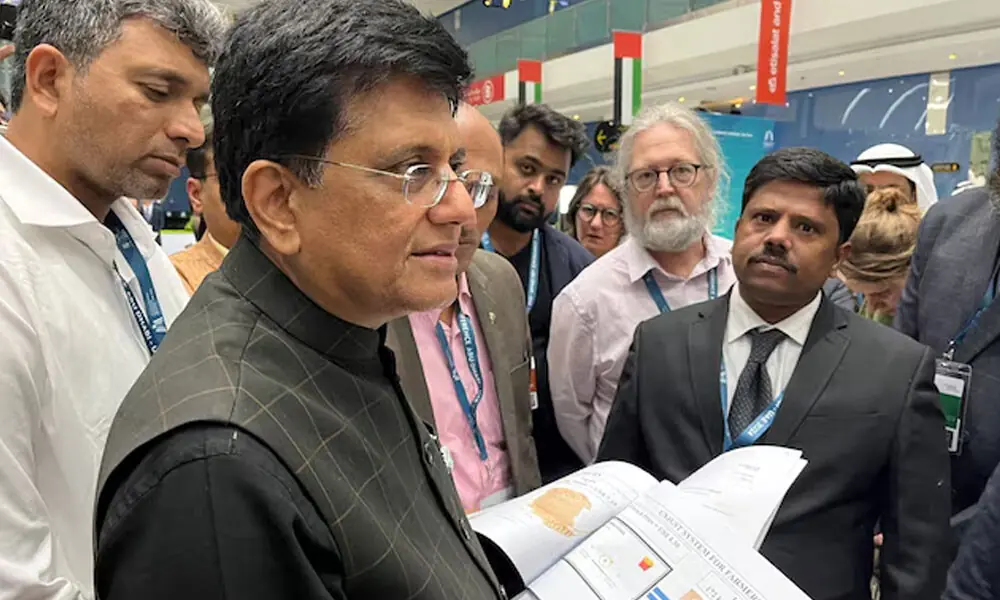

YAOUNDE: India has signalled it may drop its opposition to the extension of a global agreement to not impose tariffs on electronic transmissions such as digital downloads, though it remains far from agreeing to a U.S. push to make it permanent, diplomats said.
India’s Commerce Minister Piyush Goyal had on Thursday cast doubt on U.S. efforts to permanently extend the moratorium - which is set to expire this month - during a World Trade Organization meeting in Cameroon this week, saying it warranted “careful reconsideration.”
However, India late on Friday night indicated to WTO members
it would agree to an extension of two years, two senior diplomatic sources said, in the first sign of an opening in its position, ahead of the WTO meeting on the matter on Saturday.
READ MORE: India to suspend postal deliveries to US over tariff confusion
It is unclear, however, if a short-term extension would be satisfactory to the United States. U.S. trade Representative Jamieson Greer said on Thursday Washington was not interested in a temporary extension to the ban, only a permanent one.
Business leaders say an extension is critical to guarantee predictability, fearing duties could be introduced if the agreement lapses.
Two senior diplomats said U.S. and Indian positions were still far apart.
Among the four formal proposals made by members, the African, Caribbean and Pacific (ACP) Group have proposed extending the moratorium by two years, while the U.S. seeks a permanent extension.
A third senior diplomat said that members are trying to forge a middle path of extending the moratorium beyond the next ministerial meeting - between five and 10 years. It was uncertain if the U.S. or India would accept a middle ground, they added.
The extension of the e-commerce moratorium during the WTO meeting in Yaounde is being seen as a key test for the global watchdog’s relevance, following a year of tariff-fuelled trade turmoil and major disruption to shipping, energy prices and supply chains due to the Middle East conflict.
“I think for some countries it’s actually quite existential to prolong the moratorium for a significant time,” Norwegian Foreign Minister Espen Barth Eide said, adding it would help demonstrate that ministers were able to deliver something concrete at the meeting in Yaounde.
Businesses fear uncertainty
For nearly three decades the e-commerce moratorium has been extended until the next ministerial conference.
The U.S. wants major American tech businesses such as Amazon, Microsoft and Apple to have a stable regulatory environment without the fear and costs of countries introducing duties that could impact cross-border digital trade.
John Bescec, Director, Customs and Trade Affairs at Microsoft, said businesses already face uncertainty around digital services across borders and required predictability.
“In the digital economy, uncertainty does not mean flexibility. Uncertainty means hesitation to invest,” he said.
Some developing countries believe the e-commerce moratorium deprives them of potential tax revenue which they could invest back into their countries.
Sofia Scasserra of the Transnational Institute think tank said the moratorium had failed to bolster digital economies in developing countries, and urged its expiry to enable a new agreement that would help them compete with U.S. Big Tech giants.
“The moratorium did not create a rising tide that lifted all boats. It created a protective ocean, protected for the few who already have the biggest ships,” she said.

























Comments
Comments are closed for this article.