


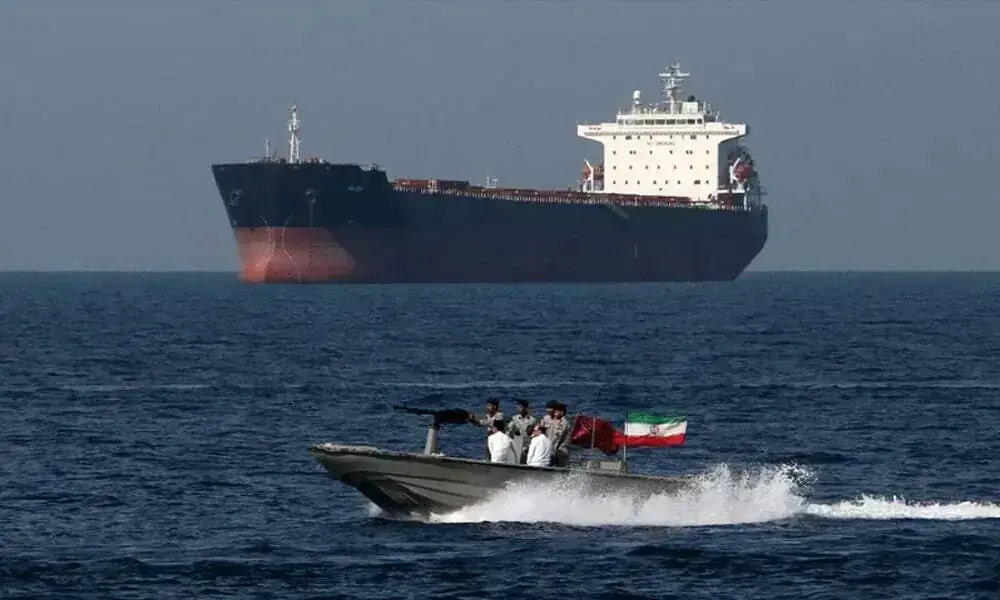

America is midway through the fourth week of a war that shows no signs of stopping. The Strait of Hormuz remains closed, and oil prices soar.
The United States, in need of its allies the most, has lost the support of many. As attacks on Iran and Lebanon intensify and the global economy teeters on the precipice, one is left with a straightforward question: who stands to gain most from this war?
Who stands to lose most from this war? To begin with, the petrodollar system gives legitimacy to the US dollar, which relies on oil purchases in dollars for the currency’s stability.
Higher oil prices mean that most countries would be paying higher prices for these purchases, strengthening the dollar as demand for it rises. This increased demand allows the United States to issue sovereign debt more cheaply, as the dollars circulating through oil markets are recycled into US Treasury bonds, effectively shifting part of the financial burden of any American expenditure, including war, onto the rest of the world.
What about the other superpowers, though? Russia benefits significantly from this war; with sanctions partially lifted for a temporary period, it becomes a major exporter in global oil markets.
China, on the other hand, had anticipated instability, stockpiling millions of barrels through 2025 when the price was still around 60 USD a barrel. With reserves estimated at over a billion barrels in onshore storage alone, China has positioned itself to weather months of disruption without the same price exposure facing the rest of Asia.
The rest of the world, however, is in dire straits. The killing of Ali Larijani, Iran’s de facto leader since Khamenei’s assassination, along with Intelligence Minister Esmail Khatib and Basij commander Gholamreza Soleimani, leaves little room for those within the establishment who could negotiate, setting an unpredictable timeline for the end of this war. This would almost certainly lead to greater uncertainty with regard to rising oil prices, which have already crossed 110 dollars a barrel. With production cuts of at least 10 million barrels per day across the Gulf, damage to Saudi refining facilities, the shutdown of Qatari LNG exports, and the mass departure of expatriate workers, the GCC countries stand to lose most from this war after Iran and Lebanon, whose critical oil and refining infrastructure has been damaged, along with their reputations, especially in Dubai.
Europe is next in line, which relies heavily on imports. While it does not depend entirely on the GCC, it remains exposed to global oil markets. These imports are largely paid in petrodollars, meaning that as oil prices rise, Europe must pay more in an already strengthening currency, increasing pressure on inflation and economic stability.
East Asia, apart from China, also imports heavily through the Strait of Hormuz and mostly settles its payments in USD. With each passing day, the burden of higher oil prices and a strengthening dollar continues to build, placing increasing pressure on import-dependent economies across the region.
This economic squeeze is already being felt in Pakistan, where the government would pass on the oil shock to ordinary consumers through a petroleum levy surcharge.
Currently, Al Jazeera has ranked Pakistan as the sixth most expensive among 95 countries that increased oil prices following the Strait of Hormuz closure. Pakistan increased prices by 24.49 percent, only slightly less than a few hard-hit East Asian countries and Canada.
While the US does gain through higher oil prices, the cost of war is debilitating. With roughly 11 billion dollars spent in the first week alone, the cost of munitions, supplies, and operational deployment could push total expenditures significantly higher for the United States.
Based on this trajectory, total costs could approach 50 billion dollars, by my own estimate. Yet, unlike any other belligerent in modern history, the United States finances this expenditure in a currency the rest of the world is simultaneously forced to accumulate, a structural advantage that no war cost estimate fully captures.
Meanwhile, most news channels in the United States discuss Donald Trump’s mixed messages. Whether it is for maximum flexibility around the objectives of the war, one thing is clear: there is neither a military solution as yet nor a diplomatic one.
Trump’s administration might be able to reverse-engineer its objectives in time, but clearly, it had not done its homework for this war. Iran, on the contrary, appears to have prepared well in advance, despite being highly disadvantaged against its adversaries.
The US Federal Reserve also finds itself with little room to maneuver amid the perplexing situation. Markets are pricing in almost no chance of rate cuts in the near term, with policymakers having held rates steady as they navigate the Iran war, inflation risks, and a weakening labour market.
The February payrolls report, which showed 92,000 jobs lost and an unemployment rate rising to 4.4 percent, would ordinarily strengthen the case for rate cuts. However, the risk of an oil-driven inflation spike has effectively forced the Fed to remain on the sidelines.
In doing so, higher interest rates continue to support a stronger dollar. Domestically, this helps contain inflation and makes imports cheaper, providing a degree of stability to the US economy and making it easier to finance the cost of war.
This raises a deeper question about how the burden of war is distributed. The United States, by virtue of issuing the world’s reserve currency, is able to finance its expenditures in ways few others can. As oil prices rise and demand for dollars increases, a portion of this burden is effectively shifted outward, as other economies must secure and recycle those dollars through trade and financial markets.
The system does not eliminate the cost of war, but it allows the United States to absorb it more comfortably than most.
At the same time, the conflict is reshaping regional dynamics on the ground. Israel’s expanding operations in Lebanon have led to large-scale displacement, leaving significant areas depopulated. To many observers, these developments raise concerns that prolonged military presence could alter territorial realities, as seen after the Arab-Israeli war and more recently in Gaza. This time, however, such shifts would be unfolding in Lebanon. For economies already reeling from the oil shock, an expanding theatre of conflict only prolongs instability, keeping energy markets tight and reinforcing global demand for the dollar.
Recent developments have thus clarified that this is Israel’s war for more influence in the Middle East, backed by the United States.
Trump now finds himself balancing his own MAGA base amid rising anti-war sentiment within the US and Israel’s desire for sustained warfare.
While Netanyahu’s objectives appear more deeply rooted, Trump now stands at a crossroads, especially after the resignation of Joe Kent, Director of the National Counterterrorism Center; he must either declare victory and list the objectives he has achieved, or risk becoming entangled in a prolonged war that could weaken his political capital and the standing of the United States as a superpower.
Copyright Business Recorder, 2026
The writer is an economist and an educationist




















Comments
Comments are closed for this article.