



ISLAMABAD: The Senate Standing Committee on Finance and Revenue took strong notice of Politically Exposed Persons (PEPs) regulations, which, according to members, were leading to undue harassment of parliamentarians, judges, senior officials and their associates and were creating hurdles for businesses and financial activities.
Finance Minister Muhammad Aurangzeb, however, stressed that Pakistan must comply with the regulations of global financial institutions, warning that failure to do so could push the country back onto the FATF grey list.
Deputy Governor of the State Bank of Pakistan (SBP), Inayat Hussain, explained that the regulations were introduced in line with the requirements of the Financial Action Task Force and the International Monetary Fund.
READ MORE: 10 highest risk agencies: NAB to lead action plans to mitigate vulnerabilities
He further said that the next evaluation assessment of Pakistan by the FATF would be held in 2028, warning that any deviation from these standards poses a risk and could push the country back onto the grey list.
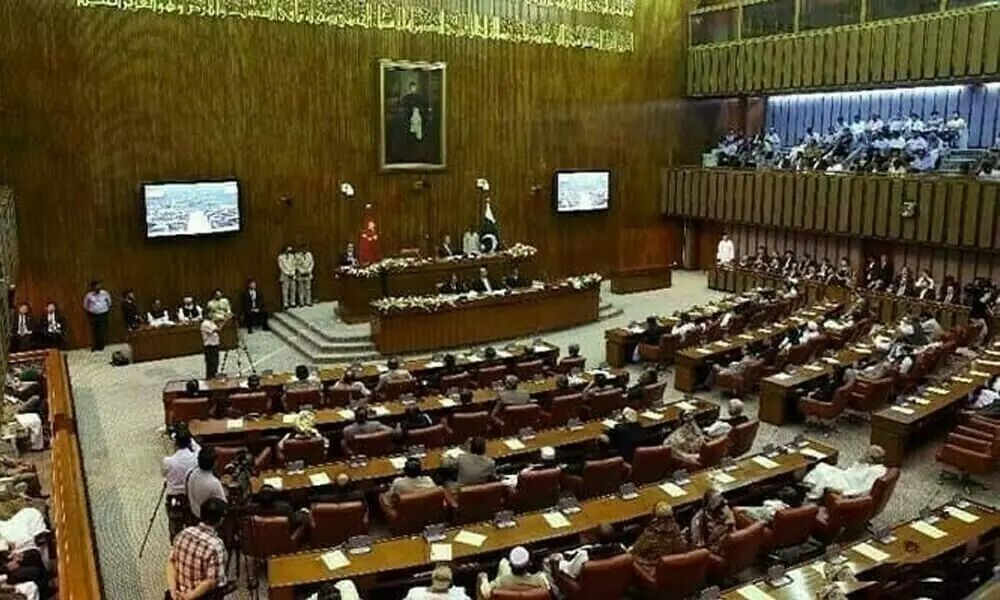
The committee met under the chairmanship of Senator Saleem Mandviwalla, where several lawmakers criticized the implementation of banking regulations requiring detailed financial scrutiny of politicians and their families.
During the meeting, Senator Farooq H. Naek alleged that the rules were being used to harass individuals under the label of “Politically Exposed Persons.”
“Is this a police state or a democratic country?” Naek asked, warning that such conditions discourage investment and business activity in the country.
He further complained that even relatives and family members of politicians were facing difficulties in opening bank accounts or conducting business. “If I am not doing business with them, why are notices being issued?” he questioned.
Some committee members also argued that the regulations had created unnecessary complications for financial transactions and business operations. One member claimed that after the September 11 attacks, Western countries had effectively initiated what he termed “business terrorism” through strict financial compliance rules.
Mandviwalla said the situation had become so restrictive that even parliamentarians and their family members were struggling to open bank accounts.
An SBP official said banks had been directed to obtain details of customers’ sources of income and transaction histories to comply with international anti-money laundering standards.
Participating in the meeting via video link, Finance Minister Muhammad Aurangzeb stressed that Pakistan must comply with the regulations of global financial institutions, warning that failure to do so could push the country back onto the FATF grey list.
“These regulations are in accordance with FATF standards and guidelines,” the deputy governor reiterated. Chairman of the Pakistan Banks’ Association, Zafar Masud, acknowledged that issues existed in implementation and suggested dialogue to resolve them. “I am not saying banks are not at fault,” he told the committee.
Senator Abdul Qadir argued that terrorism continued in Balochistan and Khyber Pakhtunkhwa despite the strict regulations, questioning whether the objectives of the law were actually being achieved.
Senator Faisal Sabzwari also pointed out that before elections, the Election Commission of Pakistan requires candidates to open new bank accounts, but commercial banks often refuse to open them.
To address the issue, the Chairman directed the constitution of a sub-committee to identify regulatory and operational gaps and propose solutions in consultation with all stakeholders, including scheduled banks. He stressed that regulatory frameworks must not be misused and that no individual should face undue hardship in the name of compliance.
The Committee also took notice of a taxpayer-related case concerning the Alternate Dispute Resolution Committee (ADRC), where an FBR member had reportedly not signed the decision as another agenda item.
The representative of M/s ADOS, as the petitioner, briefed the committee about the grievances. However, Member FBR informed the Committee that under existing law, the Federal Board of Revenue cannot reconstitute the ADRC.
The Committee urged FBR to promote a business-friendly environment. The Chairman of the committee referred the matter to the Minister of State for Finance and Revenue to resolve it amicably and report to the committee within two weeks.
He further directed the FBR not to take any coercive measures against the petitioner.
Copyright Business Recorder, 2026





















Comments