


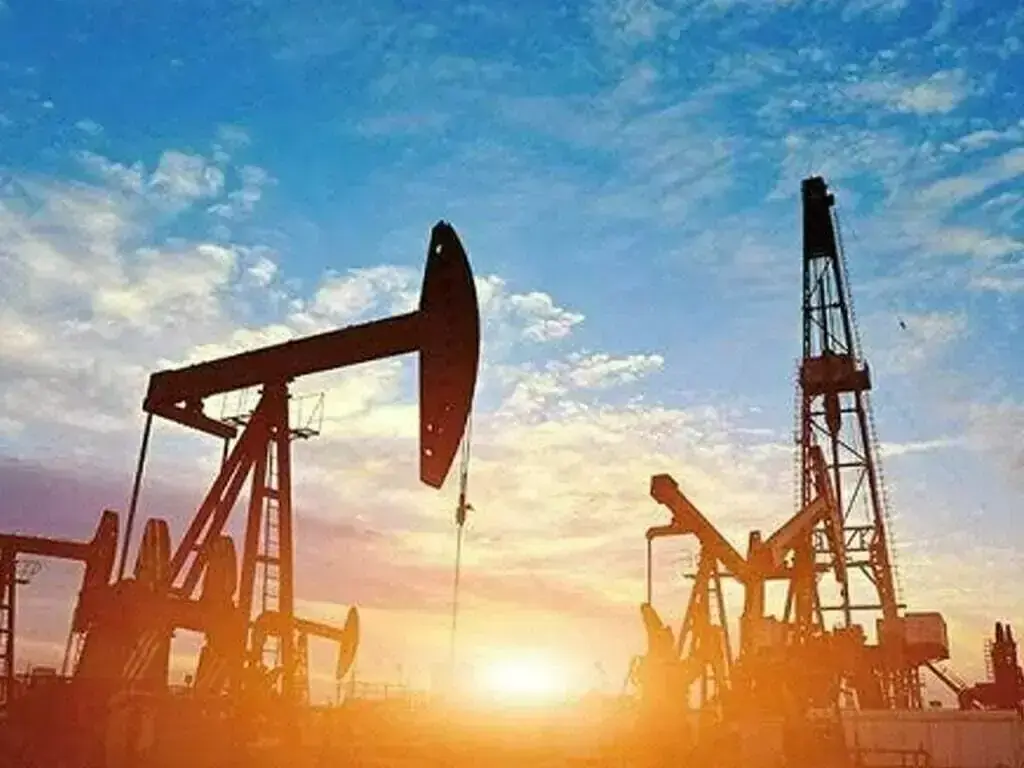

NEW YORK: Oil prices settled up about 9 percent on Thursday, at their highest in nearly four years, as Iran stepped up attacks on oil and transport facilities across the Middle East, and the country’s supreme leader vowed to keep the vital Strait of Hormuz shut.
Brent futures settled at USD100.46 a barrel, up USD8.48, or 9.2 percent, after touching a session high of USD101.60. US West Texas Intermediate crude settled at USD95.70, up USD8.48 or 9.7 percent. Both contracts settled at their highest since August 2022.
“The market is seriously unbalanced and that will continue until the Strait is reopened and upstream and downstream operations return to normal. It will not happen quickly,” said Jim Burkhard, vice president and global head of Crude Oil Research at S&P Global Energy.
US Energy Secretary Chris Wright told CNBC on Thursday that the US Navy could not escort ships through the Strait of Hormuz now but it was “quite likely” that could happen by the end of the month. Global oil prices are unlikely to hit $200 a barrel, Wright said, even as Iran continues to strike merchant ships.
Two fuel tankers in Iraqi waters were struck by explosive-laden Iranian boats, Iraqi security officials said on Thursday. An Iraqi official told state media the country’s oil ports have completely stopped operations.
Oman shifted all vessels out of its main oil export terminal at Mina Al Fahal outside the Strait of Hormuz in a precautionary move, a Bloomberg News report said.
On Monday, Brent hit USD119.50 a barrel, its highest since mid-2022, then dropped after US President Donald Trump said the Iran war could be over soon. To combat rising prices, the Trump administration is considering waiving the century-old Jones Act for a limited period to ensure energy and agricultural shipments can move freely between US ports, White House press secretary Karoline Leavitt said on Thursday.
Supply hits
The war is causing the biggest oil-supply disruption in the history of global markets, the International Energy Agency said on Thursday, a day after approving the release of a record volume of 400 million barrels of oil from strategic stockpiles.
A detailed breakdown has not been provided yet, so there is skepticism in the market that the full volume will actually be released, Energy Aspects analysts said, adding that the total barrels of mostly crude and some products inventories are only equivalent to 25 days of the current disruption to flows.
Middle East Gulf countries have cut total oil production by at least 10 million barrels per day - a volume equaling almost 10 percent of world demand, the IEA said in its latest monthly oil market report. Middle East refineries have also shut in 2.35 million barrels per day of crude and condensate refining capacity, consultants IIR said.
Lebanon’s Hezbollah launched its biggest rocket salvo of the war on Wednesday, prompting Israeli strikes that shook Beirut.
Hezbollah’s attack also raised fears about Yemen’s Houthis joining the war alongside Iran, which could further disrupt Red Sea shipping. Saudi Arabia has ramped up crude exports from its Red Sea port of Yanbu in recent days.




















Comments