


Energy Purchase Agreements: ISMO says wind projects financially protected
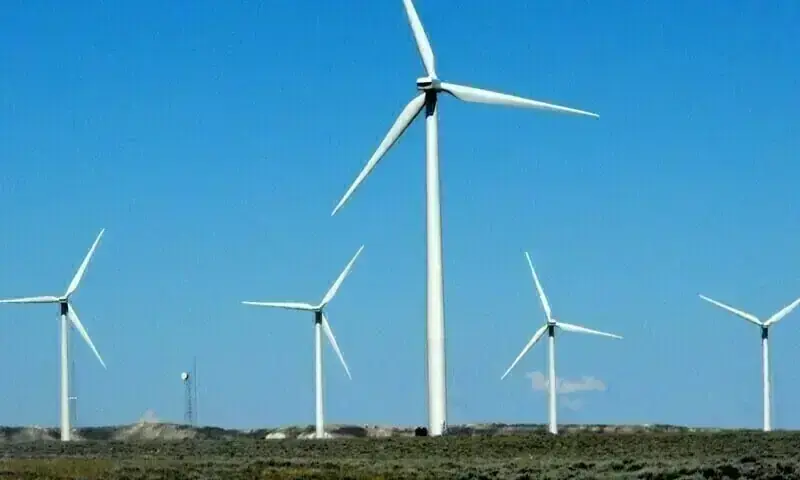

ISLAMABAD: The Independent System and Market Operator (ISMO) has stated that wind power projects remain financially protected under their Energy Purchase Agreements (EPAs) through the mechanism of Non-Project Missed Volume (NPMV), which compensates generators for energy that cannot be dispatched due to system constraints.
The clarification was issued in response to recent media reports regarding curtailment of wind power generation. ISMO, which operates power plants according to the Economic Merit Order (EMO), said the reports created an impression that curtailment of wind power is a discretionary action by the system operator.
According to an ISMO spokesperson, maintaining the real-time balance between electricity demand and supply is the core statutory responsibility of the system operator. To ensure secure and stable grid operations, ISMO manages the entire generation fleet—including hydro, thermal, nuclear, wind and solar—strictly in accordance with the Grid Code and the provisions of respective Power Purchase Agreements (PPAs) and EPAs.
READ MORE: Despite revised pacts: Wind power plants face increased curtailment by IMSO
The spokesperson explained that the power system has recently been experiencing significant intra-day demand variations, mainly due to the rapid growth of rooftop solar installations. During daylight hours, system demand can fall to around 7,000–8,000 MW, compared with evening peaks exceeding 16,000 MW.
Under such conditions, all power plants, regardless of technology, have to be backed down to their technical minimum levels to maintain grid stability. Wind plants are therefore treated in the same manner as other generators, and these operational adjustments are fully permitted under the Grid Code as well as contractual frameworks governing the plants.
ISMO further noted that a typical load curve for January 2026 shows an intra-day variation of 7,019 MW, with minimum load recorded at 8,650 MW at 1300 hours and maximum load reaching 15,669 MW at 1800 hours. This reflects the operator’s efforts to run the power network efficiently and stably at both minimum and maximum demand levels.
The system operator reiterated that wind projects remain financially protected through the NPMV mechanism under their EPAs, which compensates generators when energy cannot be dispatched due to system limitations.
ISMO also highlighted several measures taken to improve the system’s ability to evacuate wind power. These include enhanced power import capability from the national grid to K-Electric, commissioning of new infrastructure such as the 500 kV KKI grid station, improved wind forecasting, increased utilization of the HVDC-AC transmission corridor, and the recent commissioning of the 500 kV Lahore North grid station.
According to ISMO, these steps are already showing positive results, with average annual wind utilization relative to availability improving from 56 percent in 2023 to 62 percent in 2024, and further to 75 percent in 2025.
The operator added that additional initiatives are underway to address the emerging daytime “duck curve”, including demand-side measures such as industrial power packages and plans for installing utility-scale Battery Energy Storage Systems (BESS) within the national grid network.
ISMO reiterated its commitment to facilitating renewable energy integration while ensuring secure and reliable operation of the power system.
Copyright Business Recorder, 2026





















Comments