


CM Maryam, federal ministers review Punjab’s fuel reserves amid global war
- Punjab to implement fuel conservation policy, crackdown on petrol hoarders
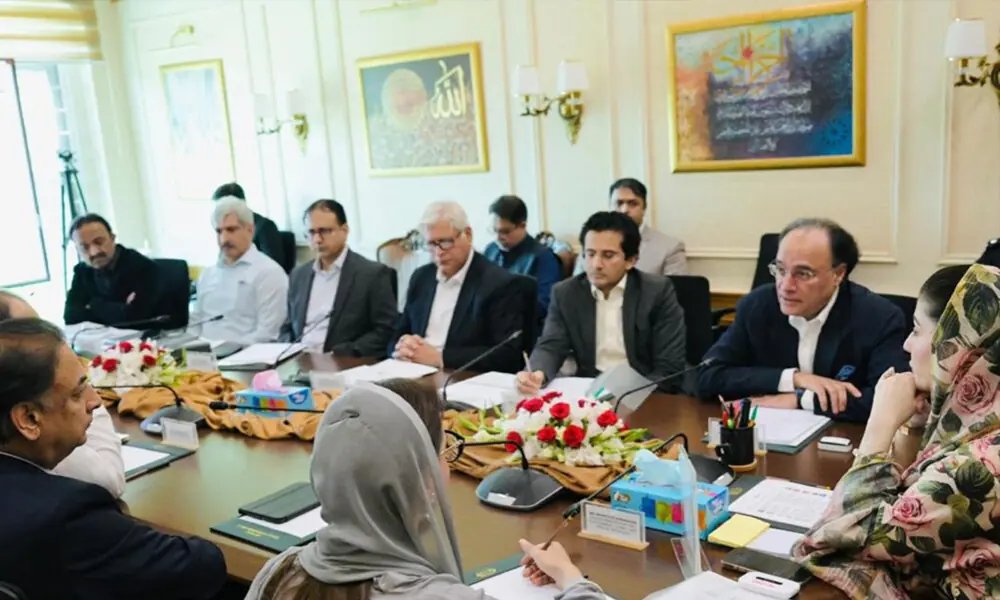

Punjab Chief Minister Maryam Nawaz Sharif met Federal Finance Minister Muhammad Aurangzeb and Federal Minister for Petroleum Ali Pervaiz Malik to review the situation arising from the ongoing war and its possible impact on petroleum supplies.
During the meeting, the participants reviewed the supply, demand and available reserves of petroleum products in Punjab. They also discussed measures to maintain balance between demand and supply of petroleum products in light of the evolving global situation.
The meeting agreed on adopting a fuel conservation policy to maintain equilibrium in petroleum demand and supply. The chief minister emphasised the need to ensure uninterrupted availability of diesel for agricultural use.
Maryam directed the district administration to continuously monitor the supply of petroleum products and ordered a strict crackdown against hoarding. She also instructed the Punjab Enforcement and Regulatory Authority and the Transport Department to closely monitor the situation and take action where necessary.
Read More: Islamabad: 7 petrol pumps sealed for refusing to supply fuel
The chief minister said the public should not have to stand in long queues at petrol pumps and directed that no sale of petroleum products above the officially notified prices would be allowed anywhere in the province.
She said the entire nation must demonstrate resilience to face the emerging challenges, adding that timely decisions are essential to safeguard economic stability.
During the meeting, officials also briefed participants on the reserves of petrol, diesel, LNG and other fuels, noting that immediate steps to conserve fuel and ensure prudent consumption were necessary in view of the global crisis.
The development takes place a couple of days after Prime Minister Shehbaz Sharif directed the minister for petroleum to visit the provinces and, in collaboration with provincial governments, prepare a strategy and plan for the conservation of petroleum products and their uninterrupted supply to the public.
The premier on March 6 directed the creation of a dashboard regarding the movement of petroleum products, through which data would be shared with provinces in real-time and the transportation of petroleum products would be monitored.
Presiding over a high-level meeting to review the country’s fuel stocks amidst a shifting regional situation, Shehbaz had ordered an immediate nationwide crackdown on the hoarding of petroleum products, directing provincial governments to shut down petrol pumps and cancel the licences of those involved in creating artificial shortages.
Earlier, Sindh Chief Minister Syed Murad Ali Shah and the federal ministers met in Karachi and reviewed the fuel supply situation. They also discussed contingency measures amid fears of rising global oil prices due to escalating tensions in the Middle East.
The meeting at the Chief Minister House was attended by Finance Minister Aurangzeb and Petroleum Minister Ali along with senior federal and provincial officials, according to a statement issued by the Sindh CM’s spokesperson.
Sindh Home Minister Zia-ul-Hassan Lanjar, Chief Secretary Asif Haider Shah, Energy Secretary Shehab Ansari and other officials also attended the meeting, while the federal delegation included senior officials from the petroleum division, the Oil and Gas Regulatory Authority (Ogra) and Sui Southern Gas Company.
Officials briefed the meeting that global crude oil prices could rise to as high as $120 per barrel if the Middle East conflict intensifies.
The meeting discussed emergency fuel conservation measures and the need for responsible energy consumption to cope with a potential energy crisis.
Murad said the government’s priority was to keep the national economy running while ensuring prudent energy use with public cooperation.
He added that the proposals discussed in the meeting would be presented before the provincial cabinet for further deliberation.

















Comments