


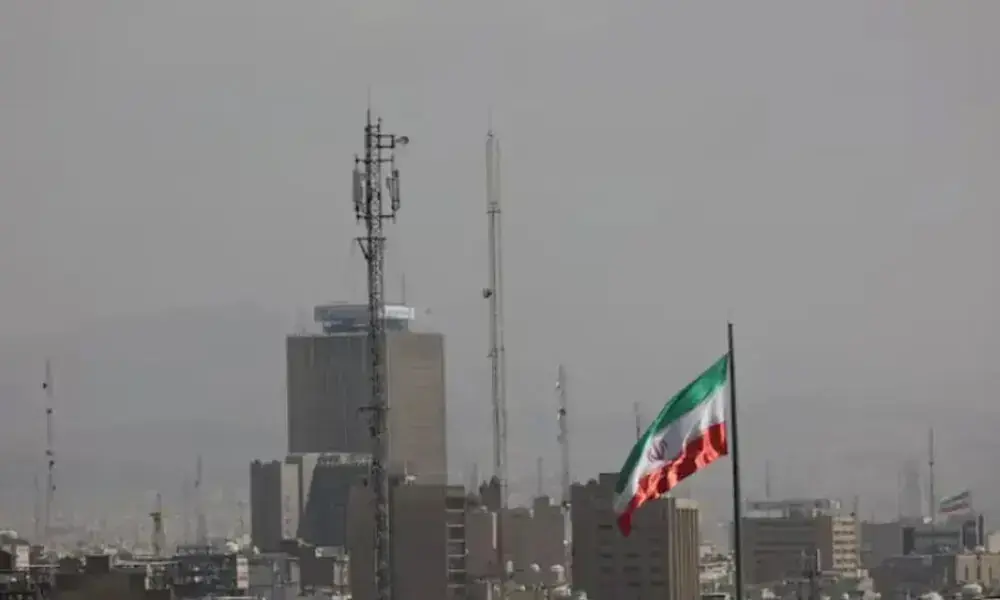

All the big powers, except China, are involved in direct or indirect hard conflicts. US scholars proposed the ‘the end of history’ and the dawn of a ‘new enlightenment era’ after the US-led West’s triumph against the Soviet Union. But the last twenty years tell a different truth. Big powers disrespected international laws. They sacrificed world peace for vested gains and they have a carte blanche to invade and destroy any dissenting small state in the name of preemptive strikes.
It seems as if the world suddenly lost all its wisdom. Earlier, millions of people fell prey to preemptive strikes based on false information in Iraq, Libya, Syria and Afghanistan. On February 28, the US and Israel launched another preemptive strike but this time the target was the supreme leader and top brass of Iran armed forces.
The attack was launched hours before a scheduled meeting between the US and Iran to discuss a possible nuclear deal. This shows that Israel and the US were not interested in a deal; rather, they wanted and still want an absolute regime change in Iran - at any cost. The current regime in Iran is trying to protect itself. Iran vowed that they will take revenge of Khamenei’s death, which means the conflict is not going to subside anytime soon.
Therefore, there are a number of possibilities that can emerge in the coming days, which will have broader global and regional repercussions. Currently, 40,000 US armed personnel serve various bases in the Gulf States. Iran will pressurize the US by attacking her bases in the Gulf and her allies in the region (Iran has been attacking the Gulf countries in response to the US-Israel attack on it). This will cause widespread destruction across the Gulf region.
Attacks on the UAE, Bahrain and Saudi Arabia can broaden the range of conflict and its impact on the global economy. At the same time, Iran can continue attacking Israel. This tactic can turn the Israelis against the hawkish government of Netanyahu.
However, to do this, Iran needs to replenish its missile stocks in order to continuously target Israel. Iran also needs to protect its batteries from Israel and US attacks, which is not an easy task.
Iran’s attacks on the Gulf States will disrupt the migrant labour market there. Most of the South Asian diaspora will lose their jobs and remittances will decrease.
This will give way to the BoP crisis in countries like Pakistan whose foreign exchange reserves squarely count on remittances from the Gulf States. Unemployment in Pakistan is already high and domestic economy is struggling to stabilize. In such a scenario, the return of overseas Pakistanis from the Gulf will destabilize the Pakistan economy.
The second scenario is that Iran will capitulate and will accept the US demand of regime change. This scenario is strategically more dangerous. Keeping in view that Balochistan is reeling because of foreign intervention. Therefore, regime change in Iran can bring Israel closer to the borders of Pakistan. Recent warmth in Israel-India relation can further escalate insurgency in Balochistan.
However, historical evidence sine 1918 till US invasion of Afghanistan in 2003 shows that US coercion often failed (Phil Haun, 2015). Therefore, it is less likely that Iran will give in but at a very high cost. The destruction of Iran air defence system will leave it bare open for similar internal instability earlier experienced by Iraq, Libya and Afghanistan.
The third possibility is closure of the Strait of Hormuz (shut down by Iran on Monday). But the Hormuz closure will not significantly affect the US and Israel. Rather, the Hormuz shutdown will affect oil exporting and oil importing countries in Asia.
Gulf economies will get bruised and oil supply to the EU, South Asia and China will get disrupted. This scenario has serious long- and short-term repercussions for oil importing South Asia. Inflation can increase in short- and long-run and energy supply disruptions can drastically decrease industrial production. An energy crisis will completely erode Pakistan’s export competitiveness.
The final scenario is that Iran will activate its proxies in Bab al-Mandab (in the Red Sea) to attack US ships. This will directly affect trade routes and will create problems for international trade. The imported goods’ prices will shoot in the US and global inflation will increase.
Taking conflict away from Iran to Bab al-Mandab or to Lebanon is the only scenario which will give a breathing space to the Gulf countries and to the South Asian economies, especially to Pakistan. However, the conflict will still hunt developing economies like Pakistan mainly because they have a weak economic structure.
The above scenario can vary depending on the long- and short-term US commitment to the regime change project in Iran. In short run, US can bomb Iran but it will not permanently deter or defeat Iran. Rather, it will bring Iranian people closer to the regime.
While in the long run, American forces will be required to set foot on Iranian soil. This is the scariest scenario for the US. The US does not want to be dragged into another conflict. However, it can be a good ploy to distract the global attention from some domestic issues such as the Epstein files.
We know that Iran stood fast against US sanctions and Israeli aggression for long time. But what will happen if Iran loses the war and US directly controls or installs another regime in Iran? Israel will emerge as a big bully in the region with absolute power, attacking anyone in the region and beyond in the name of preemptive strikes.
The Middle East will lose its charm for foreign investment. International transport will get disrupted and trade and hydrocarbon supply chain will break into pieces. The regions will be destabilized and the interest of other countries in the region will be compromised at will by the US and Israel. The Middle East will become economically barren.
Iran’s collapse will be a big loss for Pakistan. Although the recent history of wars and invasions shows that absolute victory over a nation with resolve and commitment is almost impossible, e.g., the war in Palestine, Israel’s expansionist designs and historical claims to the land in the Middle East and her absolute win over Iran will theoretically bring its borders closer to Pakistan.
This should be a moment of real worry for Pakistan. Pakistan should work with China, Russia and other allies to protect her economic and strategic interest in a lawless dangerous world.
Copyright Business Recorder, 2026
The writer is a Professor of Economics at the Pakistan Institute of Development Economics (PIDE). He can be reached at: [email protected]




















Comments
Comments are closed for this article.