


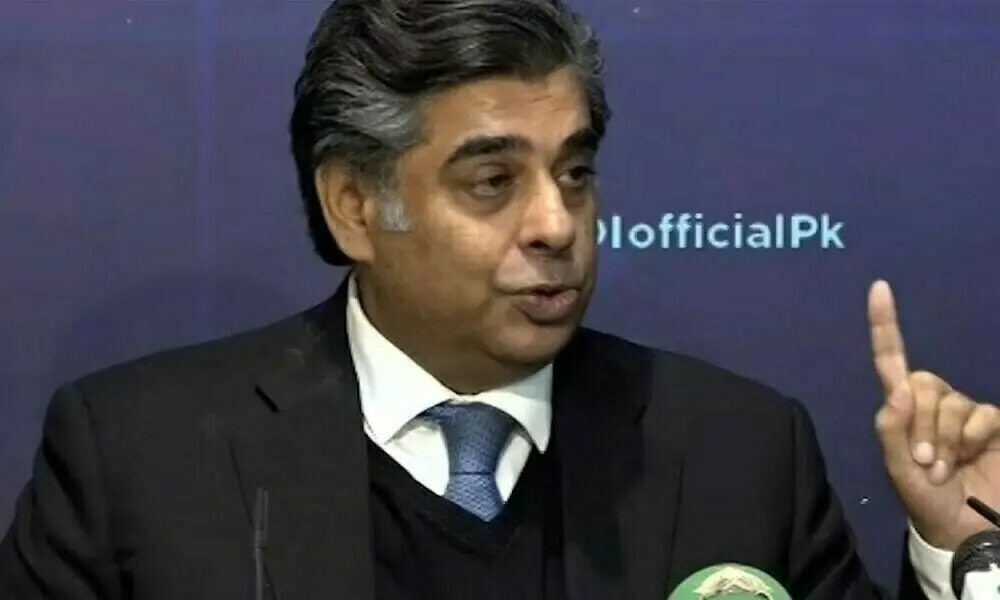

ISLAMABAD: President Economic Policy and Business Development (EPBD) think tank and former minister Gohar Ejaz has raised serious concerns over Pakistan’s worsening trade imbalance, highlighting that “no signs of export-led growth” have emerged amid a steep increase in the trade deficit.
Data from the Pakistan Bureau of Statistics reveals that during the eight-month period from July to February, Pakistan’s trade deficit surged by nearly USD5 billion compared to the same period last year. Exports declined by USD1.5 billion, while imports rose by USD3.5 billion, deepening the country’s external economic vulnerabilities.
“Exports and economic growth are the backbone of national economic security,” Ejaz said in a statement. “The government must urgently focus on reversing this trend before it threatens the stability of the entire economy.”
The latest figures show exports dropping from USD22.07 billion in July–February 2024-25 to USD20.46 billion in the same period this year, while imports climbed from USD42.11 billion to USD45.50 billion. This has pushed the trade deficit to USD25.04 billion, up 25 percent year-on-year.
Monthly data from February 2026 also reflects a continued slump in exports alongside stubbornly high imports, reinforcing fears that Pakistan is not benefiting from any meaningful export-led growth.
Economists warn that if these trends persist, foreign exchange reserves could come under severe pressure, impacting currency stability and inflation. They urge policymakers to prioritize boosting exports, diversifying markets, and controlling unnecessary imports.
As the government grapples with these challenges, Ejaz’s warning underscores the urgency for a strategic pivot towards export-led growth to secure Pakistan’s economic future.
Copyright Business Recorder, 2026

























Comments
Comments are closed for this article.