


An interview with Zubair Shaikh — CEO, Wafi Energy Pakistan Limited: ‘Complete deregulation is not realistic for Pakistan’
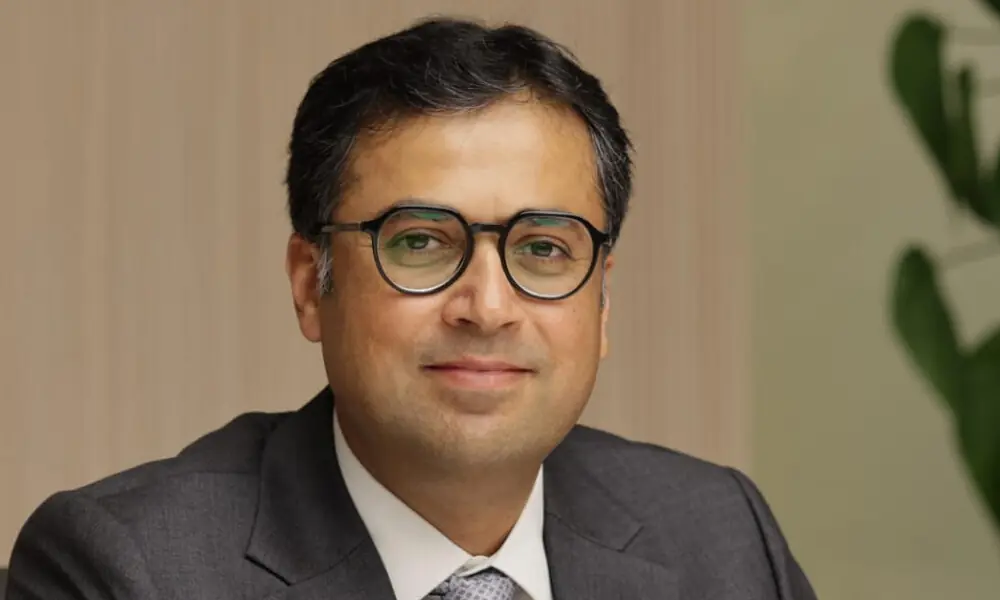

Zubair Shaikh is the CEO at Wafi Energy Pakistan Limited (formerly Shell Pakistan Limited). His leadership during a pivotal phase of the company, following Wafi Energy Holding’s acquisition of Shell Pakistan in November 2024, has ensured business continuity, strengthened performance, and built momentum towards the company’s long-term ambitions in Pakistan.
Zubair began his journey with Shell in 2006, initially in finance, before moving into key business roles. His broad experience includes sales, marketing finance, and strategy. Combining financial expertise with commercial insights, he has been instrumental in turning around business operations and ensuring long-term growth.
His career has spanned multiple sectors, including oil and gas, banking, ports and shipping, and audit and assurance. BR Research recently sat down with Zubair and discussed matters surrounding the industry. Below is an edited excerpt.
BR Research: Before we get into Wafi Energy specifically, let’s start with the OMC sector as a whole. Over the past two to three years, what significant changes have you observed? And at a fundamental level, is this business a margin plays or a volume play?
Zubair Shaikh: This is a regulated industry, so it can never really be a margin play. Margins are controlled. In such an environment, survival depends on volume. Pakistan has around 44 licensed OMCs, of which roughly 35 to 36 are operational. About 85 to 90 percent of the market is controlled by the top seven players. For smaller players, with current fuel costs, it becomes very difficult to survive without scale. So fundamentally, this sector is a volume play.
BRR: How elastic is fuel demand? At what price point do you start seeing demand taper off?
ZS: Demand is elastic. There is a natural base demand that remains, but once prices cross roughly Rs 250 to 260 per litre, demand starts to taper. When prices move towards Rs 300, behaviour changes noticeably. People shift from cars to motorbikes, reduce discretionary travel, and increase ride sharing. Disposable income is fixed, so adjustments happen quickly.
BRR: And when do prices fall?
ZS: When prices come closer to Rs 220, demand rebounds sharply. People move back from bikes to cars, leisure travel increases, and overall consumption picks up. That is where we see strong elasticity.
BRR: So, would it be fair to say that around Rs 250 is the rough threshold where demand begins to weaken?
ZS: Yes, that would be a fair ballpark.
BRR: Is this demand sensitivity mainly on the consumer side, or does the commercial and industrial segment also get affected?
ZS: The consumer side is impacted the most. That is where the bulk of demand reduction comes from. The commercial and industrial segments do feel the pressure because fuel costs affect everything through transportation, but the sharper response is from consumers.
BRR: If you had to put a number on it, what share of demand contraction comes from consumers?
ZS: Roughly 70 percent of the demand impact comes from the consumer segment. Industrial demand is around 30 to 40 percent, while consumer demand makes up about 60 to 70 percent.
BRR: Within the consumer segment, is it mainly two wheelers driving demand given the size of the bike fleet?
ZS: In terms of numbers, motorbikes dominate. But in terms of volume, four wheelers consume much more fuel. Cars have larger tank sizes and lower mileage. So, from a volumetric standpoint, four wheelers are the biggest drivers of fuel demand.
BRR: Turning to the macro environment, which factors matter most for your business? GDP growth, currency volatility, or government policy?
ZS: It is difficult to isolate just one because they are all linked. GDP growth is important because if the economy is not growing, companies are fighting for the same market share. That becomes a challenge for investors who want growth.
Currency volatility hurts us significantly. Around 60 percent of fuel is imported. If you have letters of credit on a 60-day cycle and you see sharp devaluation during that period, inventory losses can be very large. In a regulated market, you cannot pass that impact on immediately. A single major devaluation can wipe out profitability built over months.
BRR: In Pakistan, inventory and exchange losses have often driven profitability swings in this sector. Would you agree?
ZS: Absolutely. Inventory and exchange losses are closely linked, and historically they have played a major role in how profitability swings from one period to another.
BRR: This is a regulated industry, and inventory management is a big part of it. How does a company like yours manage inventory and foreign exchange risk, even if it cannot eliminate it entirely?
ZS: From an industry standpoint, minimum inventory levels are mandated. We maintain around 20 days of inventory and do not compromise on compliance. Some companies try to manage risk by reducing inventory or slowing supply during volatile periods, but that creates problems. Demand does not disappear, and the burden then falls on compliant players to meet national demand.
BRR: So, inventory discipline itself becomes a competitive disadvantage?
ZS: In some situations, yes. But compliance is critical because fuel is a strategic national asset. The regulator monitors inventories continuously. Over inventory is risky, under inventory is not allowed. You have to operate within a narrow band.
BRR: We keep hearing about deregulation plans for the OMC sector. From your perspective, should this industry be fully deregulated or only partially?
ZS: Complete deregulation is not realistic in Pakistan. Even in markets like Malaysia and Indonesia, fuel markets remain regulated. For us, partial deregulation makes more sense. You cannot view regulation or deregulation in isolation from ground realities.
BRR: What are the main shortcomings of the current regulatory framework?
ZS: Margins are the most sensitive issue. Margins are not just about profit. They fund infrastructure, storage, safety, and compliance. We operate over 650 sites. We need to continuously invest in assets, safety standards, and storage because this is a hazardous product. Regulated margins limit that flexibility.
BRR: Would that qualify as deregulation?
ZS: It would be partial deregulation. We are not advocating for removing all controls. We are advocating for a fair and transparent framework that reflects actual cost structures.
BRR: Do you ever advocate complete deregulation from a private sector point of view?
ZS: From a purely private sector perspective, complete deregulation would be clean and simple. Prices would reflect costs, and the consumer would pay accordingly. But from a national perspective, there are concerns around regional price disparities. A price in Karachi would not be the same as a price in Lahore or upcountry.
BRR: How do these proposals move forward at an industry level?
ZS: Through OCAC. Proposals are joint industry submissions, not individual company positions. Over the last one and a half to two years, there has been very little movement on deregulation. Most discussions have been around marginal adjustments rather than structural reform.
BRR:How much of your fuel movement is currently through pipelines?
ZS: Wafi Energy Pakistan has increased pipeline usage from around 50 percent to about 65 percent. Our objective is to take this further, ideally towards 75, 80, and even 90 percent, if capacity allows.
BRR: Is this purely your internal strategy or has there been policy support for this shift?
ZS: There has been policy support. Over the last one and a half years, advocacy has helped push this change. The government also recognises that pipeline usage reduces costs for consumers. Usage is reviewed regularly, roughly every six to eight months, and pipeline allocation has increased across the industry.
BRR: How is pipeline usage enforced across the industry?
ZS: There is a monthly approval process. Companies submit their demand, and approvals are given on how much product moves through pipeline and how much through road transport. If a company diverts volumes to road transport without justification, the government can disallow IFEM claims. This has made the system more disciplined.
BRR: Has this changed behaviour across the industry?
ZS: Yes. Earlier, only four or five large companies were using pipelines meaningfully. Now even smaller companies are increasing pipeline usage. This is a positive development and directly reduces IFEM costs.
BRR:We often hear about resistance from transporters and the threat of strikes. Has that been an issue?
ZS: That risk exists, but it has been managed better recently. The transition has been gradual, and the government has handled the process more carefully.
BRR: There is also discussion around the northbound pipeline projects and new joint ventures. Do these materially benefit consumers?
ZS: Eliminating road transport rationalises costs. While dealer margins have not changed for many years, IFEM is not part of the dealer margin. IFEM is reviewed monthly, audited, and approved through a robust process. As pipeline share increases, IFEM declines.
BRR: So increased pipeline usage directly lowers IFEM?
ZS: Yes. If pipeline volumes go up, IFEM automatically comes down. Companies cannot claim additional IFEM without justification. This is enforced through a structured monthly review process.
BRR: Would you say progress has been meaningful?
ZS: It is still a long journey, but it is clearly a step in the right direction.
BRR: On the informal fuel supply side, smuggling and adulteration are often cited as major problems. How large is this issue in reality?
ZS: Our estimates suggest that informal supply still accounts for around 15 to 25 percent of total demand. The level fluctuates.
BRR: How does this volatility affect your operations?
ZS: It disrupts the supply chain. There have been periods where monthly demand in places like Quetta exceeded what we would normally supply in a single day. A sudden 20 percent surge in demand is something no company is geared to manage efficiently.
BRR: Is this primarily a diesel issue or does it affect other fuels as well?
ZS: Diesel is the primary issue, but it is not limited to diesel alone.
BRR: Smuggling aside, adulteration is another concern. Where does that happen?
ZS: Adulteration has become a major issue over the past five to six years. It largely occurs at the retail forecourt level, where imported solvents and chemicals are mixed into fuels, particularly gasoline.
BRR:Does this problem extend to lubricants as well?
ZS: No. Lubricants have a different set of challenges, but solvent adulteration is primarily a fuel issue.
BRR:What initiatives are underway to address these problems?
ZS: The government has launched initiatives around digitising the entire fuel value chain. The idea is to track product from refinery output to OMC storage, from storage to transport, and from retail tanks to dispensing. If the entire chain is digitally tracked, it becomes extremely difficult to divert or adulterate product.
BRR: That sounds capital intensive. Who bears the cost?
ZS: That is the challenge. Digitisation requires massive investment. Wafi Energy Pakistan has already invested around Rs 1.3 billion to digitise about half our network. To complete it, we would need to invest roughly another Rs 1.8 billion.
BRR: What is the industry’s position on this?
ZS: We support digitisation in principle. It protects the exchequer and improves transparency. But margins are regulated, and this is a forced investment. There needs to be a mechanism for cost recovery. Shareholders expect returns, and companies need clarity on how such investments will be compensated.
BRR: Let’s shift to lubricants. Is this the segment that helps keep the business afloat during more difficult periods in fuels?
ZS: Yes. Lubricants are deregulated and differentiated, which makes a big difference. We are the market leader in lubricants and have been for many years. The brand has been present in this region for about a hundred years, which gives us strong equity and trust.
BRR: What gives you pricing power in this segment?
ZS: Wafi Energy Pakistan has a full and differentiated product range. Quality is clearly distinguishable versus competition, which allows us to command a premium. That premium positioning is what helps sustain performance even in challenging times.
BRR: How important is the lubricants business to overall stability?
ZS: It is critical. Even when fuels face losses, lubricants continue to grow and provide stability to the business.
BRR:How is lubricants demand split between consumer and industrial segments?
ZS: Consumer demand is the larger share. Industrial demand is roughly 25 to 30 percent, while consumer demand accounts for the balance. Consumer demand also includes commercial road transport.
BRR: Which industries drive industrial lubricants demand?
ZS: Almost every sector where machinery is involved. Textiles, cement, fertilisers, mining, power generation, and gas engines all require lubricants. Mining, in particular, presents a significant growth opportunity given the government’s focus on the sector.
BRR: Do you operate in both B2B and B2C segments?
ZS: Yes. We operate in both. We are particularly strong in B2B, where we are one of the strongest players in the market. In the consumer segment, we also have a solid share.
BRR: How important are two wheelers in the consumer lubricants segment?
ZS: Two wheelers are very important. Agriculture is another strong segment for us, although the market is gradually shrinking due to technological change. In premium consumer segments, we are particularly strong because of our brand positioning.
BRR: Turning to the energy transition, how do you see the shift towards electric vehicles, particularly in Pakistan?
ZS: It would be incorrect to view this purely as a threat. It is coming, and we have to treat it as an opportunity. As an energy provider, if technology changes, we need to be ready to supply the right form of energy.
BRR:How far along is Pakistan on the EV curve compared to other regions?
ZS: Pakistan is still a long way behind. Overall EV penetration, including hybrids, is below 5 percent. Most of this is concentrated in two and three wheelers. The impact on fuel demand is negligible at this stage.
BRR: Do you see this changing in the near term?
ZS: In the next five to ten years, we expect faster adoption in two and three wheelers rather than four wheelers. Battery swapping, rather than full charging, is likely to scale more quickly. Pilot projects are already underway in Punjab in partnership with Chinese OEMs.
BRR: How are you positioning yourselves in this transition?
ZS: Wafi Energy Pakistan is partnering with OEMs by providing space at our forecourts for battery swap stations. We have also installed EV charging facilities at three sites in Karachi. Utilisation is currently around 40 to 45 percent, which reflects early-stage adoption.
BRR: If EV adoption accelerates unexpectedly, could charging infrastructure compensate for declining fuel volumes?
ZS: In the near term, charging margins are driven by utilisation. Demand is still low, so prices need to remain competitive. Over time, as volumes increase, margins will normalise, similar to how premium fuels evolved.
BRR: Are there examples globally where fuel demand has fallen sharply?
ZS: In Europe, there are establishments that operate only as charging stations with no fossil fuels. OMCs there have adapted by rethinking the forecourt model.
BRR: What does that model look like?
ZS: The future is not just about fuel. Nonfuel retail becomes critical. The idea is to make the forecourt a destination where consumers can refuel, charge, shop, eat, bank, or take a break. Pakistan is moving in that direction, though it is still early.
BRR: On taxation, how do you view the current structure, both in terms of taxes on petroleum products and corporate taxation?
ZS: Taxes on petroleum products are largely pass through. They affect demand but do not directly impact our margins. Removing levies may reduce prices temporarily, but it would also increase demand, imports, and pressure on the currency. That creates broader macro risks.
BRR:So petroleum levies are not the main concern for OMCs?
ZS: The bigger concern for us is corporate taxation. Corporate tax rates are extremely high, among the highest in the region. That directly affects investment decisions and returns.
BRR: There has also been confusion around sales tax treatment in recent years. How has that affected the industry?
ZS: The removal of adjustable sales tax turned it into a cash flow issue. For a long period, there was no clarity on reimbursement. Even now, while reimbursements are happening, it places strain on both the industry and the government, and there is uncertainty about continuity.
BRR: During periods of price differential claims, how efficient has the reimbursement process been?
ZS: The most recent episode was handled far better than in the past. Payments were cleared within three to four months. The government learned from earlier mistakes, and mechanisms were put in place to ensure smoother reimbursements. Past experiences were extremely difficult. Some claims remain unreconciled even today. Financing price differentials on thin margins is not sustainable for any company.
BRR: If international oil prices were to rise sharply again, would you still prefer a pass-through mechanism rather than subsidies?
ZS: Yes. Subsidies create distortions and strain public finances. It is better to allow pass-through pricing, even if it temporarily reduces demand, than to force the industry to finance costs it cannot sustain.
BRR: Looking at your recent financial performance, the past year or so appears to have been relatively strong. Is this an industry-wide trend or something specific to your execution?
ZS: Profitability in this industry is often distorted by one-offs such as inventory gains or losses and exchange gains or losses. Those can flip results very quickly. We do not rely on them. What has changed over the last nine months is that our core business profitability has improved.
BRR: What has driven that improvement?
ZS: Volume growth. Both in fuels and lubricants, Wafi Energy Pakistan’s volumetric growth has outpaced the industry. Historically, we would have years where lubricants performed well and fuels did not, or the other way around. This year has been consistent across both segments for the entire nine-month period.
BRR: So,is this less about price movements and more about fundamentals?
ZS: Exactly. We cannot predict price increases or decreases, and we do not run the business around them. What we focus on is ensuring core profitability is stable. Once that is in place, the business is on the right track regardless of price volatility.
BRR: Howsustainable is this trend?
ZS: If you look back over five to ten years, you will see that one offs have been the most consistent feature of this industry. What gives us confidence now is that the improvement is coming from volumes and operational performance, not temporary factors.
BRR: Looking ahead five years, how do you see the company evolving?
ZS: With the new shareholder, the strategy is clear. We want to invest and grow. Previously, as part of a global group, investment priorities were driven by global considerations. Since the transition, the message is that we have confidence in this country and believe opportunities outweigh challenges.
BRR: What does that growth strategy look like in practice?
ZS: The objective is to grow market share by expanding our retail network and increasing volumes. We are open to both organic and inorganic growth. Inorganic opportunities are being actively evaluated, but they must make commercial and strategic sense.
BRR: Do you expect consolidation in the OMC sector?
ZS: Yes. Consolidation is inevitable. If regulatory enforcement tightens and compliance requirements increase, smaller players will find it difficult to sustain operations. Globally, you see the top seven players controlling around 85 to 88 percent of the market. Pakistan will move in the same direction.
BRR: Are you positioning yourselves to participate in that consolidation?
ZS: Yes, but carefully. Wafi Energy Pakistan already has around 680 sites. Any acquisition has to align with our strategy and standards. We are not interested in assets that do not fit our network or require disproportionate corrective investment.


























Comments
Comments are closed for this article.