



What many commentators are calling the “mother of all deals” has been dominating recent economic headlines. The European Union and India last month finalized a Free Trade Agreement after nearly two decades of negotiations. For the two partners, the agreement marks a strategic and economic milestone. For other economies closely tied to the European market, however, the implications could be significant. Pakistan, whose exports rely heavily on EU demand, sits high on that list.
A look at the scale and structure of trade helps explain why. India is now a major global trading economy, with total exports of goods and services around US$800 billion in 2024. Merchandise exports account for roughly US$440 billion, with about 17 percent destined for the European Union. India’s export basket to the EU is broad and increasingly tilted toward higher value sectors. Electrical and mechanical equipment together make up more than one-fifth of India’s EU-bound exports, alongside chemicals, fuels, metals, and textiles and clothing. This diversified base positions Indian producers well to benefit from tariff reductions and regulatory cooperation under the new agreement.
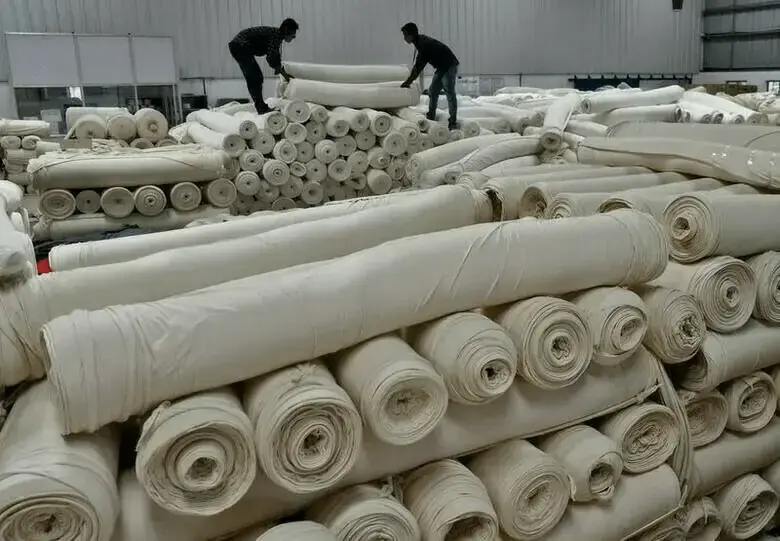
Pakistan’s export profile is far more concentrated. Total exports are below US$40 billion, and the EU remains the single most important destination, absorbing about one-third of Pakistan’s merchandise exports. The product mix is also narrow. Textiles and clothing dominate, with additional contributions from a limited range of agricultural goods, hides and skins, food products, plastics and rubber, and footwear. Most importantly, nearly 80 percent of Pakistan’s exports to the EU consist of textiles and apparel alone. This concentration turns any shift in relative market access in Europe into a sector-level stress test.
That is where the EU-India Free Trade Agreement matters most. Pakistan has long benefited from preferential access to the EU market under the GSP+ scheme. As EU tariff cuts for Indian goods take effect under the new agreement, that margin of preference will narrow in several product lines where the two countries compete directly. The result is likely to be stronger competitive pressure in garments, made-ups, and related textile segments. Model-based estimates suggest India’s exports to the EU could rise sharply once the agreement is fully implemented, with part of that gain coming at the expense of competing suppliers.
The adjustment will not be instantaneous. The agreement still requires formal ratification steps in the EU and India, and tariff reductions are typically phased in. Indian firms will also need time to scale and align products with specific EU buyer requirements. This creates a limited but valuable response window for Pakistan.
Competitive pressure will also not fall evenly across firms. A larger and more diversified Indian manufacturing base could shift some market share toward stronger players, placing particular strain on smaller Pakistani exporters. At thesame time, large global retailers and brands usually maintain stable, long-term supplier relationships. Established Pakistani exporters with proven compliance and delivery records may therefore retain part of their order books. Smaller firms, however, are more exposed and will need targeted support.
Policy response should focus on lowering exporter costs and strengthening firm capability rather than relying on temporary protection. A practical package would include targeted liquidity support and better use of export financing and facilitation schemes, alongside energy cost rationalization for exporting sectors. Faster and more predictable border clearance through digitized procedures can reduce time and cost margins that directly affect competitiveness. Investment incentives and targeted tax credits can help push value addition and product diversification within textiles, especially toward man-made fiber and technical textile segments where global demand is expanding. Firm-level upgrading through compliance with product standards and certification remains essential to secure and retain EU buyers. In parallel, proactive engagement with the EU to ensure continuity and smooth renewal of GSP+ status remains important.
The EU-India agreement is not a shock event, but it is a clear signal. Preference margins can shrink as new agreements are signed. For Pakistan, this is a timely reminder that sustainable export growth cannot rest on preferences alone. The real safeguard is a more competitive, diversified, and productivity-driven export base.
Copyright Business Recorder, 2026
The writer is a Chief of Research at the Pakistan Institute of Development Economics (PIDE). He can be reached at [email protected]



















Comments
Comments are closed for this article.