


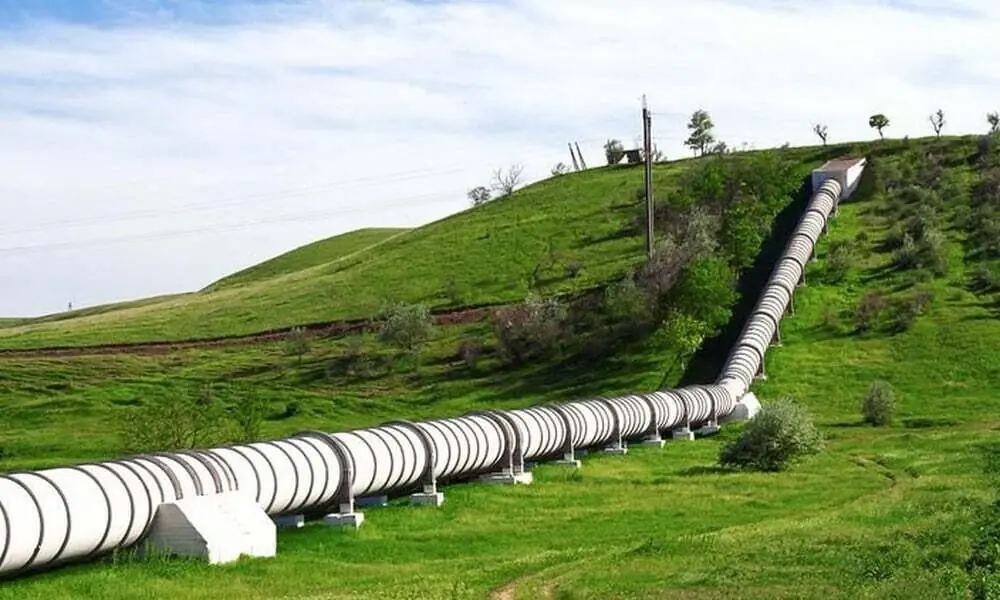

There is a plan to build a white oil pipeline to transport petrol and diesel from around Lahore to Peshawar at nearly double the existing peak-load capacity, with a financial structure offering dollarized guaranteed returns irrespective of capacity utilization.
Currently, two white oil pipelines carry molecules from Karachi to Multan to Faisalabad to Lahore (the actual pipeline points differ; these major cities are referenced for simplicity). The proposal now seeks to extend the network to Peshawar, covering upper Punjab and Khyber Pakhtunkhwa.
The idea itself has merit. Transporting petroleum products through pipelines is safer and more efficient than moving them on heavy vehicles along main highways. However, questions arise regarding the proposed capacity and the dollarized guaranteed return for a pipeline that may operate with excess capacity—especially when 75 percent ownership rests with government-owned and associated companies.
The model resembles the structure previously offered to IPPs, which subsequent governments have repeatedly regretted. There have been multiple attempts to renegotiate or reverse those arrangements, yet the “ship-or-pay” (take-or-pay) model with dollarized returns continues to be replicated. This suggests little institutional learning within the energy sector.
The new project is estimated to cost around $375 million, with a debt-to-equity ratio of 55:45. It will span 435 km and have a project life of 30 years. The developer, Frontier Oil Company (Pvt) Limited, has a shareholding structure comprising 37.5 percent each for PSO and FWO, while the State Oil Company of Azerbaijan (SOCAR) will hold 25 percent.
Therefore, the argument that dollarized returns are necessary to attract foreign investment appears weak, given that 75 percent ownership is local and effectively state-owned. Another concern is the “ship-or-pay” structure. The proposed pipeline capacity is 7 million tons per annum, significantly higher than the peak volumes handled by existing pipelines.
The first pipeline, the White Oil Pipeline (WOP), carries molecules from Karachi to Mahmoodkot (near Multan). The second, Mahmoodkot–Faisalabad–Machhike (MFM), extends up to Machhike near Lahore. The new connection is proposed from Machhike to Thallian and from Thallian to Tarujabba.
White oil is typically imported at the port in Karachi and transported upcountry. Historically, the highest volumes handled were around 5 million tons per annum on WOP and, after some discharge, around 4 million tons per annum on MFM. Assuming 1 million tons are discharged at MFM, roughly 3 million tons (at current demand levels) would flow through the proposed new pipeline—against a stated capacity of 7 million tons.
Industry experts argue that it is highly unlikely that such demand will materialize over the project’s life cycle. Going forward, white oil demand is expected to decline with the adoption of electric vehicles—particularly in the two- and three-wheeler segments, which account for 30–40 percent of motor spirit consumption. At one level, provincial, and federal governments are subsidizing EV adoption; at another, they are offering guaranteed returns for expanded white oil infrastructure.
In the event of underutilization, capacity costs would be loaded onto the remaining volumes transported. A lower denominator results in higher per-unit capacity costs—the same argument seen in the IPP context—and these costs would ultimately be passed on to consumers through a higher Inland Freight Equalization Margin (IFEM).
The broader concern is the offering of dollarized returns when 75 percent of the shareholding is local and directly or indirectly state-owned. If attracting SOCAR was the objective, differentiated return structures could have been considered, as precedents exist. Even so, the overall rationale remains questionable. The government should revisit the strategy and consider denominating returns in PKR while reassessing the ship-or-pay model.




















Comments
Comments are closed for this article.