


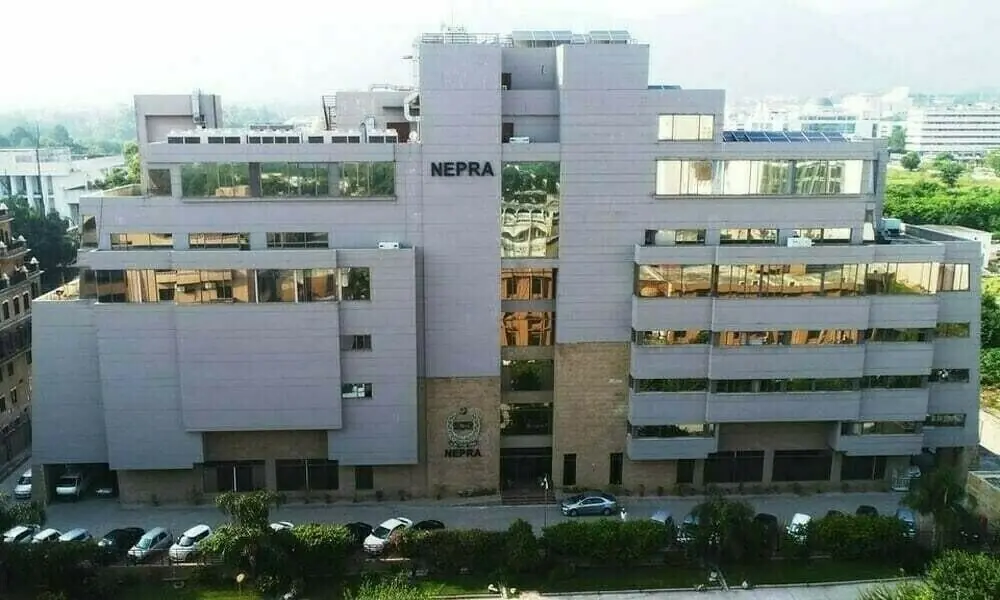
ISLAMABAD: While expressing serious concerns over the power sector performance during FY 2024-25, National Electric Power Regulatory Authority (Nepra) has recommended reforms including restructuring large DISCOs into smaller, more efficient units, advancing privatization and public–private partnership initiatives,and phasing out the AT&C losses-based policy.
According to power sector’s Performance Evaluation Report (PER) FY 2024-25 released on Wednesday the power sector regulator noted that an assessment of transmission and distribution (T&D) performance for FY 2024-25 indicates that T&D losses continue to pose a significant challenge for Pakistan’s power sector.
Despite Nepra’s repeated directives to bring these losses within prescribed limits, no DISCO has successfully achieved the set targets. Consequently, the sector incurred an estimated financial loss of Rs. 265 billion to the national exchequer.
READ MORE: PMO seeks Power Division’s input on Nepra’s Industry, Annual reports
The highest contributors to this shortfall were PESCO, QESCO, SEPCO, and LESCO with losses of Rs. 87.48 billion, Rs. 52.41 billion, Rs. 36.04 billion, and Rs. 35.17 billion, respectively. In contrast, under the currently notified tariff determination, K-Electric reported a loss of 14.73% against the target of 14.27% for FY 2024-25.
K-Electric’s T&D loss targets have been revised from 14.27% to Transmission Loss (0.75%) and Distribution Loss (8.80%), pursuant to the Authority’s decision dated October 20, 2025, in the matter of motion for leave for review filed by K-Electric and Arif Bilwani against the Authority’s determination for KE’s 7-year Investment Plan for FY 2024-2030.
However, the said decision has not yet been notified and is currently under adjudication in the Sindh High Court.
“Although Nepra has approved substantial funds under investment and O&M programs to address system inefficiencies, focusing on network strengthening, feeder optimization, advanced metering infrastructure, and preventive maintenance, implementation remains weak.
The lack of timely and effective execution by DISCOs continues to hinder improvements in operational efficiency and loss reduction, underscoring the urgent need for stronger accountability and performance-driven management,” said Nepra in its PER report.
The regulator further stated that ensuring effective revenue realization is vital for maintaining the financial health of DISCO and curbing the escalation of circular debt. During FY 2024–25, IESCO, GEPCO, FESCO, LESCO, and MEPCO achieved a recovery rate of 100%, demonstrating outstanding financial management, while PESCO and K-Electric sustained the levels above 90%.
On the other hand, HESCO and SEPCO continued to post weak performance, recording recovery rates of 74.80% and 74.20%, respectively, with only minimal progress compared to the previous year.
QESCO reflected the lowest performance among all DISCOs, with a recovery rate of 38.7%; however, the same was improved from the previous year’s figure of 31.79%. These low recovery outcomes have adversely affected the overall financial position of the power sector, contributing to an estimated loss exceeding Rs. 132 billion by XW-DISCOs to the national exchequer.
The situation highlights the need for robust collection strategies, enhanced monitoring, and improved operational efficiency to strengthen the financial sustainability of DISCOs. As far as K-Electric is concerned, the unrecovered amount is Rs. 74.6 billion @ 90.56% recovery ratio.
NEPRA underscores that a reliable power supply is crucial for sustaining economic growth and evaluates distribution system reliability through two key indicators, the System Average Interruption Frequency Index (SAIFI) and the System Average Interruption Duration Index (SAIDI).
According to the FY 2024–25 data, most DISCOs did not meet Nepra’s prescribed standards. Although IESCO, FESCO, LESCO, MEPCO, and GEPCO demonstrated some progress, their performance remained only marginally close to the targets.
Conversely, PESCO, QESCO, SEPCO, HESCO, and K-Electric exhibited poor performance, falling considerably short of the required benchmarks.
Moreover, all DISCOs failed to achieve the SAIDI targets, reflecting persistent reliability challenges across the sector.
Under the Performance Standards (Distribution) Rules (PSDR) 2005, distribution companies (DISCOs) are obligated to provide at least 95% of new connections within the prescribed timeframe. However, the performance data for FY 2024-25 presents a mixed picture. While PESCO, IESCO, HESCO, and LESCO successfully achieved the target by providing timely connections to over 95% of eligible consumers, GEPCO and QESCO narrowly missed the benchmark.
In contrast, MEPCO and K-Electric significantly underperformed, failing to connect 13–14% of applicants within the stipulated period. These delays not only translate into financial inefficiencies but also deprive a large number of consumers of electricity despite available network capacity. As of June 2025, an estimated no. of 128,096 eligible consumers were still awaiting their connections, having paid for services yet to be delivered.
Nepra has expressed serious concern over the ongoing and widespread load shedding across Pakistan, which continues to disrupt daily life, hinder economic growth, and diminish public trust.
Despite being allocated sufficient power, several DISCOs fail to utilize their full quota and consequently resort to load shedding, thereby adversely affecting both the power sector and electricity consumers. This practice contravenes the NEPRA Act of 1997 and the Performance Standards (Distribution) Rules of 2005. As a result, Nepra initiated legal action against several DISCOs — PESCO, QESCO, HESCO, SEPCO, and K-Electric — for non-compliance. Each was initially fined Rs. 50 million, while a subsequent per-day fine of Rs. 100,000 was imposed on SEPCO, and HESCO.
However, PESCO and K-Electric have challenged Nepra’s order before the Appellate Tribunal and obtained stay orders, restraining Nepra from further proceedings. For QESCO, the proceedings are underway.
The AT&C-based load-shedding mechanism, implemented in 2013 to enhance revenue recovery, has remained in place for over 12 years but has not achieved its intended goals. AT&C losses have shown little improvement, and many feeders continue to fall within the same or even higher load-shedding categories. Nepra maintains that this approach unjustly penalizes paying consumers, who face power outages due to the negligence of a few defaulters.
Ensuring the protection of consumer rights remains a key priority for Nepra, which has continuously emphasized the importance of strengthening complaint-handling mechanisms within DISCOs to achieve timely resolutions and greater customer satisfaction.
In FY 2024–25, DISCOs collectively recorded 7,421,134 complaints covering a wide range of issues. However, notable disparities in complaint volumes across DISCOs raise concerns regarding accuracy and transparency. For instance, SEPCO reported only 1,627 complaints, which may either suggest an exceptionally efficient redressal system or potential data inaccuracies.
In contrast, K-Electric accounted for 23% of all complaints, reflecting a more comprehensive framework for recording consumer feedback. These inconsistencies highlight the urgent need for a standardized, transparent, and efficient digitalized complaint management system, including the complaints lodged through telephonic phone calls across all DISCOs, to ensure accurate reporting and effective resolution of consumer grievances.
Safety performance in the power sector witnessed a troubling decline during FY 2024– 25 with 118 fatalities reported across various distribution companies—38 involving employees and 80 members of the public. IESCO reported the highest number of incidents, followed by PESCO, K-Electric and HESCO.
The company attributed many of these accidents to consumer negligence or incidents occurring on private premises.
NEPRA has taken a proactive stance in addressing these fatalities by initiating investigations under Section 27A of the NEPRA Act, which resulted in substantial fines being imposed on all DISCOs.
The investigations revealed that some of the accidents stemmed from inadequate earthing or grounding of poles and other structures within the distribution network. In response, NEPRA instructed all DISCOs to develop and implement detailed plans to improve earthing systems and accelerate their execution. However, compliance from several companies has remained unsatisfactory, prompting legal action.
NEPRA continues to monitor progress on a monthly basis to ensure adherence to safety standards and reduce the risk of future incidents across the power distribution network.
The Performance Evaluation Report for FY 2024–25 underscores the ongoing structural and operational challenges within Pakistan’s power sector, such as high transmission and distribution losses, poor billing and recovery performance, frequent load shedding, and delays in providing new connections.
Safety remains a critical concern, with a significant number of fatalities reported among both employees and the public. Addressing these persistent challenges demands comprehensive sectoral reforms.
Recommended actions include restructuring large DISCOs into smaller, more efficient units; advancing privatization and public–private partnership initiatives; phasing out the AT&C losses-based policy; integrating modern technologies; and fostering a customer-focused operational culture.
Implementing these measures is essential to improving system reliability, ensuring financial viability, and elevating the overall performance and accountability of Pakistan’s power distribution network.
Copyright Business Recorder, 2026


















Comments
Comments are closed for this article.