


PMO seeks Power Division’s input on Nepra’s Industry, Annual reports
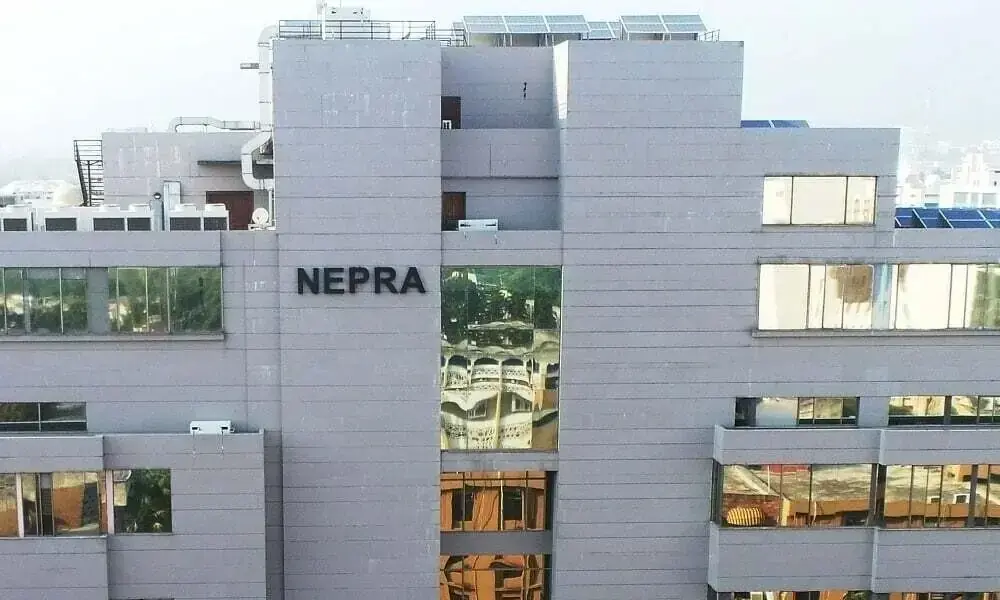

ISLAMABAD: The Prime Minister’s Office (PMO) has sought comments from the Power Division on NEPRA’s State of Industry Report 2025 and Annual Report 2024–25, recently released by the regulator, which drew a strong reaction from the Power Division.
In its report, NEPRA stated that the power sector continues to face deep-rooted operational and governance challenges that constrain efficiency and undermine its contribution to economic development.
The regulator emphasized that power sector entities must operate under commercially binding agreements that clearly define roles, performance standards, and accountability mechanisms.
Each entity, it said, should bear the financial consequences of its inefficiencies rather than passing these costs on to consumers, who are currently burdened with approximately Rs233 billion in Debt Servicing Surcharge (DSS) — a cost arising not from normal business operations but from inefficiencies within certain sector entities.
READ MORE: Weak DISCO performance added Rs397bn to circular debt in FY25: NEPRA report
According to the report, generation capacity operating under “take-or-pay” contracts remains significantly underutilized, resulting in a persistent financial burden in the form of capacity payments for idle plants.
At the same time, the transmission network is described as both constrained and underutilized, contributing to higher transmission tariffs and preventing the dispatch of cheaper and more efficient electricity in accordance with the Economic Merit Order (EMO).
On the distribution side, several government-owned DISCOs continue to suffer from poor governance, with transmission and distribution (T&D) losses exceeding allowable limits, low bill recovery, and load-shedding based on Aggregate Technical and Commercial (AT&C) losses. These inefficiencies further exacerbate asset underutilization across generation, transmission, and distribution, while fuelling the circular debt problem.
NEPRA noted that challenges faced by power sector entities — largely government-owned — span planning, execution, and operational domains.
Reacting to NEPRA’s State of Industry Report, Federal Minister for Power Sardar Awais Ahmed Khan Leghari, while addressing a press conference on January 18, 2026, strongly rebutted the observations made in the report.
He termed several conclusions “factually incorrect” and asserted that deep-rooted power sector reforms have already delivered tangible relief to consumers while putting the sector on a sustainable path.
He maintained that NEPRA’s report was based on insufficient and outdated data, leading to confusion and misperception. The Minister said the report should have been released in August 2025, and that its delayed publication failed to present the true picture of the power sector or acknowledge the government’s achievement of key targets.
Leghari stated that the government has made it possible to fully service existing debt through the Debt Servicing Surcharge, adding that circular debt will be completely eliminated within the next five to six years. He said the government’s six-year circular debt settlement plan remains firmly on track.
Responding to NEPRA’s assertion that Pakistan has around 8,700 megawatts of surplus electricity capacity, the Minister acknowledged the existence of surplus capacity but rejected the suggestion that the government had failed to review “take-or-pay” and “must-run” power plant contracts.
He said extensive negotiations were held with Independent Power Producers (IPPs), resulting in the termination or revision of several contracts and the closure of inefficient plants, thereby easing the burden on consumers through savings of billions of rupees.
READ MORE: PM Shehbaz orders review appeal against Nepra’s solar consumer ruling
The Minister further stated that, for the first time, the government took merit-based decisions and cancelled nearly 8,000 megawatts of expensive future power projects, including 7,967 megawatts identified purely on merit. These decisions, he said, eliminated unnecessary surplus capacity and saved consumers an estimated $17 billion in future costs.
Awais Leghari also rejected NEPRA’s claim of an Rs780 billion reduction in circular debt, terming the information misleading. He clarified that the reported reduction includes Rs193 billion due to lower DISCO losses, Rs260 billion achieved through successful negotiations with IPPs, and approximately Rs300 billion resulting from improvements in macroeconomic indicators.
Copyright Business Recorder, 2026




















Comments
Comments are closed for this article.