


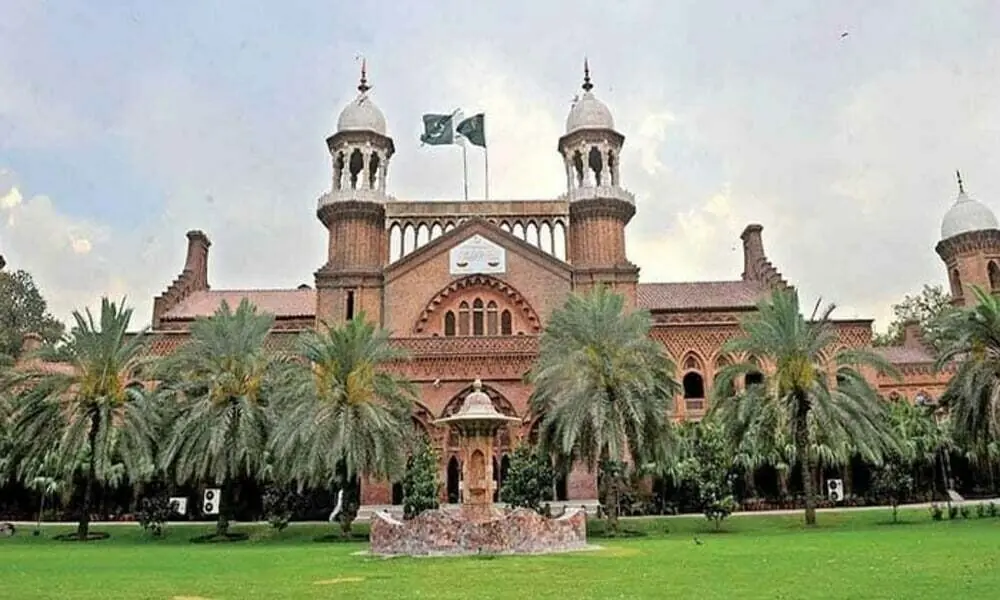

ISLAMABAD: The Lahore High Court (LHC) has set aside an order issued by the Punjab Revenue Authority (PRA) against a sales taxpayer, ruling that services in question were in fact received in Sindh.
The Lahore High Court, in an important ruling, held that the place where services are rendered and received, and the territorial nexus of the taxable event, are the foundation of the assumption of jurisdiction under the Punjab Sales Tax on Services Act, 2012. The order passed by the Punjab Revenue Authority against the sales taxpayer was accordingly set aside.
The LHC, Rawalpindi Bench, has dismissed orders, including Order in-Original and show cause notice issued by the Punjab Revenue Authority, Lahore (Bench-I), Commissioner (Appeals), Punjab Revenue Authority, Lahore.
READ MORE: Non-banking financial institutions liable to pay tax on all non-interest-based services: LHC
The company pleaded before the LHC that the Assessing Officer had failed to appreciate that the services mentioned in the “show cause notice” were received in Sindh where sales tax on services was duly withheld and deposited by the applicant under the Sindh Sales Tax on Services Act, 2011; hence, the “PRA” has no lawful authority to levy or recover sales tax on such service.
The ultimate crux of the said judgment is that the Punjab Revenue Authority is competent to initiate withholding tax proceedings based on undisputed audited accounts showing composite amounts paid for services, final determination of withholding tax liability cannot be made on aggregated figures alone; rather, each transaction must be reconciled and examined to ascertain whether it constitutes a taxable service, the applicable rate of tax, and the obligation to deduct and deposit tax.
While the burden lies upon the withholding agent to explain the nature of transactions and justify non-deduction of tax, once documentary evidence is produced before the Appellate Tribunal, it is incumbent upon the Tribunal, being the final fact-finding authority, to scrutinise and reconcile each transaction and determine taxability accordingly. The Tribunal’s failure to undertake such an exercise amounted to non-application of judicial mind, warranting annulment of its order and remand of the matter for fresh decision in accordance with law.
LHC is of the considered view that the show cause notice was issued without any legal foundation, and the “Appellate Tribunal” erred in upholding the initiation of proceedings under Section 52 of the “Act” against the applicant, despite the absence of any statutory authority permitting such proceedings against a service recipient. Moreover, the reliance placed on the Withholding Rules, 2015 is misplaced, as subordinate legislation cannot enlarge or create a substantive tax liability not contemplated by the parent statute.
Copyright Business Recorder, 2026

























Comments
Comments are closed for this article.