


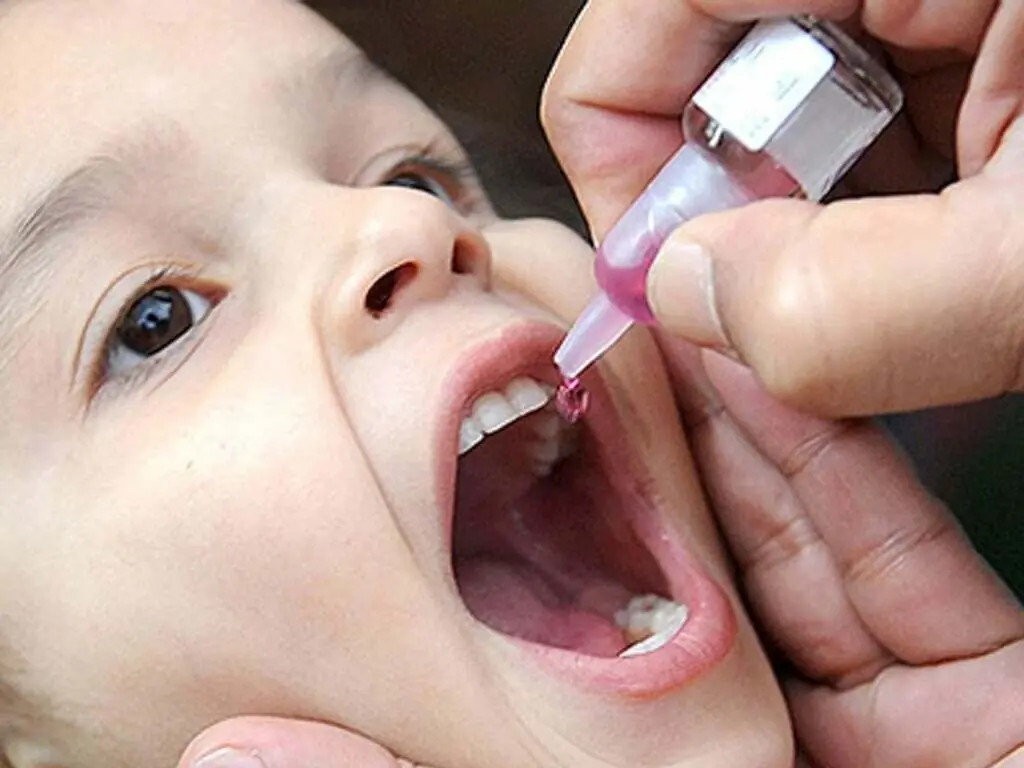
EDITORIAL: Pakistan’s campaign against poliovirus reflects both meaningful progress and persistent vulnerabilities that continue to complicate the goal of complete eradication.
Data from the latest nationwide anti-polio drive shows that while overall coverage remains high, significant gaps persist, particularly in urban centres and hard-to-reach areas. These gaps underscore why the final phase of polio eradication is widely regarded as the most difficult.
The reported figure of nearly one million children missed during the year’s first nationwide campaign is a cause for concern, even though the Pakistan Polio Eradication Programme achieved an overall household coverage of 98 percent. In the case of a highly infectious disease such as polio, even a small proportion of unvaccinated children can sustain virus transmission.
Karachi’s share of refusal cases, accounting for 58 percent of the national total, is especially worrisome. In Lahore, meanwhile, police recently registered two cases against parents not only for refusing vaccination but also for harassing and physically attacking health workers. These incidents illustrate how population density, social fragmentation, misinformation, and mistrust of public health initiatives can converge to undermine vaccination efforts.
Refusal, however, does not fully explain the scale of children missed. Available data indicates that many were absent from their homes when vaccination teams visited, while others could not be reached due to security constraints, community boycotts, or physical inaccessibility caused by extreme weather, including heavy snowfall in some regions. Such factors point to logistical and structural challenges rather than simple resistance, highlighting the need for more adaptive, locally informed approaches to immunisation.
At the same time, recent trends offer grounds for cautious optimism. The decline in polio cases from 74 in 2024 to 31 last year suggests that current strategies are yielding results. The absence of poliovirus in Punjab, Balochistan, and Peshawar in Khyber Pakhtunkhwa, as noted by the national polio eradication programme chief, represents a significant milestone. However, the continued presence of the virus in parts of Sindh and southern KP indicates that progress remains uneven and that targeted interventions in high-risk districts cannot be deferred.
Another important development is the decision to conduct the first nationwide anti-polio campaign of 2026 simultaneously in Pakistan and Afghanistan. As the only two countries where polio remains endemic, coordinated cross-border action is essential to interrupt transmission, particularly given long-standing patterns of population movement. This alignment may also help counter resistance in some tribal and remote areas by addressing perceptions that vaccination campaigns are externally driven, even as cross-border movement remains restricted due to security concerns.
The immediate task is to consolidate recent gains by closing operational gaps in districts where the virus continues to circulate. This will require targeted interventions in high-risk areas, improved security and logistical planning for vaccination teams, and consistent community engagement. The progress achieved so far shows that eradication is within reach, if only these measures are pursued with sustained focus.
Copyright Business Recorder, 2026




















Comments
Comments are closed for this article.