


Solar subsidy mirage: Bridging the “distributed divide” for 35mn grid users
- A systemic analysis of Arzachel’s report reveals that this shift is a survival mandate for the national grid
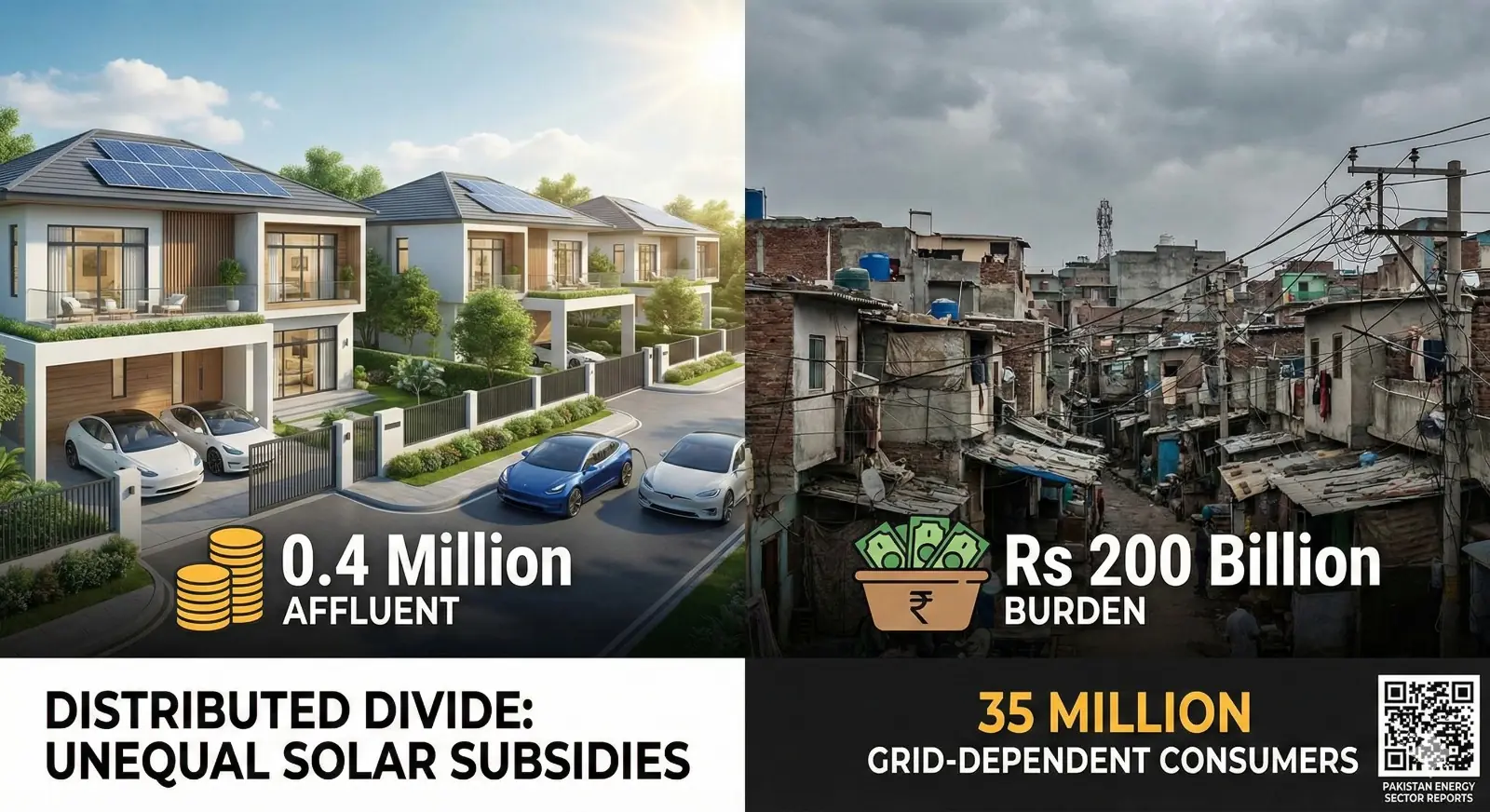
For years, Pakistan’s distributed solar landscape was hailed as a “consumer victory.” In reality, it was a slow-motion fiscal train wreck.
As the National Electric Power Regulatory Authority (NEPRA) moves to transition from net metering to net billing, the outcry from prosumers has been loud. However, a dispassionate look at the data, as visualised in the systemic analysis of Arzachel’s report, reveals that this shift is a survival mandate for the national grid.
The Rs200 billion “invisible” burden: The central tension of the solar debate is cost-shifting. Under the old net metering regime, prosumers, primarily the country’s most affluent 0.4 million households, exported excess electricity at retail parity. While this shortened the “payback period” for solar owners, it ignored a fundamental reality: the grid is not a free battery.
Maintaining the wires, transformers, and the massive “thermal fleet” that kicks in when the sun goes down costs money, fixed costs that do not disappear just because a house has solar panels. When prosumers stop paying for these services through volumetric bills, the burden doesn’t vanish; it migrates.
In FY24-25 alone, Arzachel estimated that nearly Rs200 billion in grid fixed costs, also confirmed by the Power Division, were shifted onto the shoulders of 35 million grid-dependent consumers. These are the small shopkeepers and low-income families who cannot afford the upfront cost of a solar system. In effect, the most vulnerable citizens have been subsidising the rooftop investments of the wealthy to the tune of an additional Rs2/kWh burden.
The operational nightmare, i.e. the “Duck Curve”: Beyond the balance sheet, the technical stability of the grid is at a breaking point. As shown in the PPMC data presented in recent NEPRA hearings, Pakistan is now witnessing the “Duck Curve” in real-time. This phenomenon occurs when midday solar overgeneration forces the grid to curtail power, followed by a “steep ramp” in the evening as the sun sets and solar production hits zero.
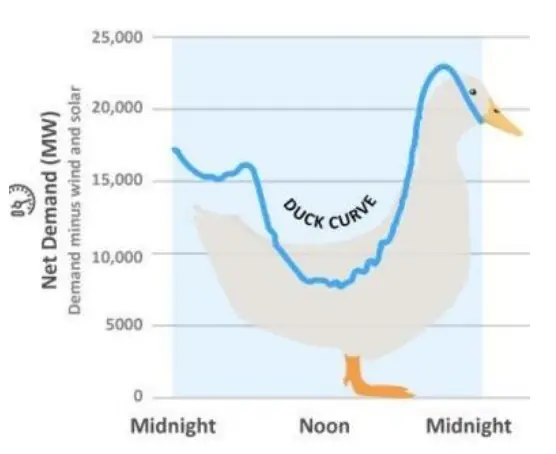
The study flags that when 400,000 systems stop producing simultaneously at 6pm, the national thermal fleet must cycle aggressively to meet the surge. As detailed in the Arzachel study, this causes thermal unit cycling stress, leading to fuel inefficiency and increased wear and tear on conventional plants.
By moving to net billing, where export compensation is aligned with the “energy purchase price” of approximately Rs8.13/kWh (compared to the previous Rs25.23/kWh), NEPRA is finally pricing electricity based on its actual value to the system.
The prime minister’s mandate, i.e. protecting the majority: There is a growing realisation that the prime minister’s mandate must inherently include the protection of the 35 million grid-dependent consumers, the vast majority of the electorate.
Historically, every time the Ministry of Energy, Power Division, and NEPRA have attempted to correct this “distributed divide,” political pressure has often stalled these reforms in favour of just 0.4 million prosumers creating propaganda and givinga misleading perception.
However, a constructive approach requires the PM Office to recognise that prioritising the short-term financial returns of a few can no longer come at the cost of the energy security of the many.
Protecting the “grid-dependent” is not just a social obligation; it is a fiscal necessity to prevent the total revenue erosion of distribution companies. As predicted in the Arzachel study, grid demand has already seen an 8% reduction due to solar imports, further stressing the tariff design for those left behind.
- Global alignment, not local hostility: Critics argue that Pakistan is “punishing” solar. This is a fallacy. Pakistan is simply following the global maturity curve of renewable energy. As outlined in the study, international trends in the USA, Vietnam, Germany, and Australia all point toward the same conclusion: Net metering is unsustainable at scale.
- Australia implemented “two-way pricing” to manage excess solar during peak hours.
- Germany enacted stricter regulations for solar inverters to ensure grid stability.
- USA (NEM 3.0) replaced net metering with Net Billing, cutting compensation rates by an average of 75%.
- Pakistan’s move to shorten contract periods from 7 years to 5 years for new consumers and adjust the adjustment mechanism to net billing is a necessary alignment with these global standards.
A fairer grid for all: The transition to net billing is not an attack on green energy; it is a defence of the 35 million grid-connected consumers who keep the lights on for the rest of the country. It encourages “self-consumption”, urging prosumers to invest in batteries and use their own power rather than dumping it onto a fragile grid.
NEPRA’s decision is a courageous step in the right direction. For the Prime Minister’s Office, the choice is clear, i.e. support a reform that ensures long-term grid viability and social equity, or continue a subsidy model that further widens the gap between the affluent and the struggling majority.
As the Arzachel study concludes, the transition is no longer theoretical; it is now an operational reality that Pakistan must embrace.

















Comments
Comments are closed for this article.